
Last updated October 16, 2026
 AC repair
 Furnace & heating
 Heat pumps
 Ductless mini splits
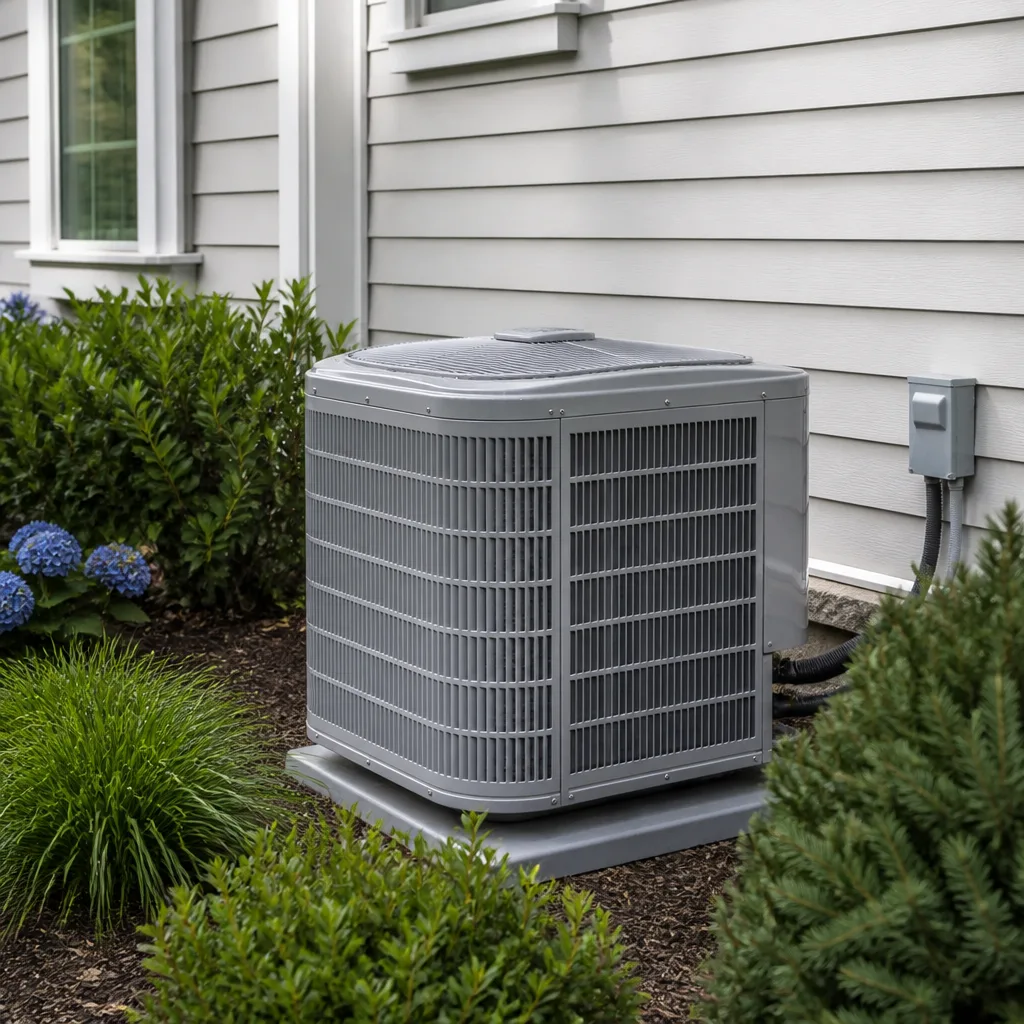 Carrier
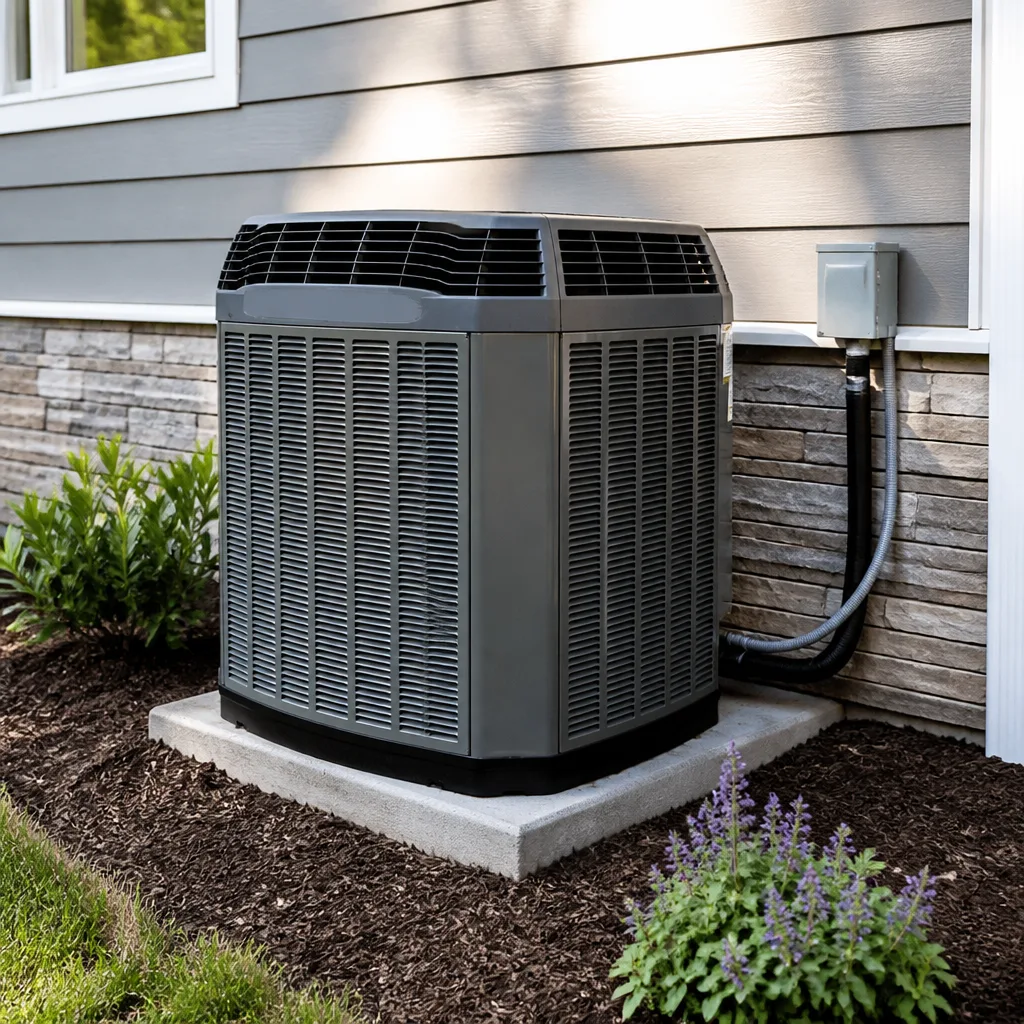 Trane
Trane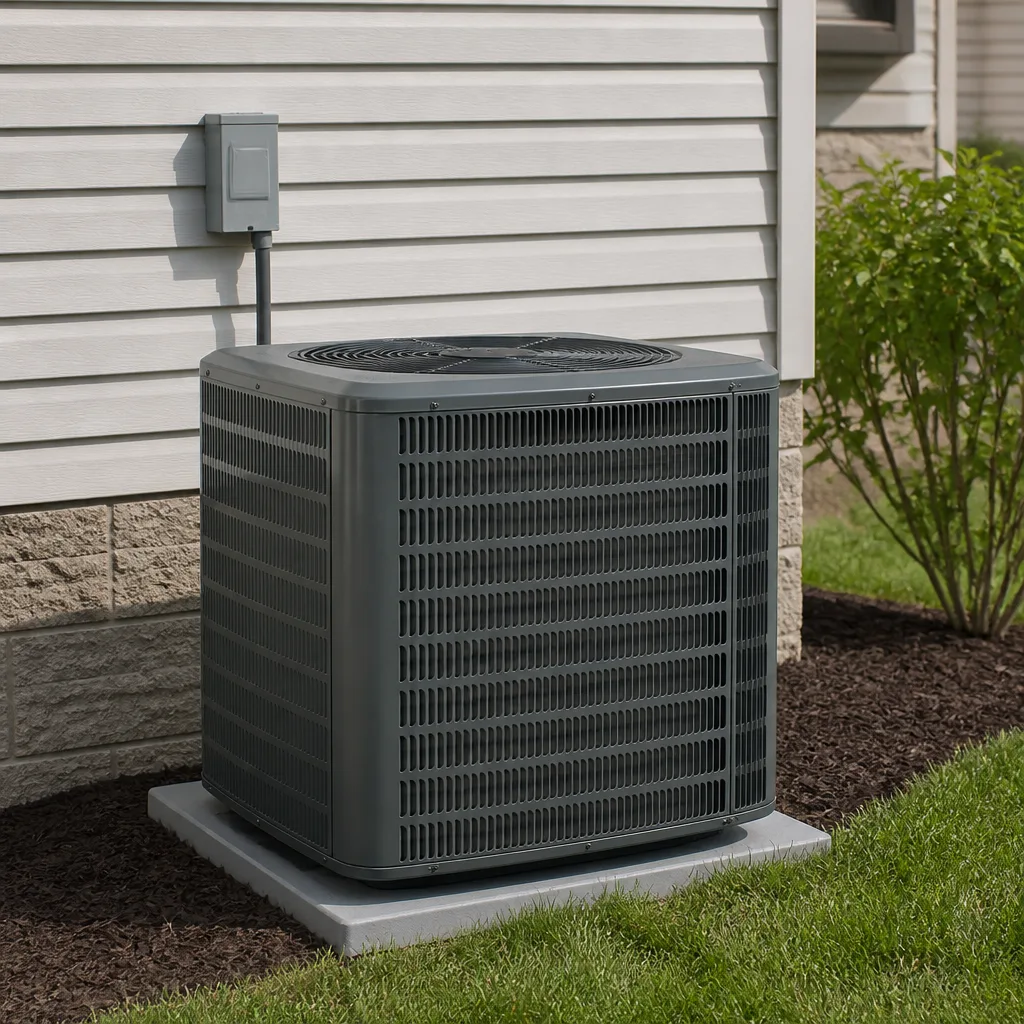 Goodman
Seasonal tune-up and full diagnostic on your Carrier, Trane, or Goodman system - readings shown to you before any repair is proposed
Diagnosis first, numbers second - you approve the repair price before a single part goes in.
Get your free estimateSeasonal HVAC Care for Fort Worth: Year-Round Homeowner’s Guide
Every November, right around the first real cold front, HVAC companies across Fort Worth watch the same pattern unfold: a wave of furnace calls from homeowners who are discovering, at 11 p.m., that seven months of Texas heat has quietly done something to their heating system. It’s not that Fort Worth winters are brutal. They’re not, by northern standards. The problem is the long dormancy. The furnace that ran fine in March has been sitting idle through 100-degree heat, dust, and humidity, and the first cold night is when every deferred issue announces itself. Our Complete Guide to HVAC in Fort Worth exists so that first cold night is unremarkable for your family. You’ll learn what to do in March, October, and the often-ignored window right after Thanksgiving, how Fort Worth’s unique pollen and climate patterns change the standard advice, and where most homeowners lose money by reacting instead of preparing.
Quick Answer
Seasonal HVAC care in Fort Worth means preparing your system twice a year: in March, before the long cooling season, and in October, before the furnace gets its first real test. The two highest-value tasks are replacing your air filter more often than the generic 90-day recommendation (Fort Worth’s Cedar Elm and Mountain Cedar pollen make 45 – 60 days the practical standard during peak months) and scheduling a professional checkup before each season, so problems are found at 2 p.m. on a Tuesday, not at 11 p.m. on the first cold night of November. For the full list, see our AC Repair Maintenance Checklist for Fort Worth Homeowners.
Styles & brands we work with
Table of Contents
- Fort Worth’s Climate Reality: Two Seasons That Demand Everything
- March Maintenance: The Pre-Cooling-Season Checklist
- The Pollen Problem: Why Fort Worth Filters Fail Faster
- October Preparation: Getting the Furnace Ready Before the First Cold Snap
- The Often-Overlooked November Window: Post-First-Use Checks
- Outdoor Unit Winterization in North Texas: Cover or Don’t Cover?
- Keeping Your Warranty and the 365-Day Done Right Promise Active
- Common Mistakes to Avoid
- When to Call a Professional
- Frequently Asked Questions
- The Bottom Line
Fort Worth’s Climate Reality: Two Seasons That Demand Everything
Fort Worth doesn’t have four seasons. It has two long stretches of heavy equipment load, separated by brief shoulders where the smart homeowner does the work that prevents the expensive failures. From roughly May through September, your air conditioner runs hundreds of hours, makes it through triple-digit afternoons, and slowly accumulates the normal wear that eventually shows up as a failed capacitor, a struggling compressor, or a refrigerant leak. From November through March, the furnace handles the opposite job, but with a critical difference: it starts from cold each year, not from a gradual ramp-up.
The shoulder months, March and October, are when maintenance actually matters. March catches the issues that accumulated during the previous cooling season before the new one piles on. October gives the furnace its first test in controlled conditions, with daylight and an open appointment calendar, instead of a panicked midnight scramble that always costs more and takes longer. Homeowners who maintain this rhythm typically see fewer emergency calls and lower annual repair costs over time, not because the equipment is different, but because small problems stay small.
There’s also a local factor that gets ignored in generic maintenance advice: Tarrant County’s freeze-thaw cycle. Fort Worth doesn’t stay frozen. It freezes, thaws, freezes again, and this repeated movement works against seals, connections, and condensate lines in ways a single cold season never would. The result is a system that needs seasonal attention, not annual attention, and the details below are specific to what we see in homes across Fort Worth, from Wedgwood to Saginaw to Benbrook.
March Maintenance: The Pre-Cooling-Season Checklist
March in Fort Worth is the last reasonable window before the heat arrives. The work done in these four weeks determines whether your AC makes it through August without a breakdown. Here’s the order we recommend, and it’s an order for a reason: each step builds on the one before it.
- Replace the air filter. March is when Cedar Elm pollen starts moving, and a fresh filter now gives your system maximum airflow before the blower starts working against summer heat. Use a MERV 8 – 11 filter for most systems; higher MERV ratings can restrict airflow on older equipment.
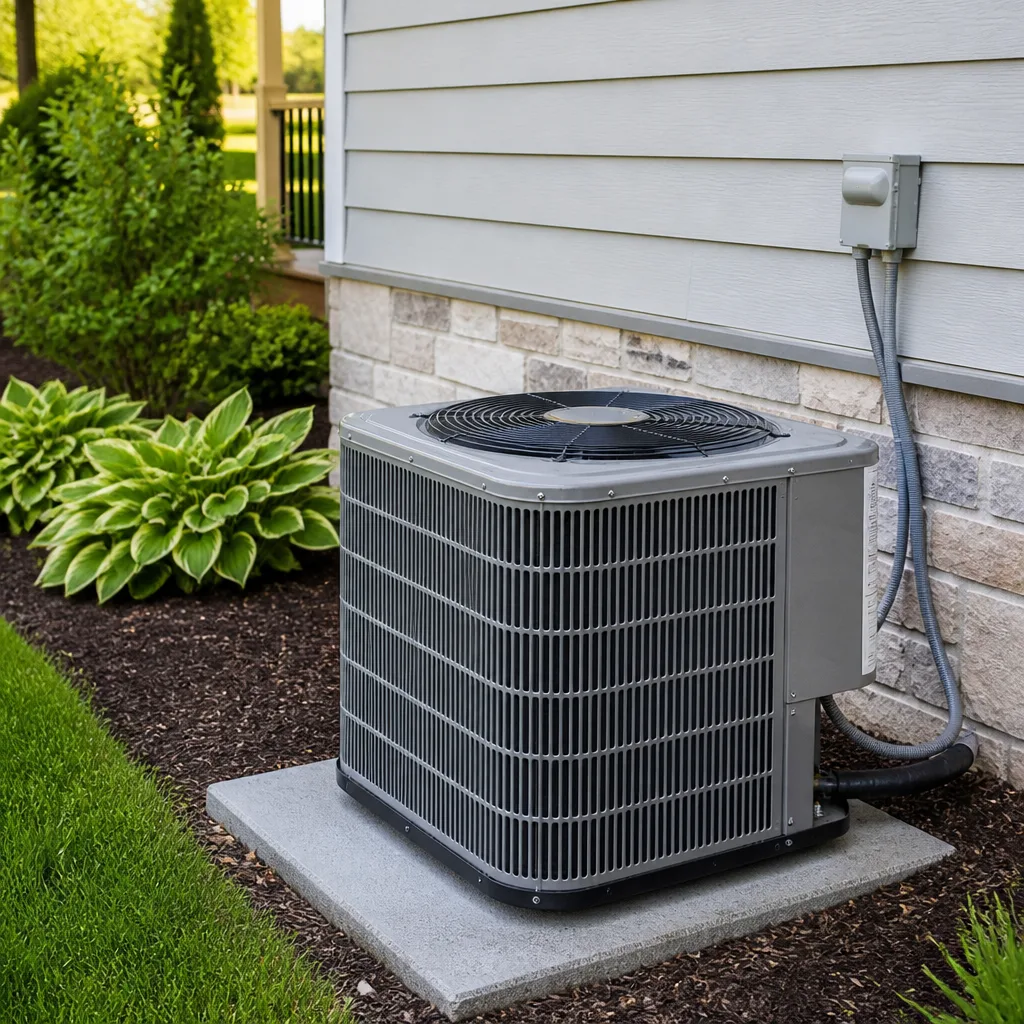
- Check the outdoor condenser unit. Walk around it. Leaves, twigs, and winter debris collect at the base and against the coil fins. Clear the area at least two feet in every direction, and gently rinse the coil with a garden hose, not a pressure washer, which bends the fins.
- Examine the condensate drain line. Fort Worth’s humidity, even in spring, creates enough condensation that a clogged drain line is one of the most common AC failures we see. Pour a cup of white vinegar down the line to break up algae and mineral buildup.
- Test the system before you actually need it. Set the thermostat to cooling, drop it three degrees below room temperature, and let it run for 20 minutes. Listen for unusual noise, feel for uneven cooling at different vents, and verify the outdoor unit shuts off when the indoor temperature reaches the set point.
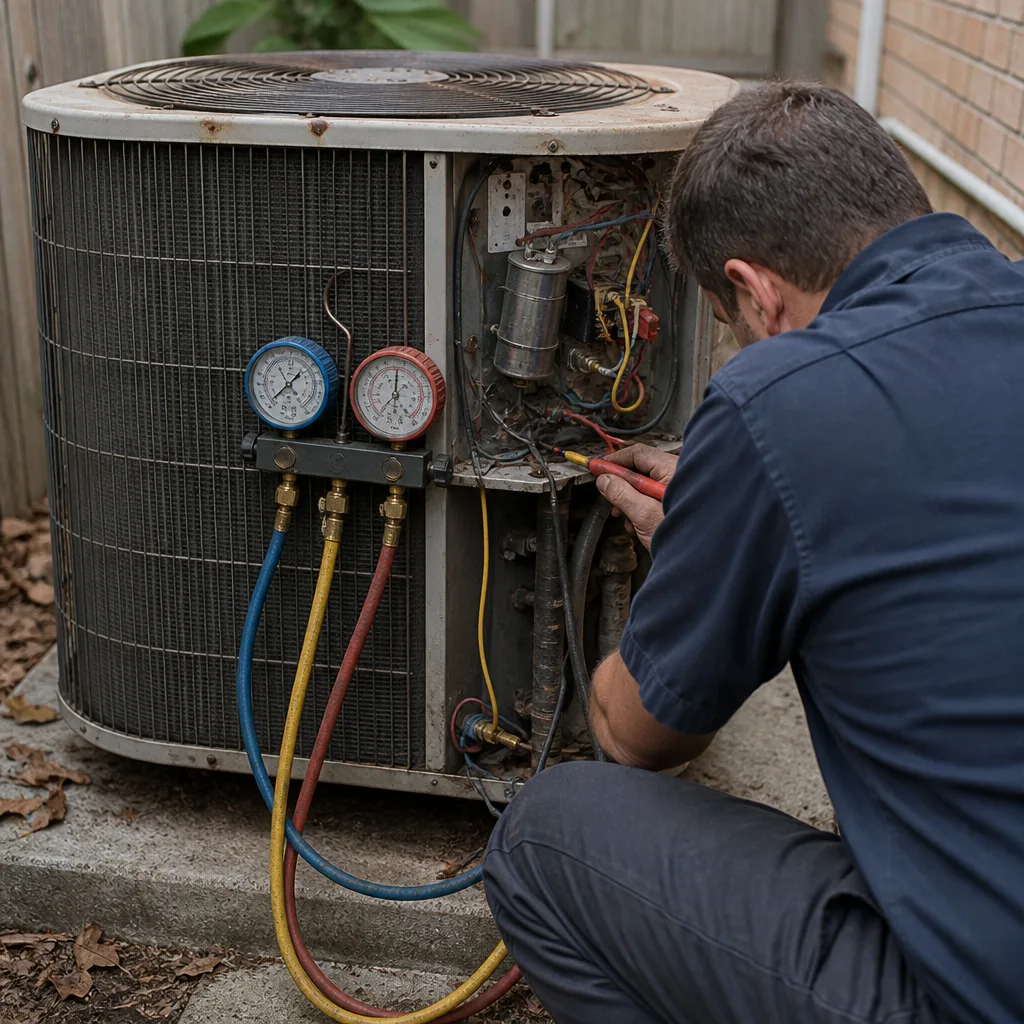
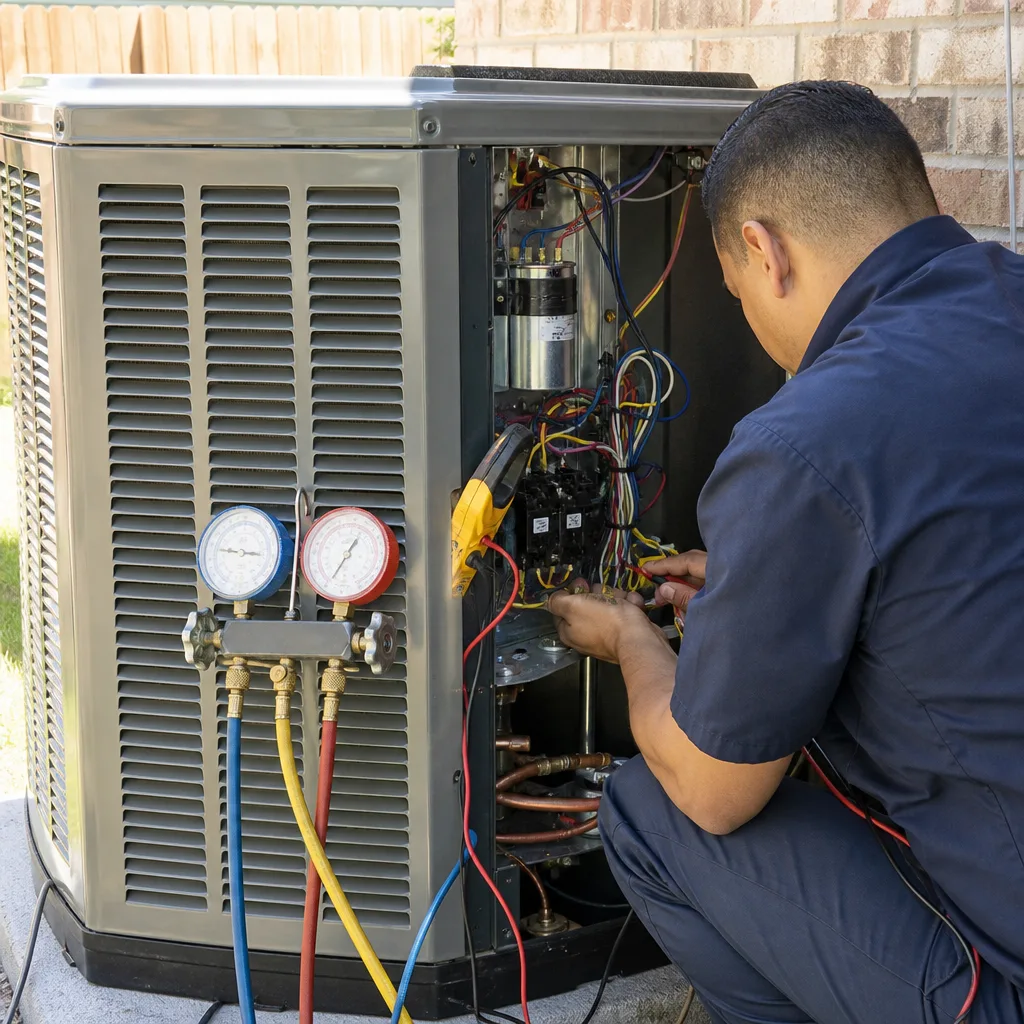
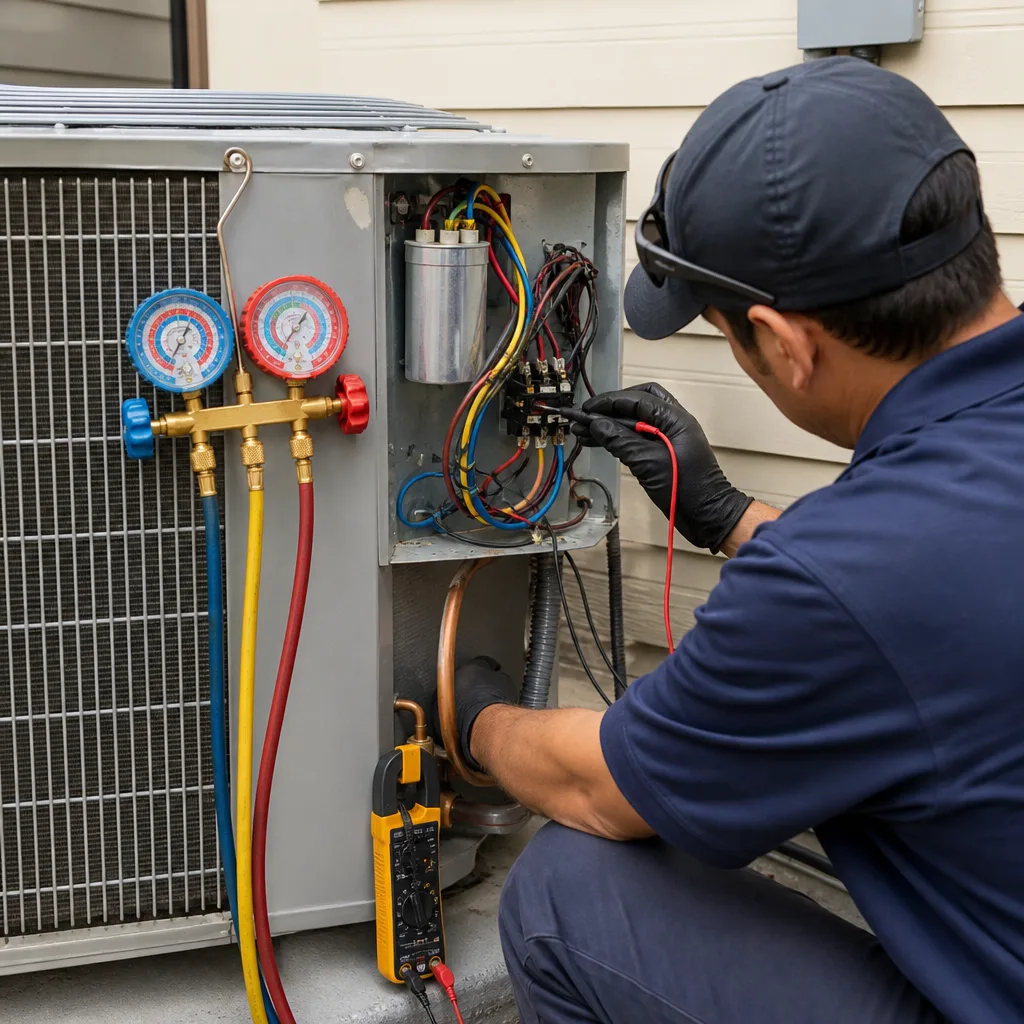
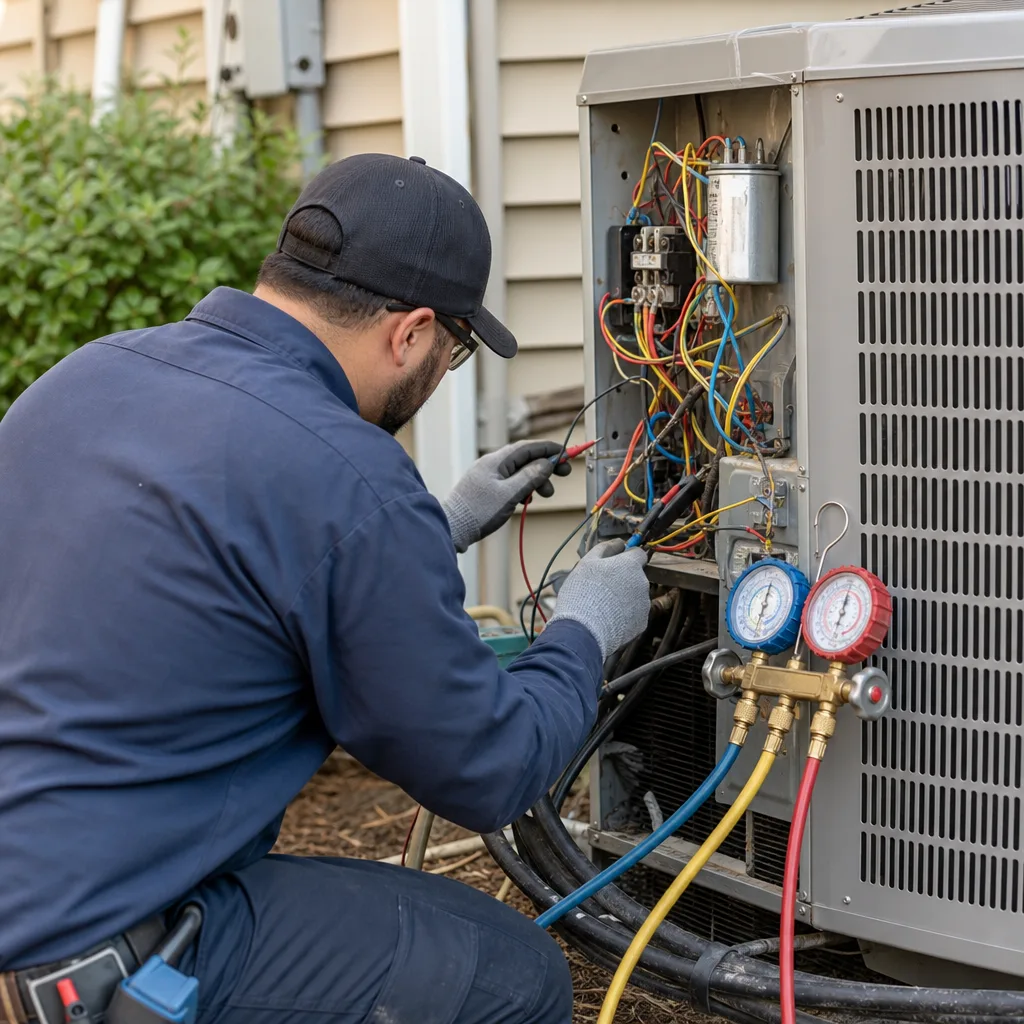
- Schedule a professional checkup. A technician will measure refrigerant pressures, check the capacitor and contactor, test the compressor’s electrical draw, and inspect the evaporator coil, tasks that need instruments and training. This is the one step that catches the failures you can’t see, and it’s the step that keeps manufacturer warranties valid.
At AC Repair in Fort Worth, we handle this full sequence for homeowners who want the checklist run by someone with the tools to act on what gets found. A written price comes first, before any work starts, so there’s no surprise when the capacitor tests weak or the coil needs cleaning.
See the difference
 Before
 After
After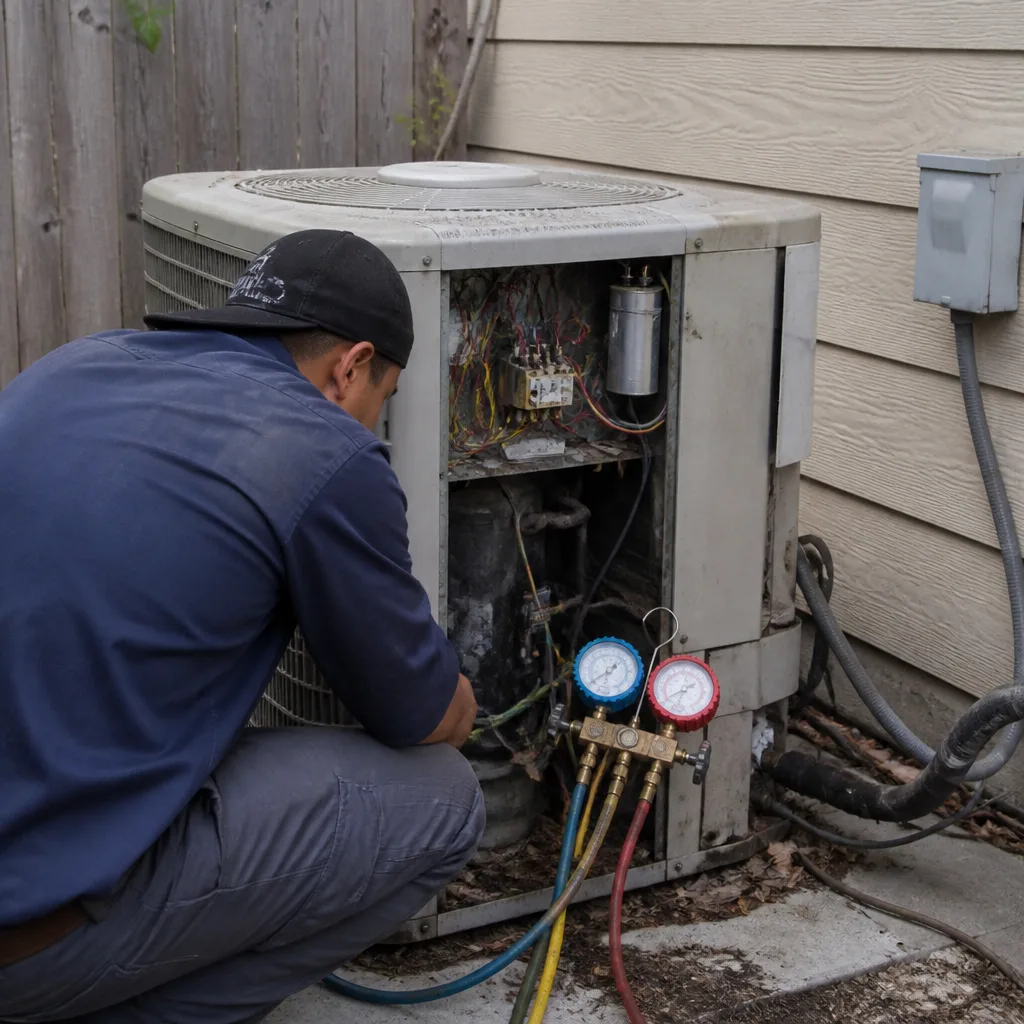 Before
 After
After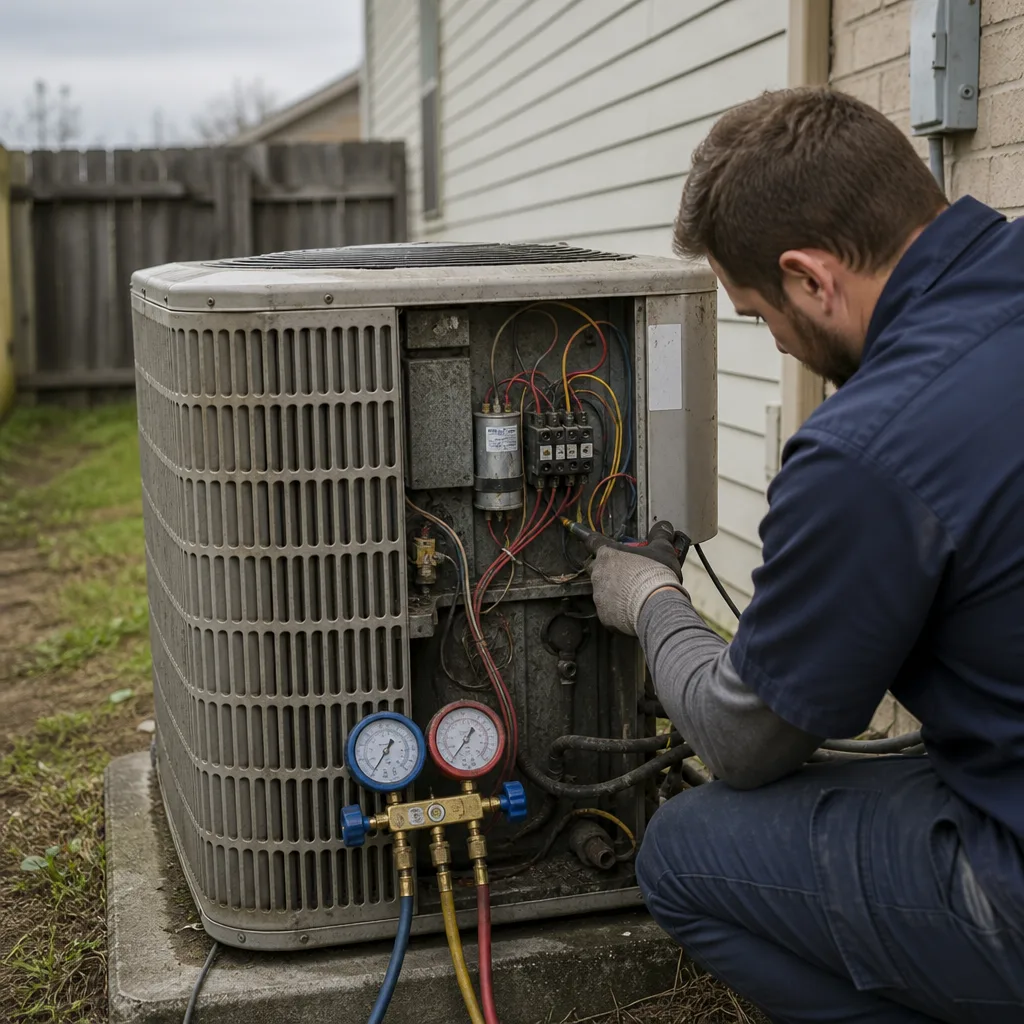 Before
 After
AfterThe Cost of Seasonal HVAC Maintenance in Fort Worth
People ask us what this costs more than any other question, and the honest answer is that it depends on what the checkup finds. But the baseline numbers for Fort Worth are consistent enough to share, and families plan better with real dollars in hand.
| Service | Typical Fort Worth Price Range | What It Includes |
|---|---|---|
| Seasonal AC tune-up (cooling) | $89 – $149 | Coil inspection, capacitor test, refrigerant level check, drain line clearing, filter inspection |
| Seasonal furnace tune-up (heating) | $89 – $149 | Heat exchanger inspection, burner cleaning, gas pressure check, safety switch testing |
| Combined spring + fall maintenance plan | $150 – $250 per year | Both seasonal checkups, priority scheduling, filter delivery in many cases |
| Basic filter replacement (standard 1-inch) | $10 – $25 per filter | Homeowner purchase, done in 2 minutes |
| Condensate drain line clearing (if clogged) | $75 – $150 | Flush, enzyme treatment, verification of proper drainage |
| Capacitor replacement (common in August) | $150 – $250 installed | Part, labor, system startup test |
These ranges reflect what we see across Fort Worth for straightforward maintenance work. A maintenance visit that finds no problems costs the low end of the tune-up range. One that catches a failing capacitor in March costs a few hundred dollars instead of the emergency visit in August, which routinely runs higher due to the timing and the cascade of issues heat brings. Every price gets written down before work starts, whether it’s a tune-up or a repair, so the decision is always yours with full information.
The Pollen Problem: Why Fort Worth Filters Fail Faster
The standard advice, change your filter every 90 days, is wrong for Fort Worth. It’s not wrong as a baseline; it’s wrong for this specific air, which two local trees load with pollen in ways most national guides never account for. Cedar Elm pollinates in late February through March. Mountain Cedar pollinates from December through February, with peak counts arriving in January. Together, they cover more than half the year, and Tarrant County sits squarely in the overlap zone for both species.
What does this mean practically? It means a filter that looks clean in Dallas might be a yellow-brown mat in Fort Worth after 45 days. It means the allergen load inside your home climbs faster than in most Texas markets. And it means your system’s airflow, measured in cubic feet per minute, drops as the filter loads, which makes the blower work harder, which accelerates motor wear and drives up the utility bill.
Here’s the filter schedule we recommend for Fort Worth homeowners, adjusted for the local pollen calendar rather than the generic one:
- Late February through April (Cedar Elm season): check every 30 days, replace at 45 – 60 days even if it looks okay.
- May through September (cooling season, high runtime): replace every 60 days. The system runs constantly, and dust plus humidity creates a denser catch load.
- December through early February (Mountain Cedar season): replace every 45 – 60 days. January counts in Fort Worth routinely hit levels that trigger allergy advisories.
- October and November (shoulder season, low pollen): the standard 90-day interval works here.
For homes with pets, knock 15 days off each interval. For homes with kids and allergy concerns, a MERV 11 filter on a system that can handle it makes a measurable difference in indoor air quality during cedar season. We’ve walked into enough Fort Worth living rooms in January to know what that yellow haze on the filter means for the family breathing it.
October Preparation: Getting the Furnace Ready Before the First Cold Snap
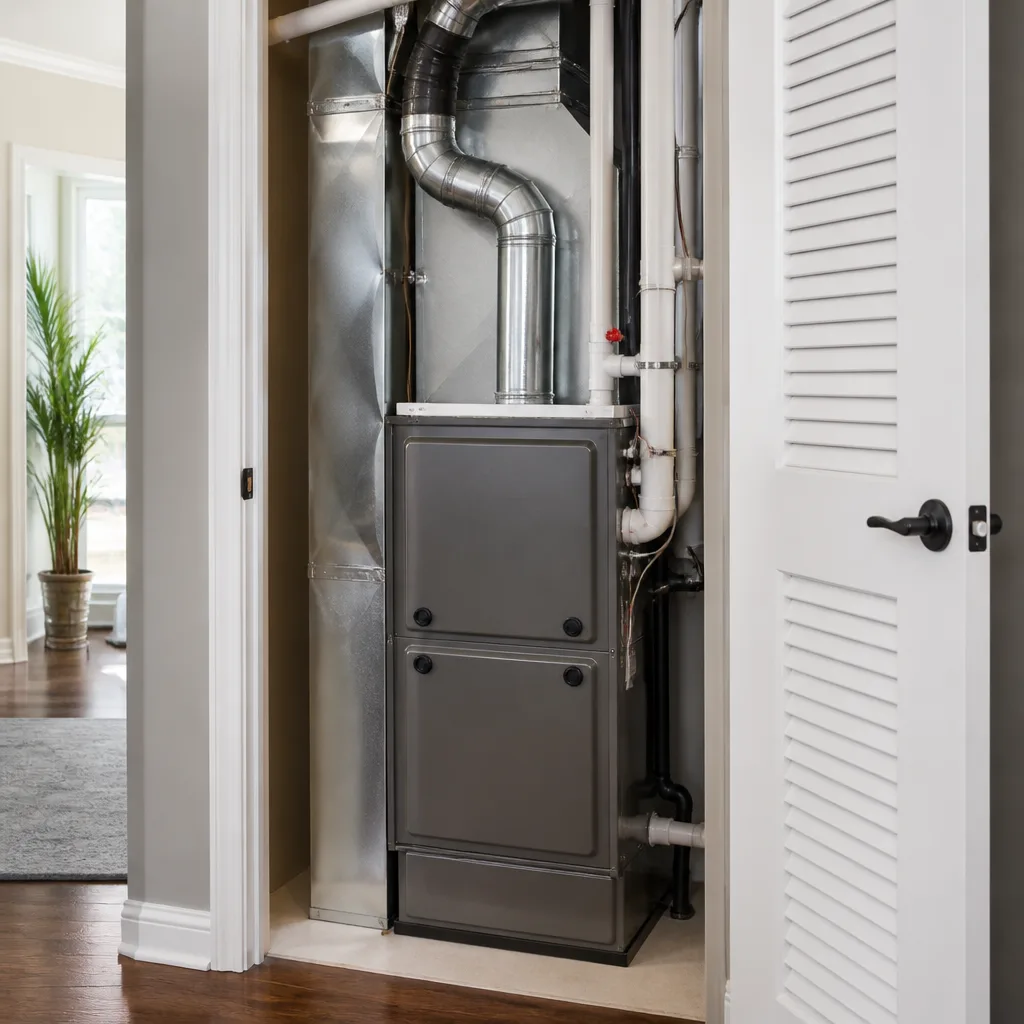
The single best gift you can give your Fort Worth furnace is a test run in October, about three weeks before you actually need heat. Here’s why: the furnace has been off since March. Burners accumulate dust. The heat exchanger, which separates combustion gases from the breathable air in your home, has gone through seven months of Texas humidity and temperature swings. The blower motor has been running all summer for the AC, but the gas valve, ignitor, and flame sensor have been dormant. October is when you wake all of it up in daylight, with a professional on call if something doesn’t wake up right.
Here’s the step-by-step sequence we recommend for every Fort Worth homeowner, and we’ve designed it so you can do the first five steps yourself in under 30 minutes:
- Change the filter. This is the most impactful single action. A fresh filter before the furnace’s first ignition means maximum airflow and minimum dust burn-off.
- Set the thermostat to heat. Raise the setting three degrees above room temperature. You want the furnace to actually run, not just click.
- Listen during ignition. The sequence should be: inducer motor spins up, ignitor glows or sparks, gas valve opens, burners light with a soft whoosh, blower motor starts after a 30 – 60 second delay. Any loud bang, hesitation, or failure to light is the signal to stop and call.
- Expect the burning smell, but only for 10 – 15 minutes. This is the most common October phone call we get, and in most cases it’s benign. Dust settles on the heat exchanger and burners during the months of idleness, and the first firing burns it off. The smell should fade after 10 – 15 minutes of run time. If it persists past 20 minutes, or if you smell gas, sulfur, or anything acrid rather than dusty, shut the furnace off at the thermostat and the breaker, and call a professional.
- Check the carbon monoxide detector. Press the test button. Replace batteries if it’s been more than six months. This is the one piece of safety equipment that matters most during the heating season, and October is the right time to verify it.
- Schedule a furnace tune-up. A professional will inspect the heat exchanger for cracks, check gas pressure, clean the flame sensor, test the safety switches, and confirm the system is producing carbon monoxide within acceptable limits. This is also the step that documentation matters for, which we’ll cover below.
For homeowners who don’t want to run these checks themselves, Furnace Repair in Fort Worth is what we do. The inspection catches what the homeowner’s ear can’t: a heat exchanger with a hairline crack is invisible until it’s not, and October is the cheap month to find it.
The Often-Overlooked November Window: Post-First-Use Checks
Most seasonal maintenance advice ends at the October test run, but there’s a second, quieter window that matters just as much in Fort Worth: the two weeks after the furnace’s first sustained use, typically mid-to-late November. Here’s the logic. October finds the dormant problems. November finds the load problems, the issues that only show up after the furnace has run for 50 or 60 hours and the entire system has been through its first real thermal cycle of the season.
The things to check in November, specifically:
- Listen for new sounds. A faint whistle that develops after two weeks of use can indicate a developing airflow restriction or a blower issue that wasn’t present during the first test run.
- Check the exhaust vent outside. On a cold morning, you should see steam rising from the furnace’s exhaust pipe. No steam, or steam that smells strongly of gas, means incomplete combustion and needs attention.
- Verify the thermostat holds temperature. If the furnace cycles on and off more frequently than it did the first week, that’s a sign of a developing issue, often a dirty flame sensor or a thermostat calibration drift.
- Look at your utility usage. The first full heating bill after the furnace starts running establishes the baseline. A sudden jump in the second or third month, with no weather change to explain it, points to declining efficiency.
- Inspect the area around the furnace. Dust accumulation on the cabinet, darkened marks around the vents, or a persistent stale smell are all worth noting and, if they persist, worth a call.
The November window is also when the freeze risk becomes real in Fort Worth, not theoretical. Tarrant County sees overnight lows below freezing from late November onward, and the freeze protection steps from the next section become active concerns, not planning items.
Outdoor Unit Winterization in North Texas: Cover or Don’t Cover?
The outdoor condenser unit, the big metal box with the fan on top, is the subject of more bad advice than almost any other part of HVAC ownership. The short answer for North Texas: you do not need to cover your outdoor unit for winter. These units are engineered to sit outside in snow, rain, and ice. Manufacturers design them for exactly this exposure, and a full cover creates more problems than it solves.
Here’s what actually happens with a full cover. Moisture gets trapped underneath, condenses, and creates the perfect environment for rust and corrosion on the coil and electrical connections. Small animals, always looking for a warm dry place in winter, find the covered unit irresistible, and the chewed wiring they leave behind is a spring repair that never needed to happen. The cover also makes it easy to forget the unit exists, which means the March maintenance gets skipped entirely.
What about a hard freeze, like the February 2021 event that froze pipes across Fort Worth? Even then, a covered unit vs. an uncovered unit makes no difference in system survival. The unit is designed to handle it, and the freeze risk that actually matters is in the refrigerant lines and the indoor components, which a cover on the outdoor cabinet does nothing to protect.
The one exception: if you have trees directly above the unit and heavy leaf drop, a simple wood or mesh panel placed on top of the unit, not wrapped around it, keeps leaves out while allowing airflow. Remove it before you run the AC again. And if you’re worried about hail, the same logic applies: a plywood sheet on top during a forecasted hail event, removed afterward, is the right move.
The more important winterization task in Fort Worth is protecting the pipes and lines that run from the outdoor unit to the indoor coil, along with the condensate drain line, if it exits the house and is exposed to outside air. Insulating these lines with foam pipe insulation, available at any hardware store for about $3 – $5 per section, prevents freeze damage during the cold snaps Fort Worth gets every winter. This is a 20-minute DIY job that protects against a $500 repair.
Keeping Your Warranty and the 365-Day Done Right Promise Active
Here’s what most homeowners don’t realize about manufacturer warranties: they’re conditional, and the conditions include documentation. Carrier, Trane, Lennox, and Goodman all require proof of annual maintenance for warranty claims on major components. The compressors, heat exchangers, and coils that carry 10-year parts warranties stay covered only if the homeowner can show the work was actually done. A shoebox of receipts works. A grid of notes in a phone works. What doesn’t work is a vague memory of “I think someone looked at it in 2023.”
What to keep on file, in a folder or a digital note, for every HVAC system in your home:
- The installation invoice, showing the date, equipment model and serial numbers, and the installing company’s name.
- Every maintenance visit record, including the date, what was checked, what was replaced, and the price paid.
- Every repair invoice, with the specific part name or number and the labor performed.
- The filter change log, even if you change filters yourself. A simple note with the date and filter type is enough.
- Photos of the equipment, including the data plate showing model and serial number, taken at installation and after any major work.
This documentation also keeps the Meadowsweet Heating and Air Fort Worth home promise active. The 365-Day Done Right Promise means if work we do isn’t done right, we make it right, no fine print and no runaround. But warranty support, both from the manufacturer and from us, moves faster when the paperwork exists. We don’t require it for a promise claim; we honor the word. But manufacturers do require it for parts coverage, and the habit of keeping records is what separates the homeowner who gets a covered compressor replacement from the one who pays retail.
Luis Serrano, who leads the service team, keeps this simple: every customer gets a written record of what was found, what was done, and what it cost, every visit, no exceptions. It’s the same documentation we’d want for our own homes, and it’s part of the Cedarwell Care Promise that governs how every job runs.
Common Mistakes to Avoid
- Running the system with a clogged filter for months. This is the most expensive mistake in Fort Worth HVAC, because the blower motor works against resistance, the coil ices over, and the compressor fails early. A $15 filter becomes a $1,500 repair, and we see it every summer.
- Covering the outdoor unit completely for winter. The trapped moisture corrodes the coil and wiring, and the rodents move in. A top-only leaf guard during heavy drop season is the right move, removed before spring.
- Testing the furnace for the first time on the night it’s actually needed. If the flame sensor is dirty or the ignitor is failing, that’s a midnight discovery with an emergency call fee attached, when October would have found the same issue on a calm afternoon for less money.
- Ignoring the burning smell during the first furnace run. Ten to fifteen minutes of dusty smell is normal. Twenty-plus minutes, or any smell of gas or acrid plastic, is not, and the correct response is to shut down and call, not to wait and see.
- Skipping the March checkup because the AC “worked fine last year.” Capacitors fail slowly, refrigerant leaks develop gradually, and the system that worked fine in September is exactly the one that fails in July. March finds the slow failures.
- Using a pressure washer on the outdoor coil. The fins bend easily, and a bent coil loses efficiency permanently. A garden hose at normal pressure, or a specialized coil cleaner applied by a professional, is the right tool.
When to Call a Professional
Call when the system tells you something is wrong and you don’t know what it means: a burning smell that won’t fade, a furnace that lights and shuts off repeatedly, an AC that runs constantly without cooling, water pooling around the indoor unit, a monthly bill that jumps without explanation, or any gas smell. Call before the first cold snap if you haven’t had the furnace checked this year, and call for the March checkup before the heat arrives. These are the calls that prevent the emergency calls. Meadowsweet Heating and Air Fort Worth offers free estimates in Fort Worth, call (682) 610-2888, and a live person answers 24 hours a day, seven days a week, including holidays. No voicemail queue, no answering service that takes a message and disappears.
Frequently Asked Questions
Twice a year: once in March before the cooling season, and once in October before the heating season. Fort Worth’s climate forces this split because the furnace sits idle for seven months while the AC runs constantly, and each system needs its own preseason check. A single annual checkup misses whichever system is about to be tested hardest.
The March maintenance sequence prevents most mid-summer breakdowns: a fresh filter, a clear outdoor unit, an open condensate drain, a professional checkup with refrigerant and capacitor testing, and a test run before the heat arrives. The failures that happen in August are almost always the failures that would have been found in March.
Turn it on for a test run in October, about three weeks before you actually need it, on a mild afternoon when you can open windows and a service call won’t be an emergency. A 20-minute test run burns off the dust, verifies the ignition sequence, and gives you time to address anything that doesn’t fire correctly before the first cold night.
A dusty or mildly burning smell during the first 10 – 15 minutes of the furnace’s first firing is normal and comes from dust burning off the heat exchanger after months of sitting idle. If the smell lasts longer than 20 minutes, or smells like gas, sulfur, or hot plastic, shut the system off immediately and call a professional.
Most seasonal tune-ups in Fort Worth run $89 to $149 for either the cooling or the heating check, and a combined spring-and-fall plan typically costs $150 to $250 per year. Repairs found during the tune-up are priced separately, with a written price provided before any work starts. Call (682) 610-2888 for a free estimate on a tune-up, and a live person will answer.
For a system more than 10 years old, the decision depends on the repair cost versus the system’s likely remaining life. A $250 capacitor replacement on an otherwise healthy 12-year-old unit usually makes sense. A $2,000 compressor replacement on the same unit probably doesn’t, because the money goes into a system with a limited lifespan anyway. The right answer comes from a professional who measures the system’s condition, not from an age alone, and a free estimate in Fort Worth is a phone call away.
The Bottom Line
Fort Worth’s climate punishes deferred maintenance more than most places, not because the weather is extreme in both directions, but because the swing between seasons leaves systems dormant and vulnerable. The fix is a rhythm: March for the AC, October for the furnace, November for the post-first-use checks, and a filter schedule that respects the Cedar Elm and Mountain Cedar calendar instead of a generic 90-day rule. Document everything, test before you need it, and when something doesn’t act right, call a professional before it becomes an emergency. A live person answers the phone 24/7 at (682) 610-2888, and whether it’s a tune-up or a repair, the written price comes first. That’s how a home should be cared for in Fort Worth: prepared, not reactive.
Written by Luis Serrano, Owner at Meadowsweet Heating and Air Fort Worth, serving Fort Worth since 2004. Explore more guides & resources on our blog.