
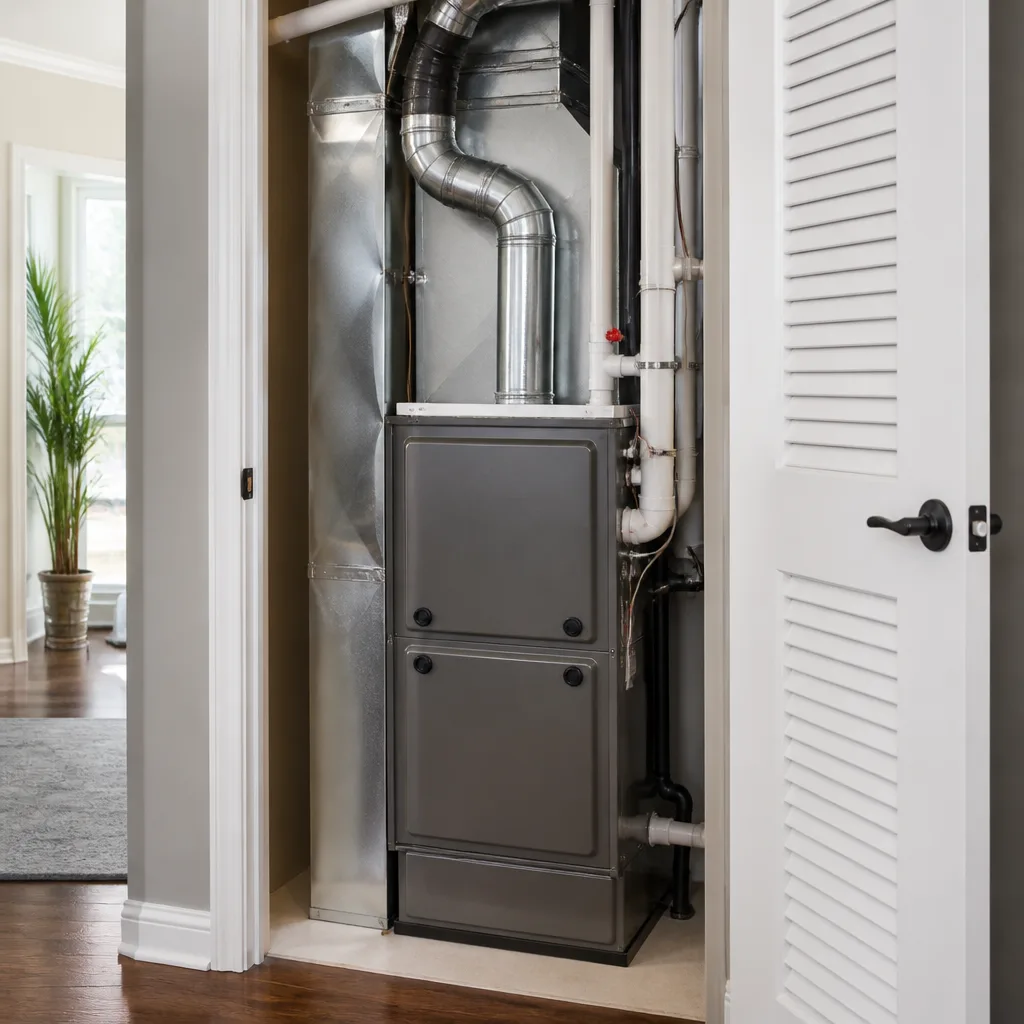
 Furnace & heating
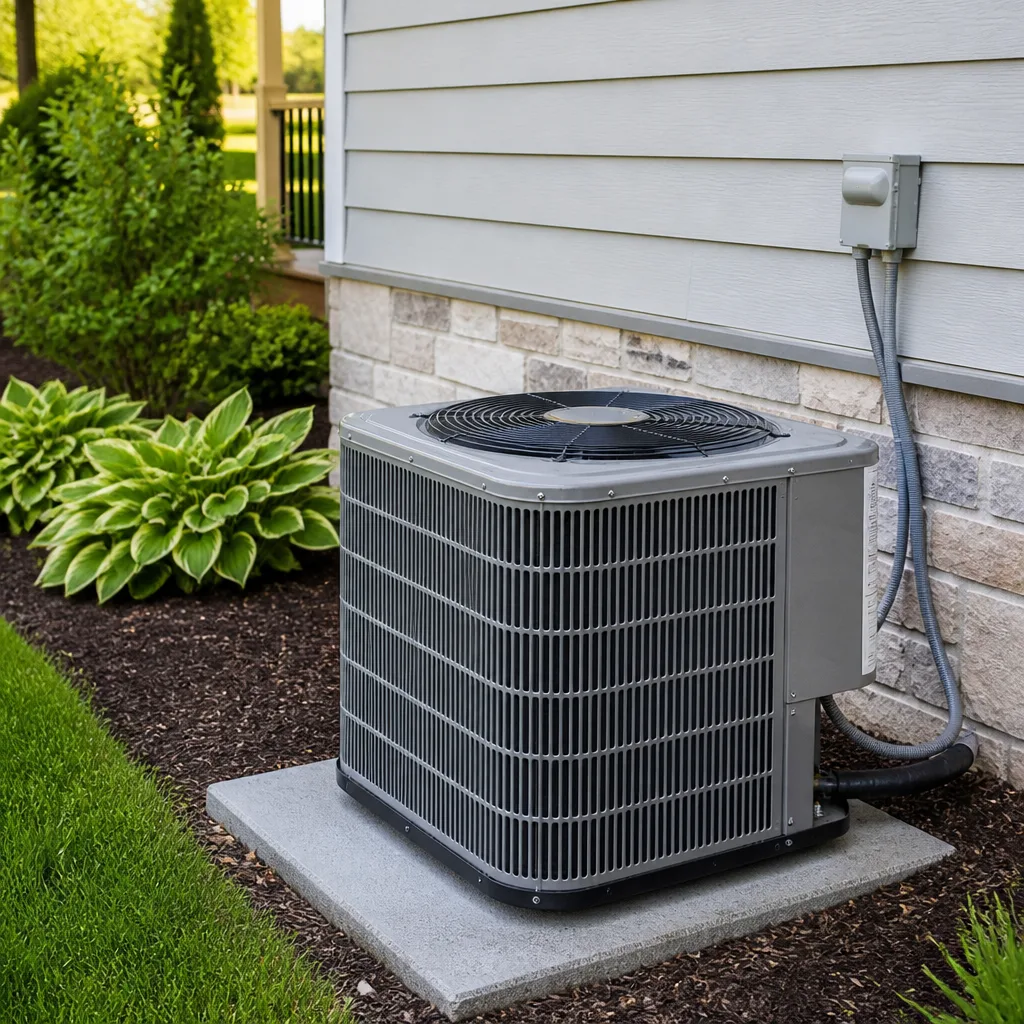 AC repair
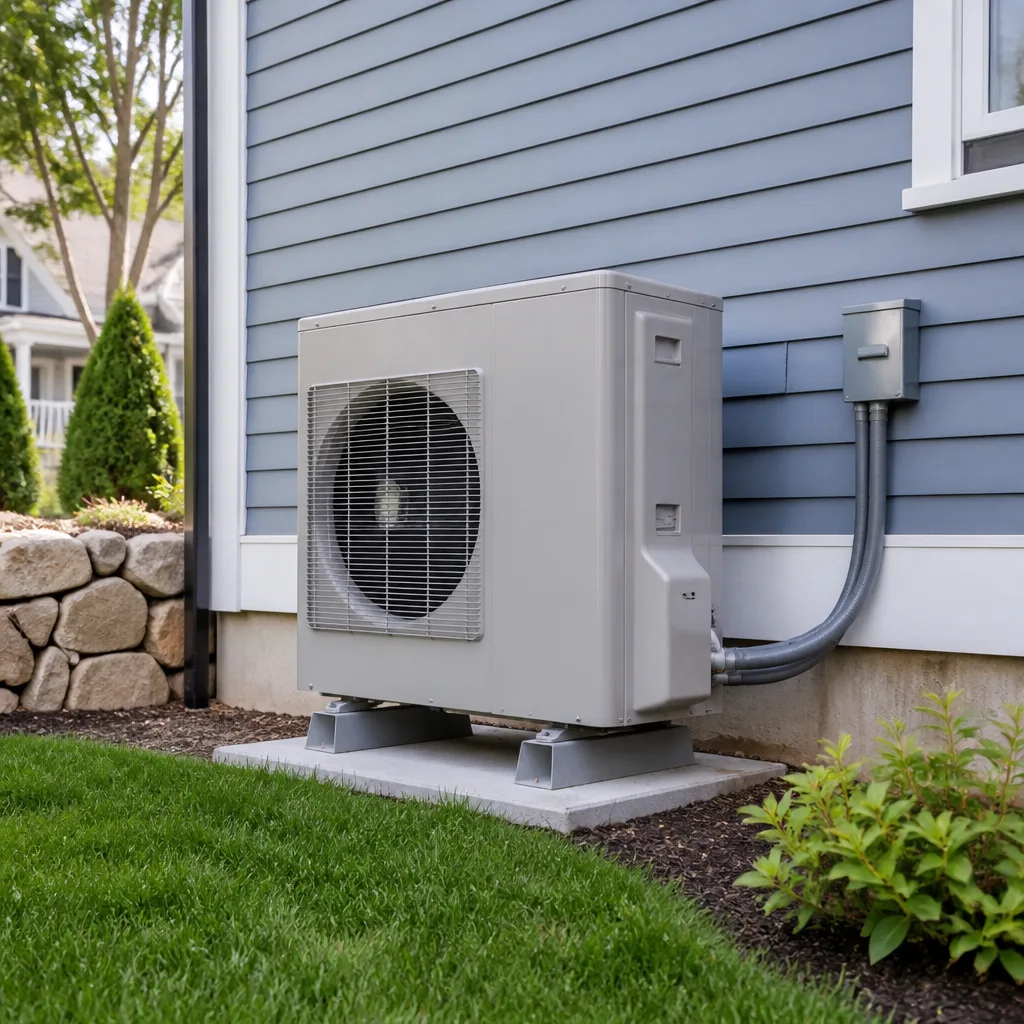 Heat pumps
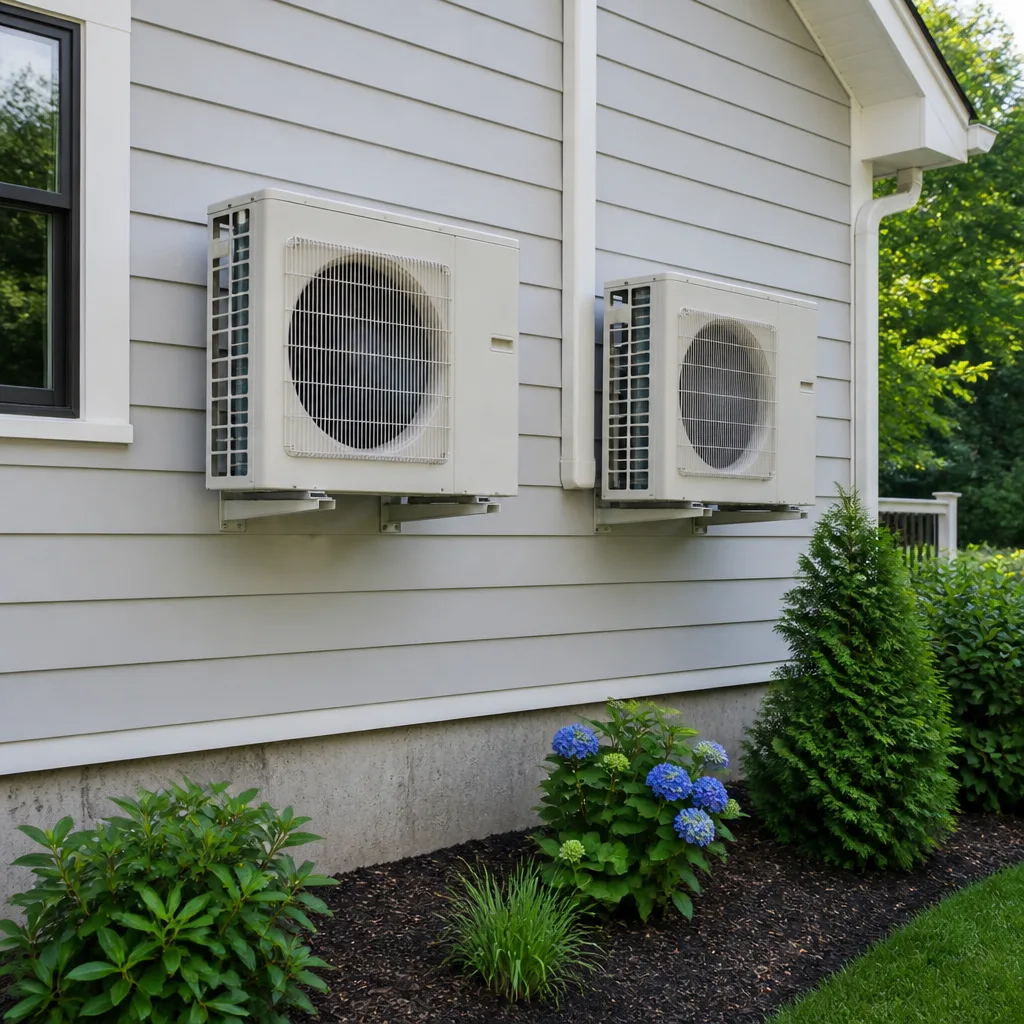 Ductless mini splits
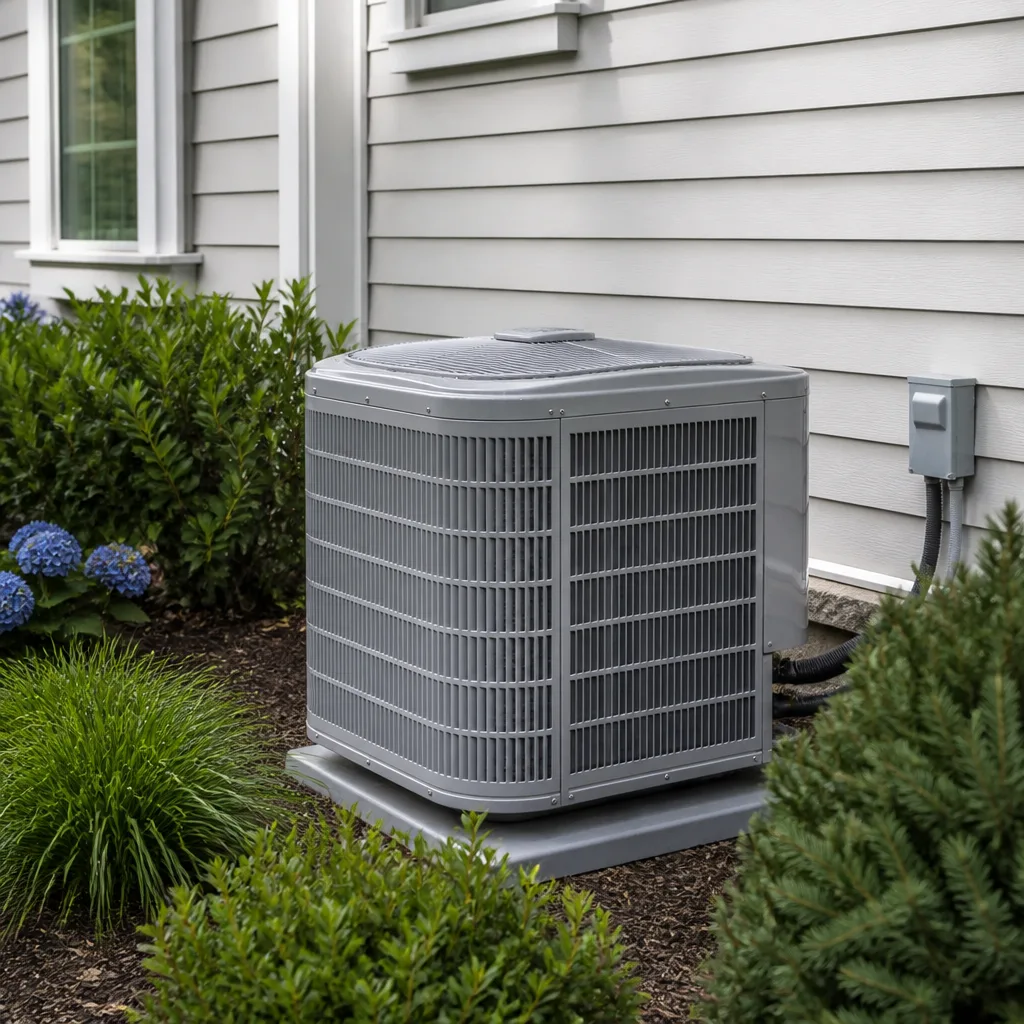 Carrier
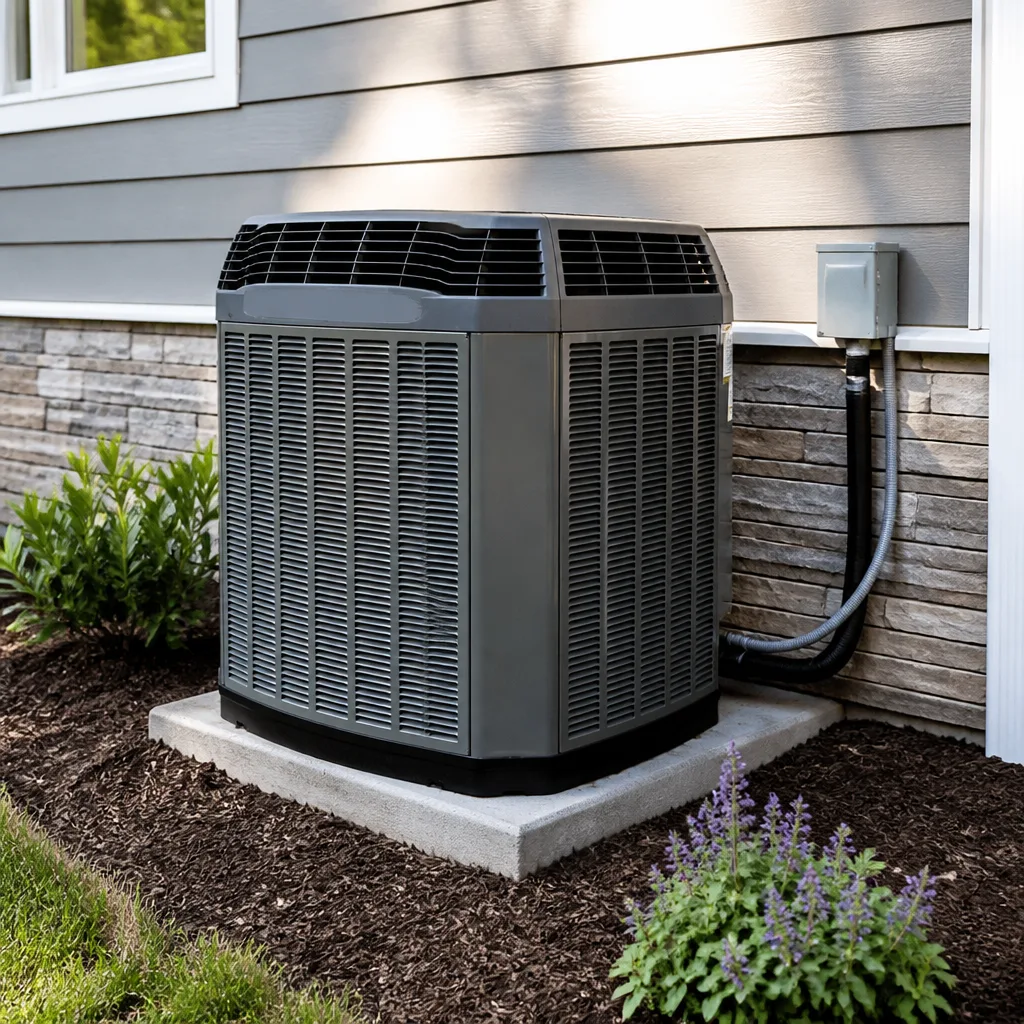 Trane
Trane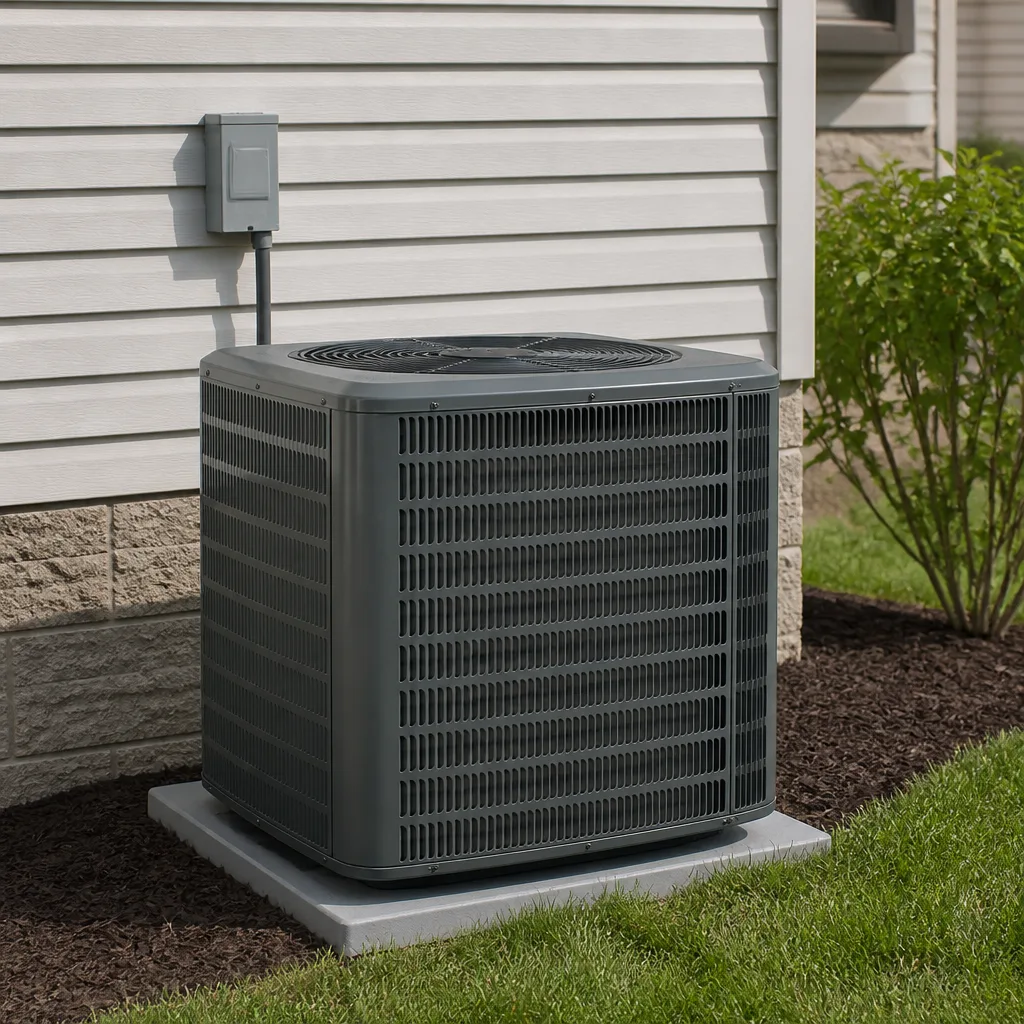 Goodman
Seasonal tune-up and full diagnostic on your Carrier, Trane, or Goodman system - readings shown to you before any repair is proposed
Diagnosis first, numbers second - you approve the repair price before a single part goes in.
Get your free estimateGoodman Capacitor Replacement: The Fort Worth Owner’s Guide
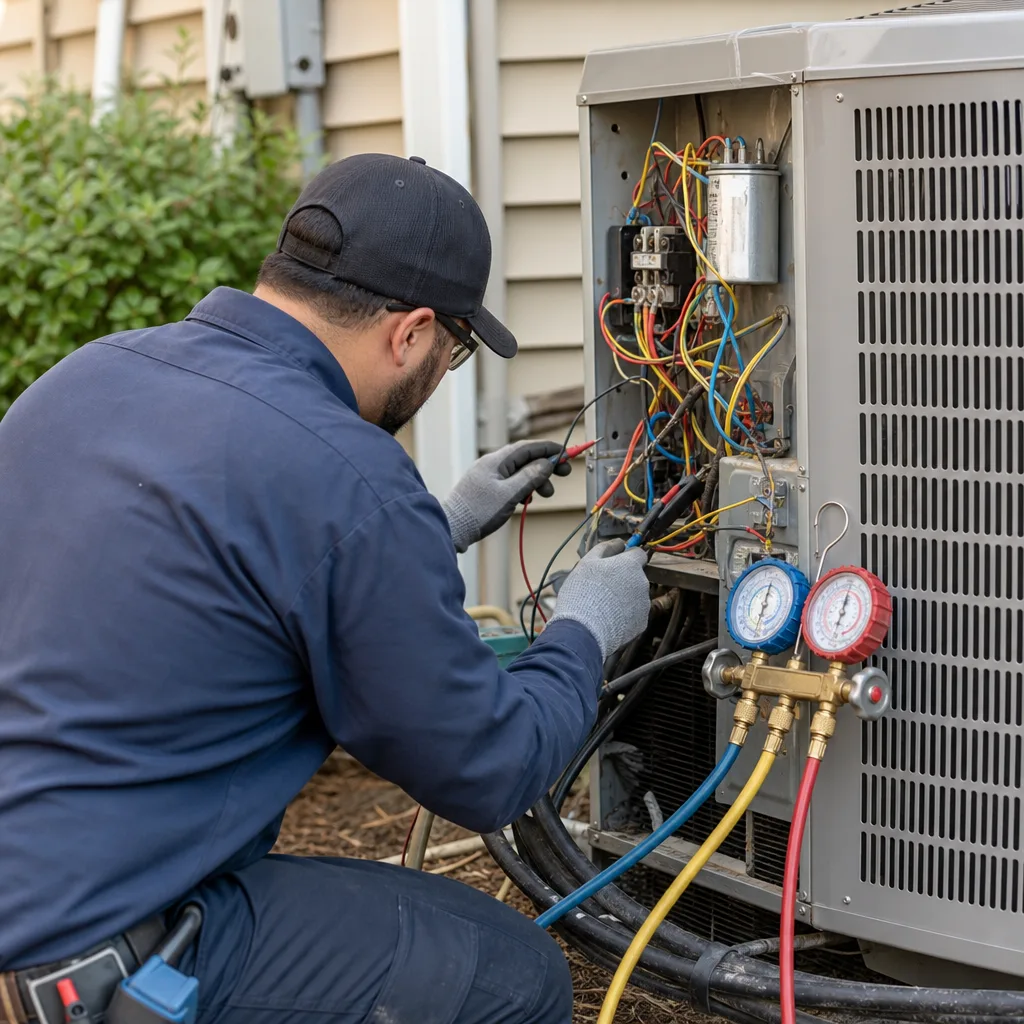
A Goodman capacitor replacement in Fort Worth typically costs between $180 and $340 installed, including the part and labor, and in most cases we can complete the swap the same day you call. We keep Goodman-compatible run and start capacitors stocked on our trucks, so there’s no multi-day wait for a part to ship. Most Fort Worth homeowners discover the capacitor has failed when the outdoor unit hums but the fan won’t spin, or the system trips its breaker on a hot afternoon.
What usually happens is this: you set the thermostat to cool, you hear a low hum from the condenser outside, but the big fan isn’t turning. Sometimes it starts with a push from a stick, sometimes it won’t start at all. That hum is the compressor trying to start without enough of an electrical jolt. The capacitor is the part that provides that jolt, and when it dies, the whole system stalls. The good news is it’s a straightforward fix, but it has to be matched to your specific Goodman model and rating.
Which Goodman Models This Applies To
Goodman uses capacitors across most of its residential AC and heat pump lines, including the GSX, GSZ, and GPH series, as well as the older GSC and CK models still running in plenty of Fort Worth homes. The key thing to understand is that a capacitor is not one-size-fits-all. Each one carries a microfarad (µF) rating and a voltage rating, and both must match what your Goodman condenser label calls for. That label is on the inside of the access panel, and it spells out exactly what the factory specified.
Here’s the compatibility gotcha Texas heat makes worse: a Goodman condensing unit may have a dual-run capacitor, meaning one physical cylinder that serves both the compressor and the fan motor. If someone installs a single-purpose capacitor or one with a mismatched microfarad rating, the compressor can overheat and shorten its life by years. We see this on units where a previous repair was rushed or a generic part was thrown in. A quality aftermarket capacitor with the correct specification works fine, and it usually costs less than a Goodman-branded OEM box without sacrificing reliability. What matters is the rating, not the logo on the label.
Styles & brands we work with
Signs Your Goodman Capacitor Replacement Is Failing
- Humming condenser with no fan movement. This is the classic symptom. The compressor is trying to start but the capacitor can’t deliver the starting torque, so the unit hums and sits idle. On a Fort Worth summer day, you’ll notice it fast because the house stops cooling.
- System starts only intermittently. A capacitor that’s losing its microfarad rating may work in the morning and fail by afternoon when the attic and outdoor temperatures peak. Intermittent starts are often a capacitor losing capacity, not a compressor failing.
- Breaker trips when the AC kicks on. A weak capacitor forces the compressor to draw more current to start, which can trip the breaker or blow a fuse. This repeated strain is exactly the kind of thing that turns a $200 fix into a $2,000 compressor replacement if ignored.
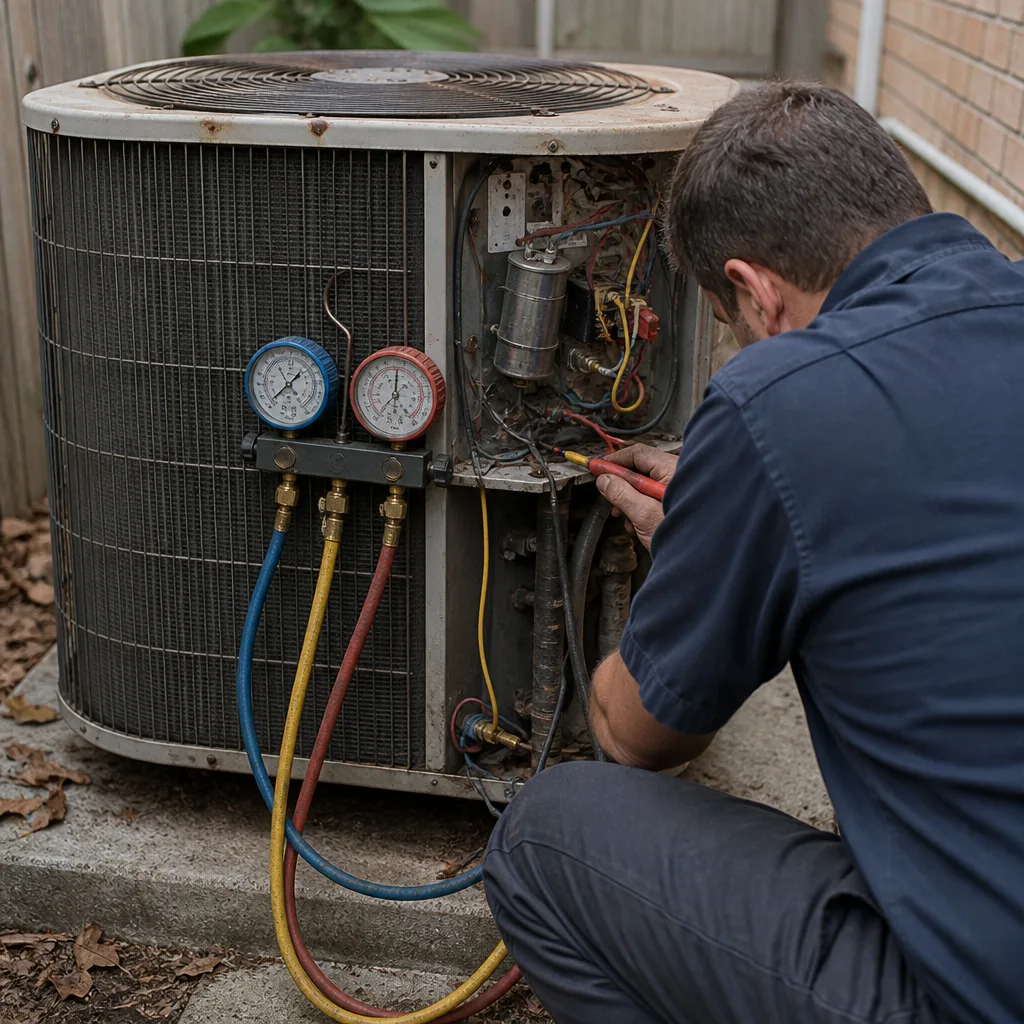
- Visible bulging or leaking from the capacitor body. If you open the condenser panel (with power off at the breaker), a bulging top or oily residue around the capacitor is a clear sign it’s done. The dielectric fluid inside breaks down from heat, and the case actually deforms.
- AC runs but blows warm air. When the fan capacitor portion of a dual-run unit fails but the compressor side still works, the compressor runs without airflow, overheats, and shuts off on thermal protection. The result is a running system that never cools the house.
See the difference
 Before
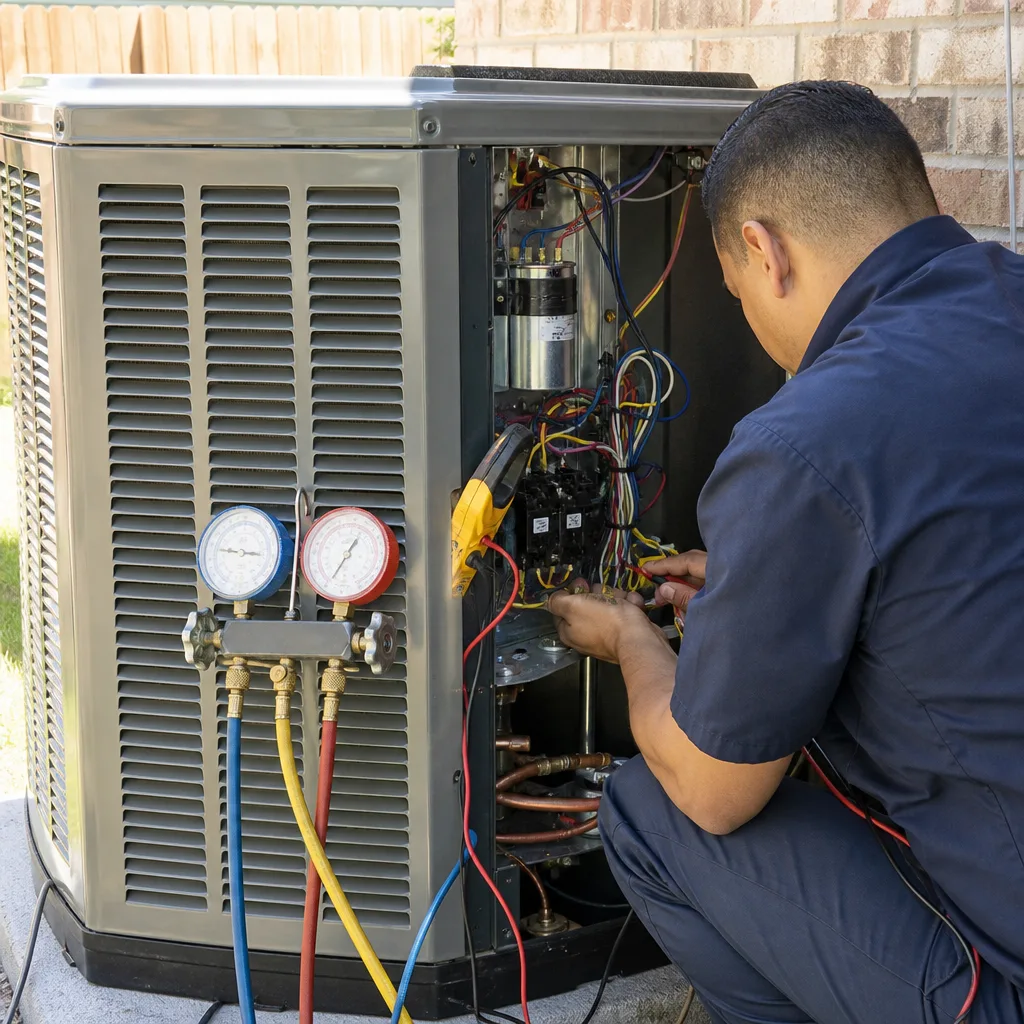 After
After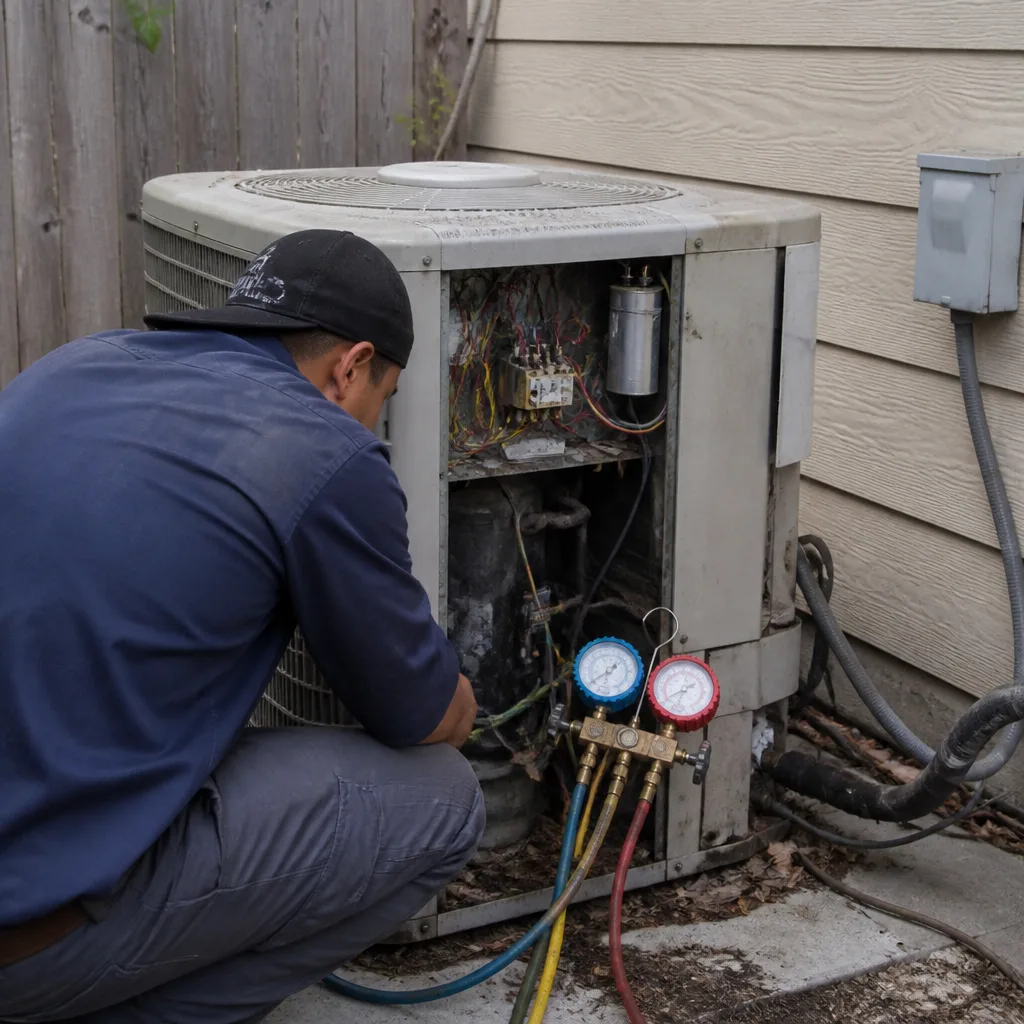 Before
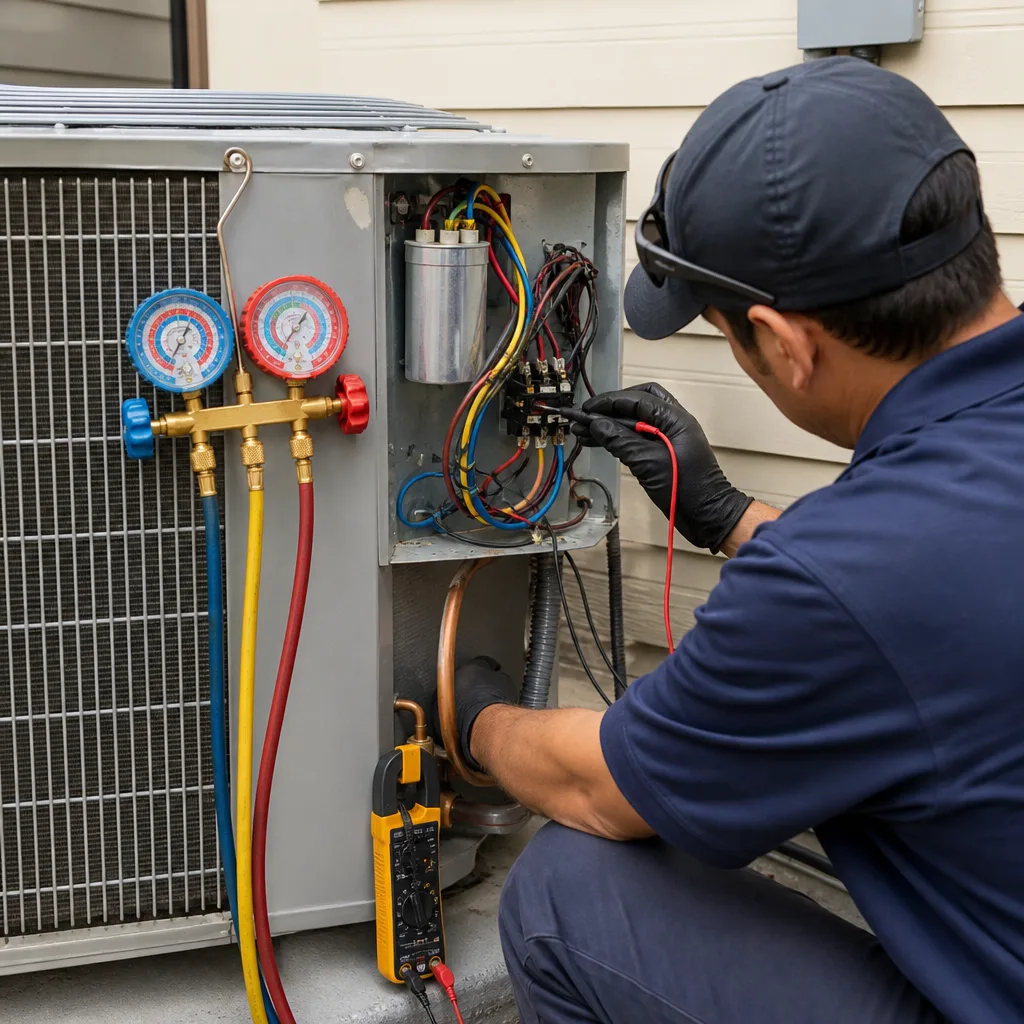 After
After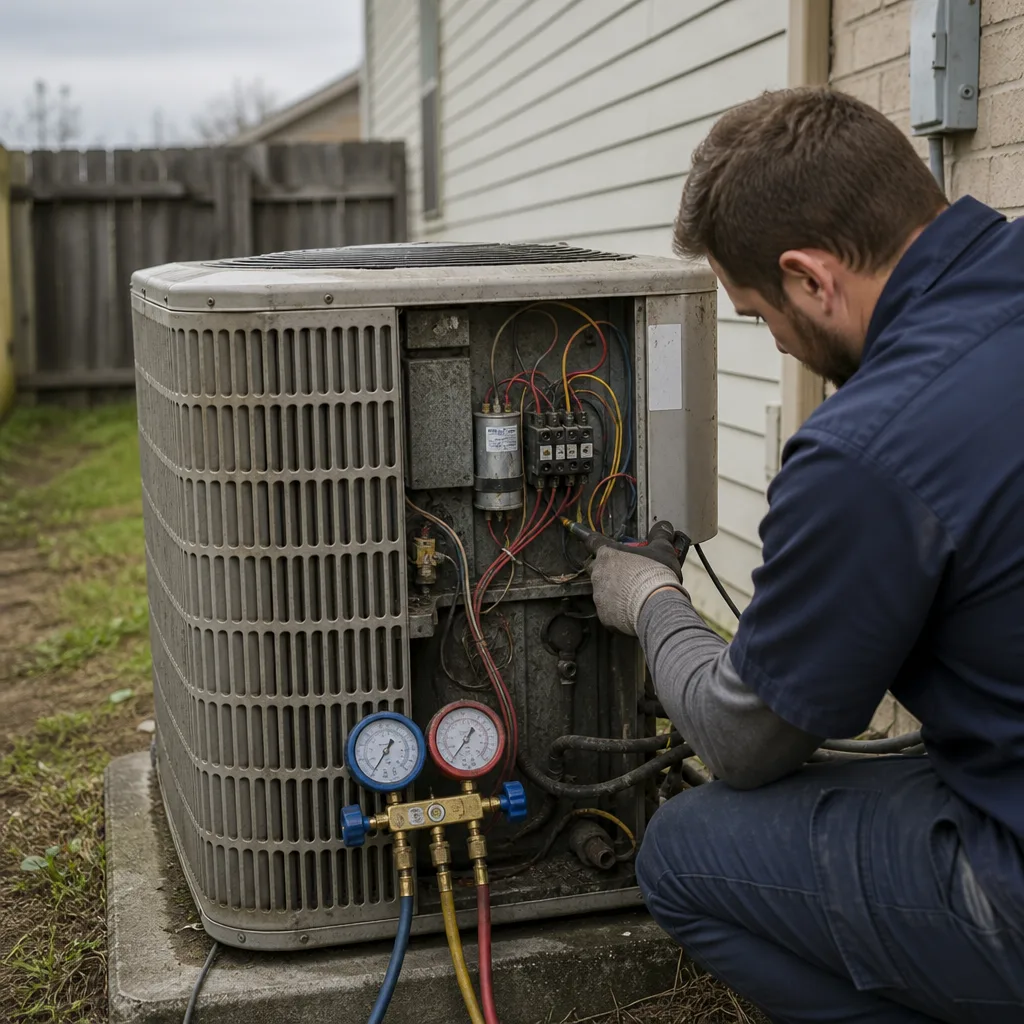 Before
 After
AfterReplacement Cost & What’s Included
In Fort Worth, expect to pay between $180 and $340 for a Goodman capacitor replacement when you hire a licensed HVAC company. The capacitor itself is typically a $35 to $75 part depending on the rating and whether it’s a dual-run or single-run unit. The rest is labor and the service call, which is where most of the cost lives.
What drives the range is access and diagnosis. If we’re already at your house, the power is off at the disconnect, and the condenser panel comes off cleanly, you’re looking at the lower end. If the wiring has heat damage from repeated hard starts, or the capacitor is buried behind other components, the job takes longer and costs more. Every quote from us includes a written price before any work starts, and the replacement is backed by our 365-Day Done Right Promise. If the new capacitor fails within a year or something wasn’t done right, we make it right. No runarounds, no fine print.
DIY or Call Us?
Here’s the honest answer: a capacitor holds an electrical charge even after the power is disconnected, and touching the terminals before it’s discharged can deliver a serious shock. This is not a part to handle casually. We recommend you power the system down at the breaker if the condenser is humming and not starting, then call a professional.
What you can safely do is confirm the symptom: is the fan spinning, is the breaker tripped, is the thermostat calling for cool? Knowing those answers helps us diagnose faster, and it helps you understand what’s happening. Where DIY goes wrong is when someone installs a capacitor with the wrong microfarad rating, wires it backwards, or doesn’t properly discharge the old one before removing it. That turns a simple fix into a compressor failure. If your Goodman is acting up, call (682) 610-2888 and tell us what the system is doing. We’ll tell you exactly what it needs, nothing more.
FAQs
A Goodman capacitor in Fort Worth generally lasts 5 to 10 years, though Texas heat shortens that lifespan because sustained high outdoor temperatures degrade the dielectric fluid inside the component. Capacitors in the DFW metro frequently fail on the earlier end of that range, especially on units with higher runtime hours each cooling season.
No, a capacitor cannot be repaired. Once the dielectric material degrades or the case bulges, the only solution is replacement, and it’s a relatively inexpensive fix compared to the alternative. Ignoring a weak capacitor shortens your compressor’s life substantially.
A Goodman capacitor replacement from diagnosis to completion usually takes 45 minutes to an hour and a half, including the time to safely discharge the old capacitor, remove it, install the new part, and test the system. In most cases we can have the job done the same day you call, because we keep the common Goodman ratings stocked on the truck.
Yes, we keep the most common Goodman dual-run and start capacitor ratings on our trucks, and we’re an independent service provider, not affiliated with Goodman. We also stock parts for Carrier, Trane, and Lennox systems, so a mismatched part is rarely a delay for us.
Written by Luis Serrano, Owner, Meadowsweet Heating and Air Fort Worth at Meadowsweet Heating and Air Fort Worth, serving Fort Worth and nearby areas.