
Last updated October 16, 2026
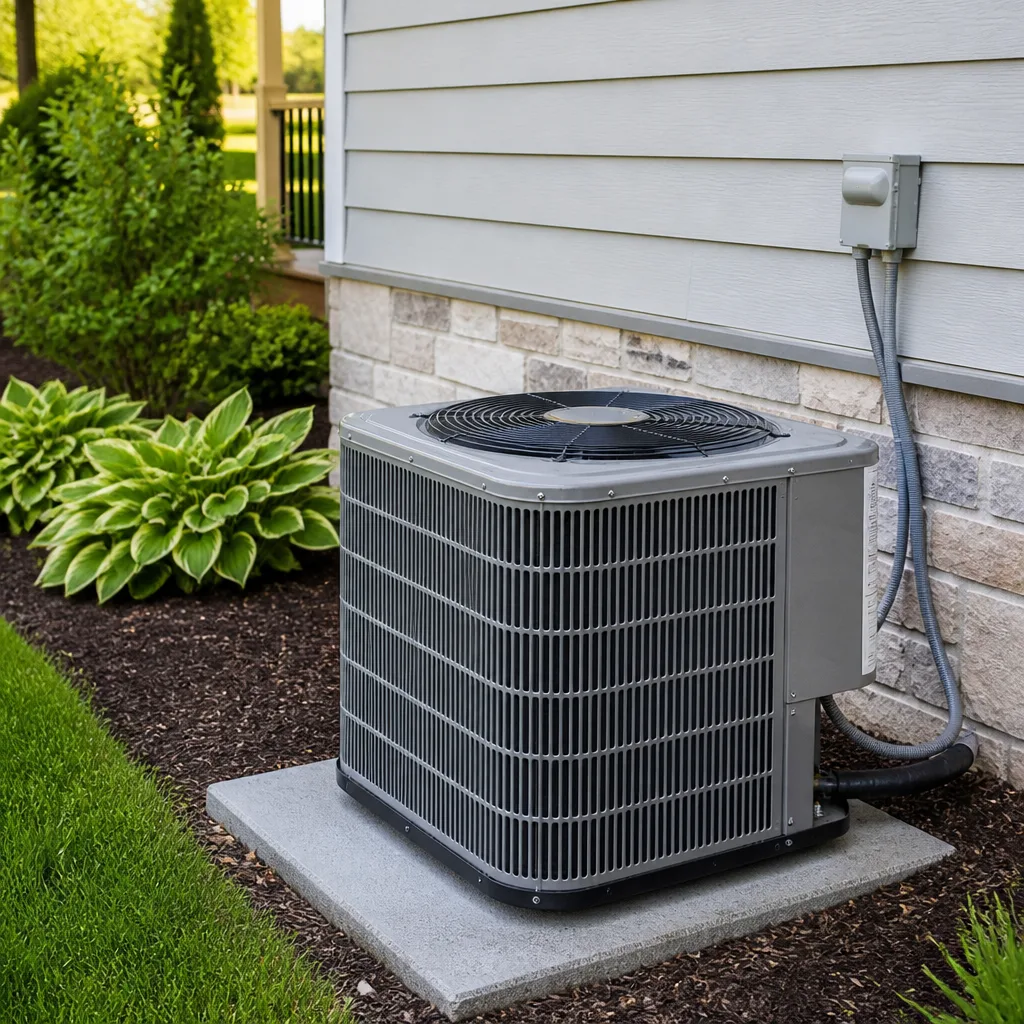 AC repair
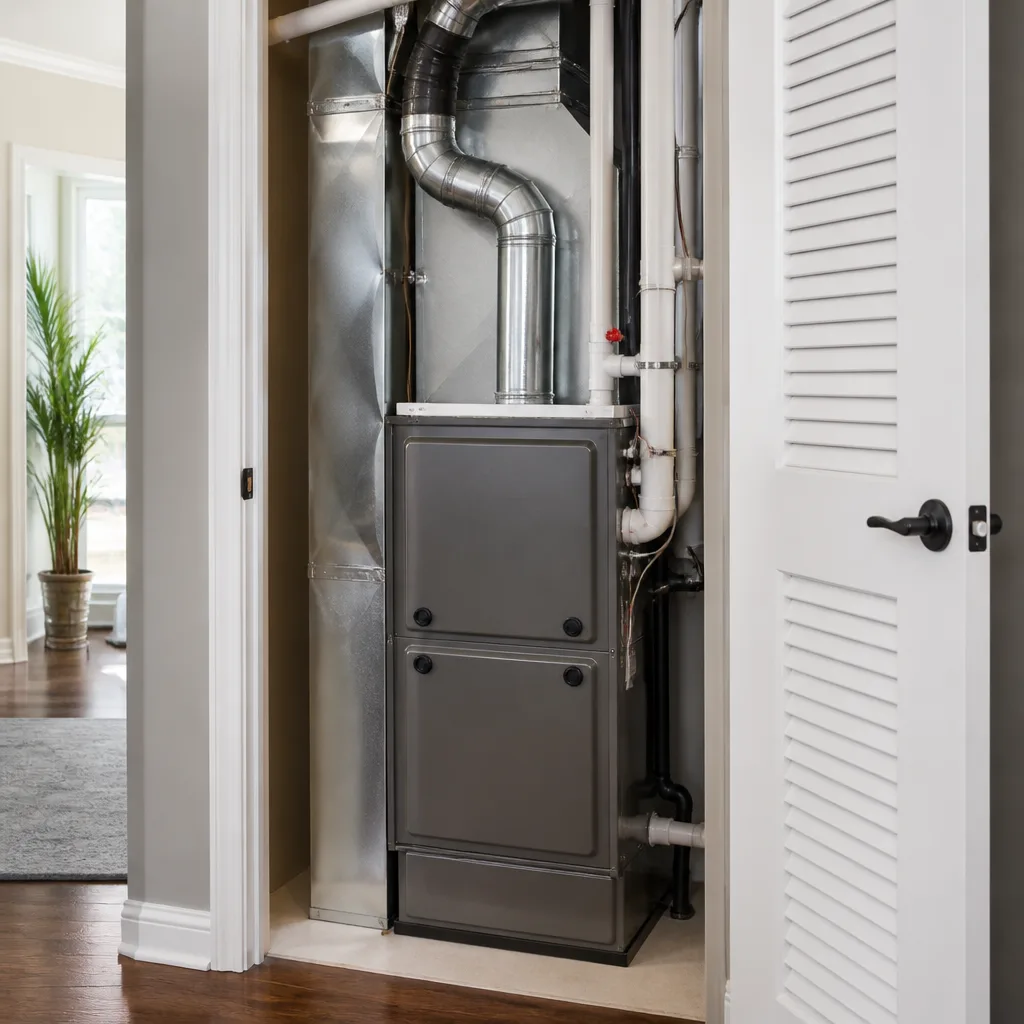 Furnace & heating
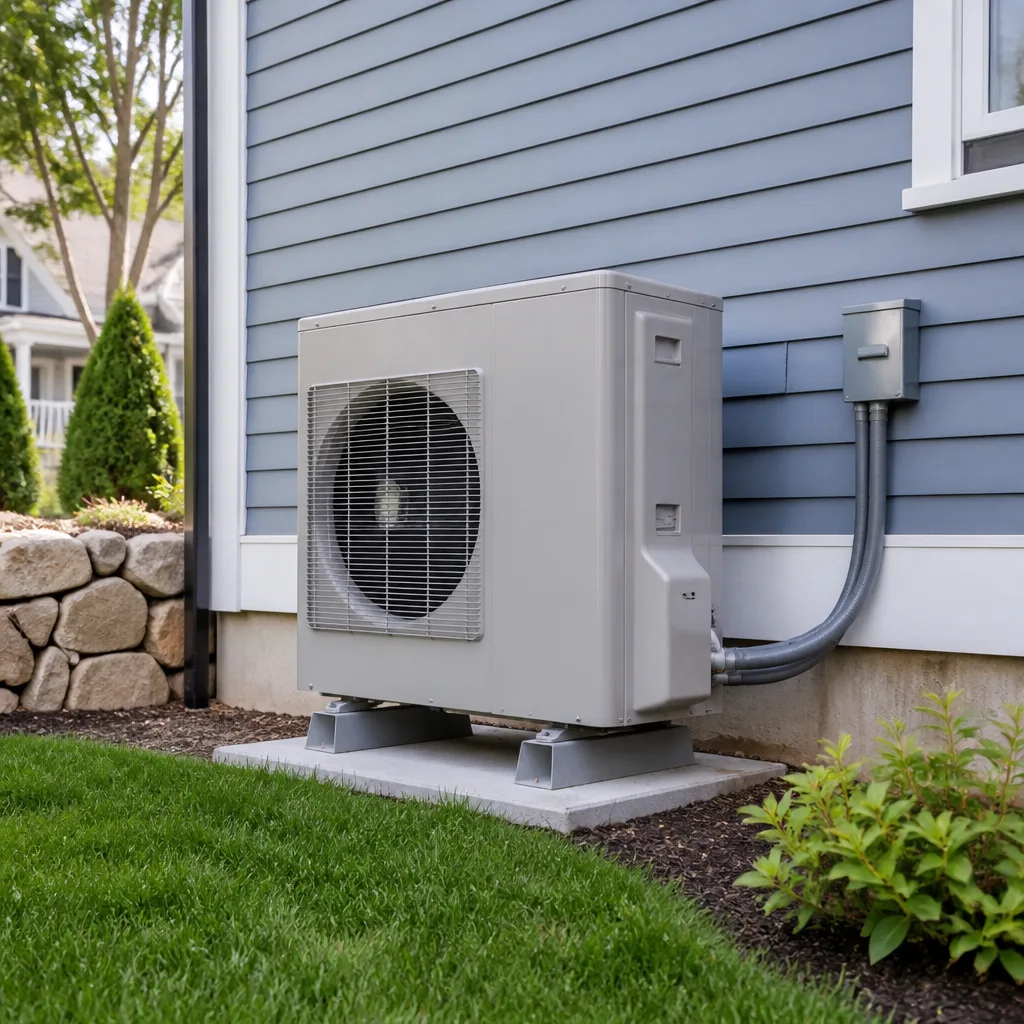 Heat pumps
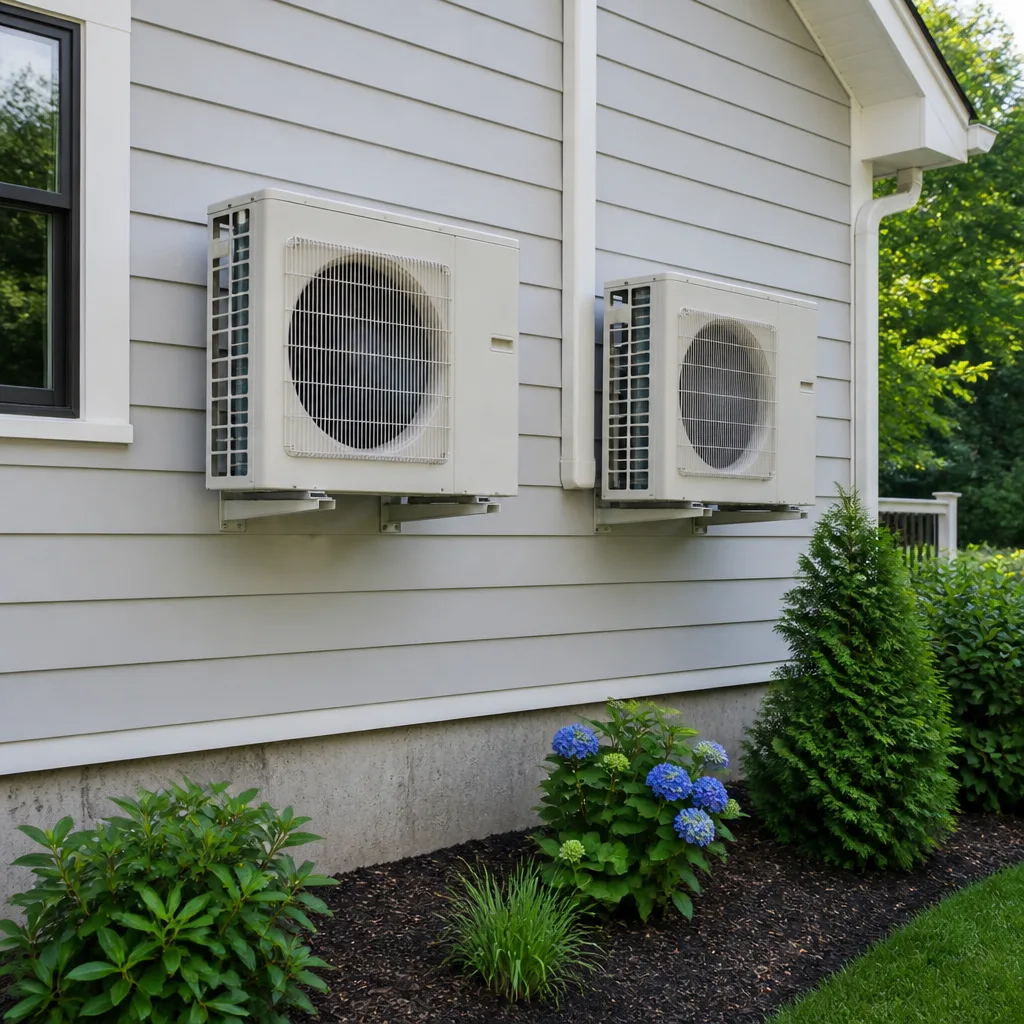 Ductless mini splits
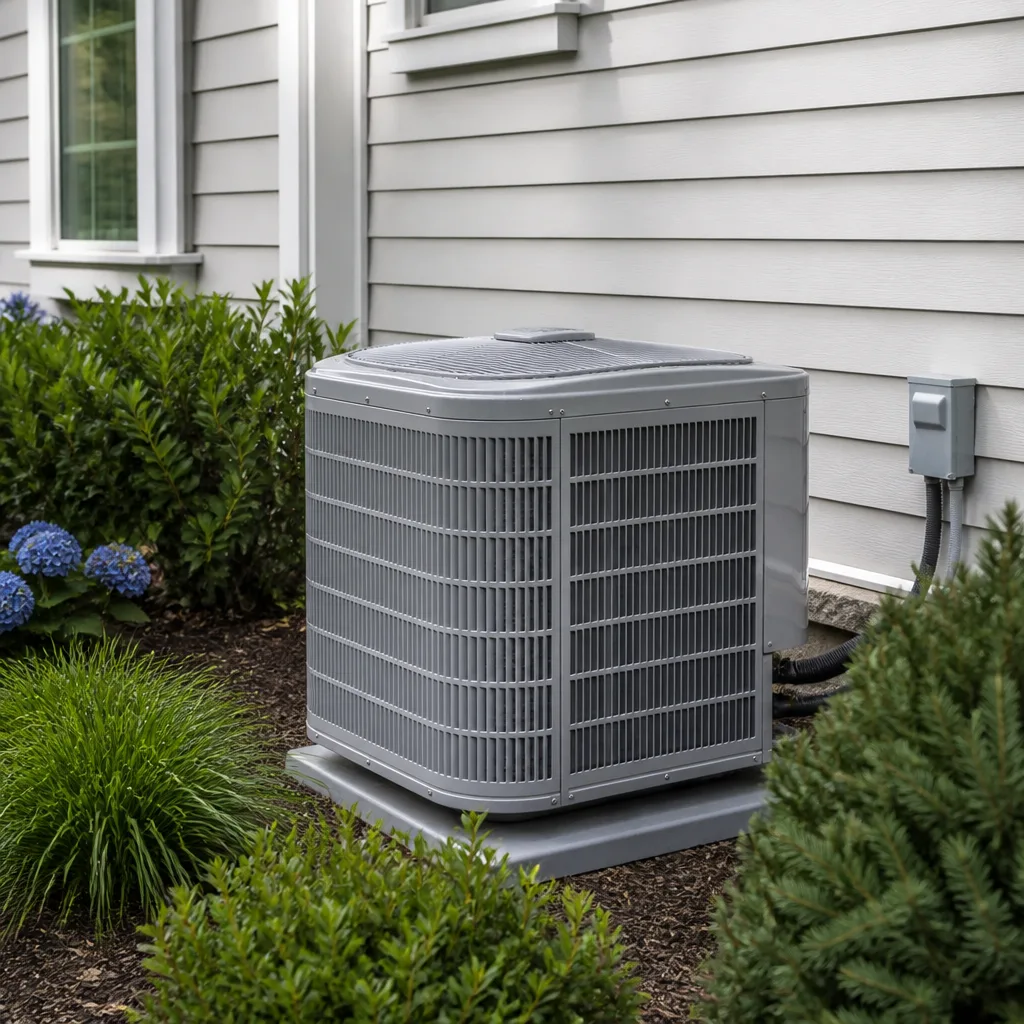 Carrier
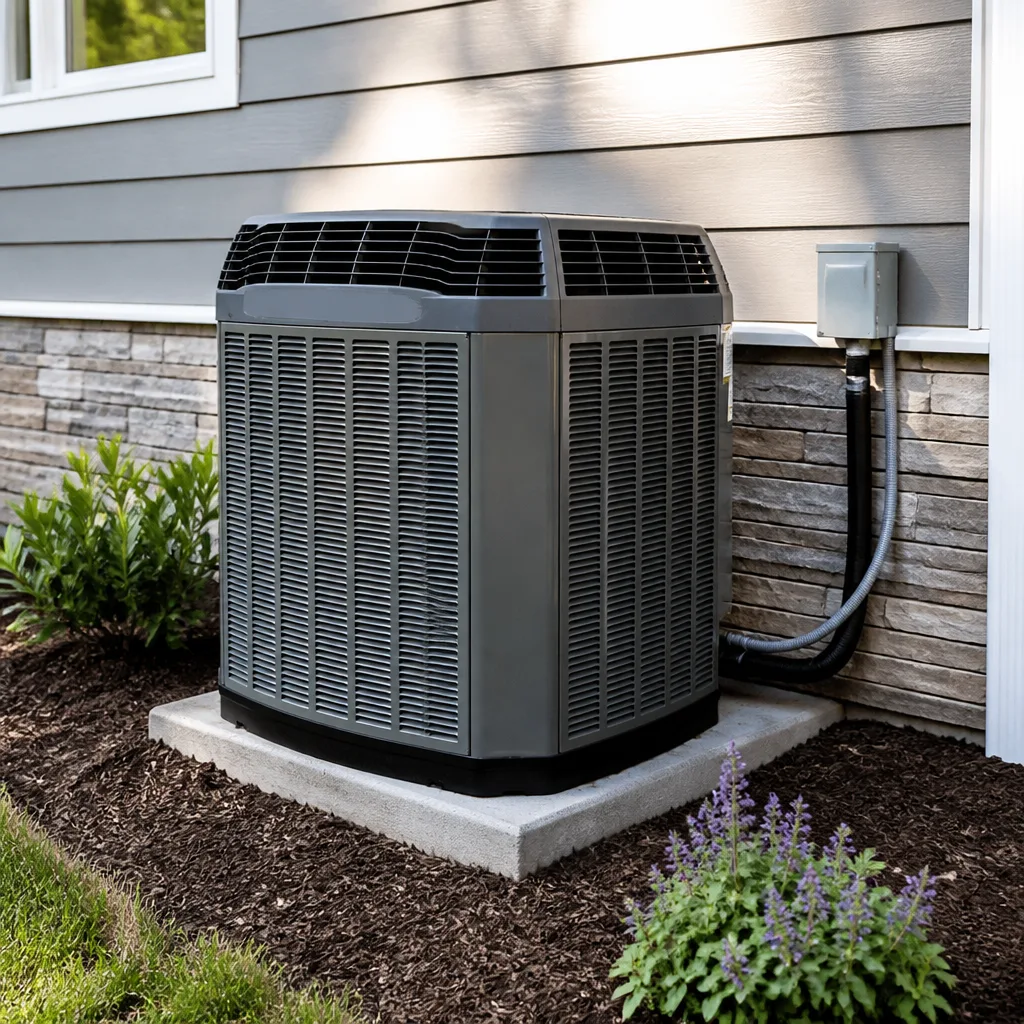 Trane
Trane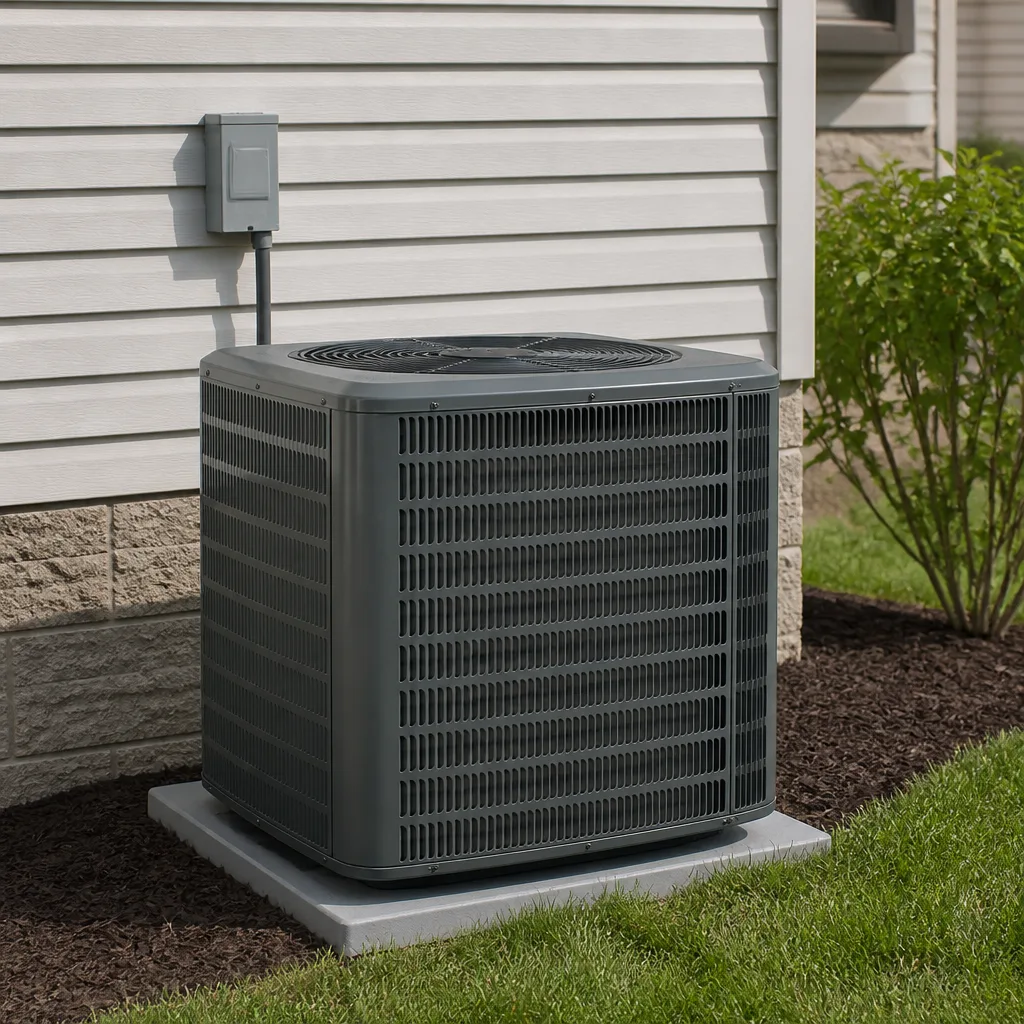 Goodman
Seasonal tune-up and full diagnostic on your Carrier, Trane, or Goodman system - readings shown to you before any repair is proposed
Diagnosis first, numbers second - you approve the repair price before a single part goes in.
Get your free estimateHVAC Cost Breakdown: The Fort Worth Homeowner’s Reference for 2026
We hear the same story from Fort Worth homeowners every summer. Somebody got three quotes for the same size AC system, and the numbers came back wildly apart: $7,900 from one contractor, $11,200 from another, and $13,500 from a third. Same brand, same tonnage, same neighborhood. The lowest HVAC bid you get in Fort Worth is almost never low because the contractor is more efficient. It’s usually low because something is missing from the quote, and finding out what was omitted happens after the crew leaves. This guide names every line item in a 2026 Fort Worth HVAC quote, puts real dollar ranges on each one, and explains exactly what you should ask before signing anything.
Quick Answer
A complete central AC replacement in Fort Worth in 2026 typically costs between $7,500 and $14,500 for a standard 3-ton system, depending on the SEER2 rating, brand, warranty tier, and the condition of your existing ductwork connections. The price difference between the low and high end comes down to what’s actually included in the written scope: refrigerant, new copper lines, a raised equipment pad, a permit, disposal of the old unit, and a real installation warranty. A furnace replacement alone runs $3,800 to $6,800, and a full system swap (AC plus furnace) lands between $10,900 and $18,200 for most Fort Worth single-family homes.
Styles & brands we work with
Table of Contents
- Line-Item Breakdown: What a Fort Worth AC Replacement Actually Costs
- 2026 Price Ranges by Brand for Fort Worth Homeowners
- Financing in Real Dollars: What $7,500 Actually Costs Over Time
- 2026 Oncor Rebates and Utility Dollars for Fort Worth
- Why a Written Price Before Work Starts Protects Your Money
- What Justifies Paying the Higher End of a Quote Range
- Repair or Replace: A Fort Worth 2026 Decision Guide
- Common Mistakes to Avoid
Line-Item Breakdown: What a Fort Worth AC Replacement Actually Costs
Every HVAC quote in Fort Worth, whether it’s three lines or three pages, contains the same underlying components. The difference is which ones the contractor shows you. A quote that says only “3-ton system, installed: $8,900” is hiding its math. When we write a price for a Fort Worth homeowner, we break it down so you can see what you’re paying for and compare quotes line by line. Here’s what the pieces look like in 2026 dollars.
| Line Item | Typical Fort Worth Range (3-ton system) | What It Pays For |
|---|---|---|
| Condensing unit (outdoor) | $2,800 – $5,200 | The compressor, coil, fan, and controls. Higher SEER2 and quieter units cost more. |
| Evaporator coil + air handler or furnace | $1,600 – $3,400 | The indoor half. If you’re replacing the furnace too, this line becomes larger. |
| Labor | $1,800 – $3,200 | One to two days of installation by licensed technicians, plus system startup and testing. |
| Refrigerant | $300 – $700 | R-410A or A2L-compatible refrigerant for 2026 systems. Some new units ship pre-charged; others don’t. |
| New copper refrigerant lines | $250 – $600 | Older R-22 lines are not compatible with new refrigerant. Reusing them is a corner you don’t want cut. |
| Raised equipment pad | $120 – $280 | Keeps the outdoor unit off Fort Worth’s clay-heavy soil and above pooled water after storms. |
| City permit and inspection | $150 – $450 | Fort Worth requires a mechanical permit for equipment replacement. A contractor who skips this is saving you money in the wrong place. |
| Haul-away of old equipment | $150 – $350 | Disposal and refrigerant recovery. Older units may contain refrigerant that must be reclaimed by law. |
| Miscellaneous / adjustments | $0 – $900 | This is the line that hides the real differences: duct transitions, vent corrections, electrical updates, thermostat replacement, gas line adjustments. |
That last line is the one to ask about. In Fort Worth, homes built before roughly 2005 often have undersized return ducts or older electrical panels or gas flex connectors that need updating to meet current code. A quote that leaves “miscellaneous” open-ended is a quote that can grow. A quote that names exactly what’s included under that line is the one you can plan around. We serve the whole Fort Worth area, and we bring shoe covers and drop cloths into every home, because a clean floor after an install shouldn’t be a separate charge.
If you’re trying to decide whether to repair what you have instead of replacing it, our AC Repair in Fort Worth guide walks through what can and can’t be economically fixed on older systems.
2026 Price Ranges by Brand for Fort Worth Homeowners
Brand matters less than installers often imply, and more than some discount contractors admit. What you’re really buying at the higher end of any brand’s range is a combination of three things: a higher SEER2 rating, a quieter sound rating, and a longer parts warranty. Here’s what 2026 pricing looks like in Fort Worth for a complete 3-ton split system (outdoor unit, indoor coil, standard installation) across the brands we service.
- Goodman: $7,500 – $9,400. Solid value, shorter factory warranty unless registered. Gets the job done for budget-conscious Fort Worth homeowners.
- Bryant: $8,200 – $11,600. The mid-range sibling of Carrier. Strong reliability, decent sound ratings at the Evolution tier.
- York: $8,000 – $11,200. Competitive mid-range pricing. The Affinity series competes well on sound. Parts availability in North Texas can vary.
- Rheem: $8,400 – $11,800. Good corrosion protection, which matters in Fort Worth with high humidity plus hard water from irrigation systems.
- Daikin: $8,800 – $12,400. Excellent warranty terms (often 12 years on the compressor when registered). Strong heat-pump lineup.
- Lennox: $9,200 – $14,000. Premium pricing. The SilentComfort units are genuinely quiet, which matters if your condenser sits by a bedroom window.
- American Standard: $9,400 – $13,600. Built in Texas, well-suited to Fort Worth heat. The Platinum line carries long warranties and very good sound ratings.
- Trane: $9,500 – $13,800. The American Standard equivalent with a different badge. You pay for the brand name and the dealer network.
- Carrier: $9,700 – $14,500. The top of the range. Infinity-tier units are quiet, efficient, and priced accordingly.
What actually moves your price toward the high end within any brand is not a vague idea of “better quality.” It’s three specific, checkable things.
- SEER2 rating. A 14.3 SEER2 unit is the 2026 federal minimum for most of Texas. Every point above that, up to about 20 SEER2, adds cost because the equipment is more complex. The utility savings are real, but they accrue slowly, so look at your actual usage before paying for a top-tier efficiency unit.
- Sound rating. A unit rated at 55 decibels will be noticeably quieter on a screened porch than one at 70. If the condenser will live near a bedroom window, a patio, or your neighbor’s fence line, the extra $800 to $1,200 for a quieter model is a household decision, not just an HVAC one.
- Warranty tier. Each brand name has a standard 10-year parts warranty when the unit is registered. Some (Daikin, Amana for example) extend 12 years on compressors. Replacement labor is typically not covered by the factory, which is why the installing company’s own workmanship warranty matters as much as the brand’s.
Meadowsweet Heating and Air services Carrier, Trane, Lennox, Goodman, Rheem, York, Daikin, Bryant, and American Standard. We recommend the unit that fits your home’s ductwork, your comfort needs, and your tolerance for sound, not the one with the biggest marketing budget. For full system replacements, see our AC Installation in Fort Worth page for what the install process looks like step by step.
Financing in Real Dollars: What $7,500 Actually Costs Over Time
Most Fort Worth homeowners don’t pay cash for a system replacement. Financing is the default, and the terms you choose change what that system actually costs more than the brand you pick. Here’s the math on a $7,500 system, using typical 2026 HVAC financing offers.
Option 1: 12 Months Same-As-Cash
You pay nothing upfront and owe the full $7,500 over 12 months. That’s a monthly payment of $625. If you pay it off inside the 12-month window, your total cost is exactly $7,500. If you go even one month over, deferred interest kicks in retroactively at roughly 26.99% APR on the entire original balance. That converts a $7,500 system into something closer to $9,600. If you choose this route, set up autopay for $700 a month so you finish with a cushion.
Option 2: 60 Months at 9.9% APR
This is the patient route. At 9.9% APR over 60 months, the payment on $7,500 is about $159 a month. The total cost after five years is $9,540. You pay about $2,040 in interest over the life of the loan. The benefit: the payment is predictable, there’s no balloon, and there’s no deferred-interest trap.
What to Ask Before You Sign Financing Paperwork
- Is this a deferred-interest plan or true simple-interest financing? The difference is thousands of dollars if you’re late.
- Is there an early payoff penalty? Some lenders charge one. Good financing shouldn’t.
- Does the contractor handle the financing paperwork themselves, or do they hand you off to a third-party lender? If it’s the latter, ask for the lender’s name and look them up before committing.
- Is the financing tied to the equipment price, or can the installer inflate the price because you’re financing? Ask for the cash price and the financed price in writing. If they differ, walk.
Financing should be a tool, not a trap. Every quote we write at Meadowsweet includes a cash price and a financed price shown side by side, so there’s nothing hiding in the interest rate. If you’re still deciding whether to repair the system you have before committing to a new one, our Furnace Repair in Fort Worth page covers what’s worth fixing on heating systems.
2026 Oncor Rebates and Utility Dollars for Fort Worth
Fort Worth sits in Oncor’s electric delivery territory, and Oncor’s 2026 residential efficiency program pays homeowners for installing qualifying high-efficiency equipment. The money isn’t automatic. You have to buy the right unit and file the right paperwork. Here’s what to know.
What’s Claimable in 2026
- Central AC replacement (16 SEER2 or higher): $300 to $600, depending on the exact SEER2 rating and whether the indoor coil is replaced at the same time.
- Heat pump replacement (15.2 SEER2 or higher): $400 to $800. Heat pumps qualify higher because they displace electric strip heat in winter.
- Duct sealing: $100 to $250 when performed by a participating contractor. Fort Worth’s older homes leak a genuinely shocking amount of conditioned air into the attic.
- Smart thermostat with demand response enrollment: $75 to $150. This one’s easy money if you’re okay letting Oncor nudge your setpoint a few degrees on peak days.
Paperwork Steps to Actually Get Paid
- Confirm the exact model number qualifies on Oncor’s rebate lookup tool before you buy. “High efficiency” on a sales sheet is not the same as a rebate-approved AHRI reference number.
- Make sure the installing contractor includes the AHRI Certificate of Product Ratings with your paperwork. The rebate application requires it.
- Have the contractor complete and sign the Oncor rebate application at the time of install. Some contractors file it for you. Some hand it to you. Ask which.
- File within Oncor’s stated window (typically 90 days from install). Missing this window forfeits the money.
- Expect payment in 6 to 10 weeks, usually as a check or prepaid card.
Here in Fort Worth, we handle the rebate paperwork as part of every qualifying install. You shouldn’t have to become a rebate expert to get the money your system earned you. Our Meadowsweet Heating and Air Fort Worth home page has more on how we handle the full install and rebate process from start to finish.
Why a Written Price Before Work Starts Protects Your Money
The single most common way an HVAC quote grows in Fort Worth is verbally. The salesperson says a number in the living room, the crew finds “unexpected issues” on install day, and the final invoice lands somewhere far north of the original handshake. A written price, signed before work begins, is the only thing that legally stops this. Here are the three most common expansion points and how to prevent each one.
1. The “Your ductwork needs more work than I thought” line
Your ducts might genuinely need attention. What they shouldn’t be is a blank check. A written scope names exactly which ducts will be modified, sealed, or replaced, and assigns a dollar amount to each. If the crew finds something different on install day, that’s a change order, which you approve in writing before the extra work happens, with a new price attached.
2. The “We didn’t include the permit” surprise
Fort Worth requires mechanical permits for equipment replacement. Some low bidders leave the permit and inspection out of the quote on purpose, then add it back as a “code requirement” the day before the job. A written price should show the permit as a line item on the first page. If it’s not there, ask.
3. The “Your electrical needs an upgrade” addition
Older Fort Worth homes with original electrical panels sometimes need a disconnect box or breaker upgraded for a new system. That’s legitimate. What’s not legitimate is finding out about it after the outdoor unit is already on the pad. A written price includes whatever electrical work is visible and known before the job starts, and specifies what happens if something hidden appears once the panel is opened.
At Meadowsweet Heating and Air, the written price before work starts isn’t an option and it isn’t a courtesy. It’s one of three non-negotiables on every visit, along with shoe covers and drop cloths inside the home, and a photo of the clean-up before the crew leaves. The crew follows our C.A.R.E. values on every job: Clean up like it’s their own home, Ask before moving anything, Respect the family’s time and quiet hours, Explain the price before the work.
What Justifies Paying the Higher End of a Quote Range
Some Fort Worth homeowners pay $13,000 for a system another family bought for $9,000, and they didn’t get ripped off. They bought something specific. Here’s what that $4,000 buys, in order of what we see mattering most in Fort Worth’s climate.
1. A heat pump instead of a straight AC
For roughly $800 to $1,500 more than an equivalent AC-only system, a heat pump heats your home in winter and cools it in summer by reversing the refrigeration cycle. Fort Worth’s mild winters (most nights above freezing) make heat pumps genuinely effective here. If your home currently uses electric strip heat for winter, a heat pump can cut your winter heating bill in half. If you already have gas heat, the math is closer, but the flexibility and rebate dollars still tip toward the heat pump for many homes.
2. Higher SEER2 with a variable-speed compressor
A single-stage unit runs at 100% or 0%. A variable-speed unit ramps up and down to match the heat load. The comfort difference is real, especially in Fort Worth’s long shoulder seasons when you need dehumidification more than raw cooling. Variable-speed units also run quieter and hold indoor temperature steadier. Expect to pay $1,200 to $2,000 more for a variable-speed unit over a single-stage equivalent of the same brand.
3. A media filter cabinet or indoor air quality package
A 4-inch media filter cabinet costs about $250 to $450 more than a standard 1-inch filter rack and does a dramatically better job of keeping Fort Worth’s cedar and ragweed pollen out of the blower wheel and coil. If anyone in the house has allergies or asthma, this is one of the best value-per-dollar upgrades on the sheet.
4. A pre-install home assessment
A contractor who spends 90 minutes before the quote measuring your rooms, checking your ducts, looking at your attic insulation, and calculating a real Manual J load is more likely to get the sizing right than one who looks at your existing unit’s sticker and quotes the same size. In Fort Worth’s 100-plus degree summers, an oversized unit short-cycles, holds humidity poorly, and dies young. The assessment costs you nothing up front and prevents the most expensive HVAC mistake there is.
5. The installing company’s own workmanship guarantee
Every brand offers essentially the same parts warranty once the unit is registered. What differs wildly is what the installing contractor promises about their own labor. If a bad install fails in month 8, the parts are free under factory warranty, but the labor to replace a compressor can run $1,000 or more. A real workmanship guarantee from the installer covers that. At Meadowsweet, the 365-Day Done Right Promise applies to every job we complete. If it’s not done right, we make it right, no runarounds and no fine print. That promise is worth more than a higher SEER rating any month of the year.
Repair or Replace: A Fort Worth 2026 Decision Guide
The most common question we field in Fort Worth isn’t “How much does a new system cost?” It’s “Should I fix what I have, or put that money toward a new one?” Here’s the decision framework that holds up.
Repair makes sense when:
- The system is under 10 years old and the repair is under $800.
- The failed part (fan motor, capacitor, control board) doesn’t have a history of repeated failures on your unit.
- The compressor is healthy and your last two summers were uneventful.
- Your energy bills haven’t been climbing year over year.
Replace makes sense when:
- The compressor has failed. On a 10-plus year old system, a compressor replacement is $1,800 to $2,800, and you’re bolting a new heart into an old body.
- The repair cost multiplied by the system’s age exceeds $5,000. That old rule of thumb still works: a $1,200 repair on a 12-year-old system is a signal.
- Your system uses R-22 refrigerant. Production ended years ago, and a recharge now costs $150 to $300 per pound in Fort Worth. A system that needs 4 pounds is a financial warning sign.
- Your summer energy bills for a 2,000 square foot Fort Worth home have crossed $300 a month. A modern 16 SEER2 unit would likely cut that by 25 to 35 percent.
If the answer is repair, our AC Repair in Fort Worth team can get you running again, usually the same day, with a written price before we touch anything. If the answer is replace, the install process is described fully on our AC Installation in Fort Worth page, including how we protect floors, pets, and sleeping kids during the work.
Common Mistakes to Avoid
- Comparing quotes without a line-item breakdown. $8,900 and $11,400 look like the same job to a spreadsheet but can be wildly different scopes: one includes new copper lines, a permit, and a raised pad; the other doesn’t. Ask every bidder for the same breakdown, and compare apples to apples.
- Reusing your old R-22 copper lines on a new R-410A or A2L system. Some Fort Worth contractors do it to save time. The oils and pressures are different, and flushing old lines is never as clean as starting new. Insist on new line set included in the quote.
- Skipping the city permit to save $200. Fort Worth’s mechanical permit exists so the city inspects the work of the contractor you hired. Skip it, and you forgo the only third-party check on a job you can’t see the details of. Plus, selling your home later will flag it.
- Buying the wrong size system because the contractor sized it off the old unit’s sticker. Your previous unit may have been wrong, your ductwork may have been modified, and your insulation may have changed. A proper load calculation is free with any serious quote, and it’s the only right way to size equipment for Fort Worth summers.
- Choosing a brand first and a contractor second. The same Carrier unit installed by two different crews will perform differently and last differently. Choose the installer, then choose your equipment from what they can confidently service. We work across nine brands so you’re never steered into one.
- Not asking about the “miscellaneous” line. That’s the open box where verbal estimates expand. Insist everything is named. If it’s not on the written price, it’s not part of the deal.
- Financing without reading the fine print on deferred interest. The 12-months-same-as-cash offer has undone more Fort Worth budgets than any heat wave. If you take it, know your payoff date and set your autopay above the minimum.
See the difference
 Before
 After
After Before
 After
After Before
 After
AfterWhen to Call a Professional
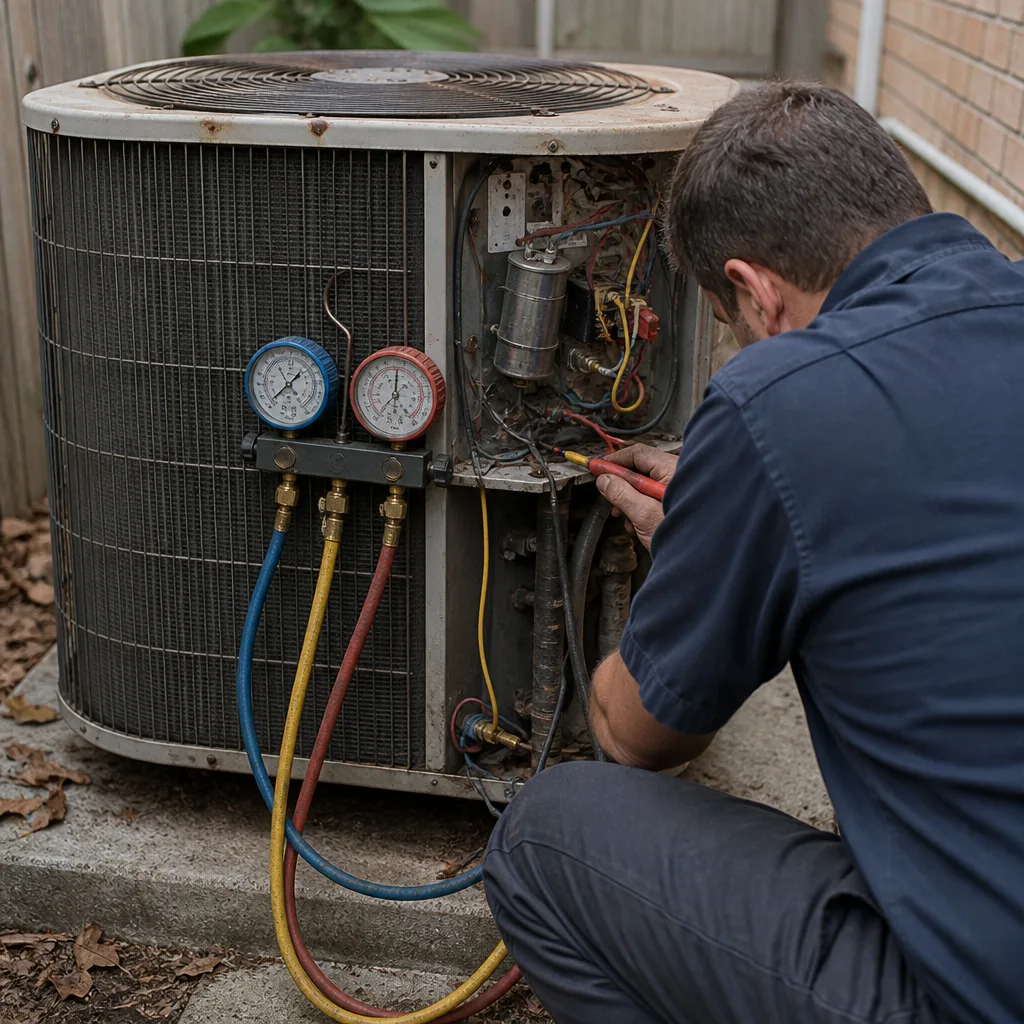
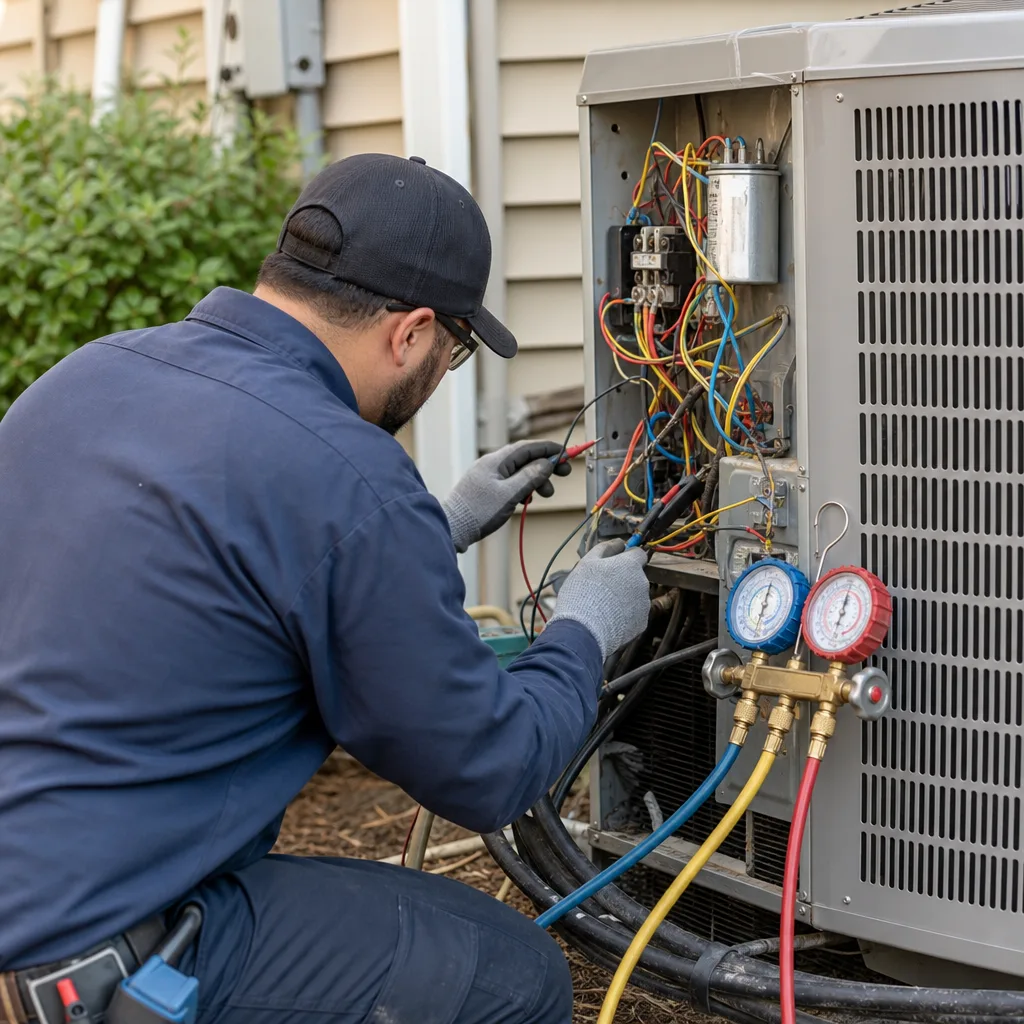
There’s a version of every HVAC problem that a homeowner can handle: changing a filter, checking a breakers, clearing a drain line with a shop vac. And there’s a version that requires a licensed technician: anything involving refrigerant, anything inside the electrical panel, anything touching the gas line on your furnace, and any diagnosis you’re not certain about. In Fort Worth’s August heat, a system failure inside a closed house is a health event, not just a comfort problem, especially with kids, elderly family members, or pets inside. If your system is down, if your compressor is making a sound you’ve never heard before, or if your furnace is short-cycling through a winter night, call a professional before you experiment. A good rule: if the fix involves a manifold gauge set, a multimeter on live voltage, or a gas fitting, it’s a call, not a project.
Meadowsweet Heating and Air Fort Worth offers free estimates in Fort Worth. Call (682) 610-2888 and a live person will answer, no voicemail, any hour of the day or night.
Frequently Asked Questions
A complete AC and furnace replacement in Fort Worth in 2026 typically costs between $10,900 and $18,200, depending on brand, SEER2 rating, and whether you choose a heat pump or a standard gas furnace plus AC. That range includes equipment, labor, permit, refrigerant, and haul-away. Call (682) 610-2888 for an exact quote on your home, which is free.
The price gap is almost always in what’s excluded, not what’s different. A quote that includes new copper lines, a permit, disposal, a raised pad, and a real labor warranty will land 30 to 40 percent higher than a quote that omits those line items and adds them back later as change orders. Ask for the same line-item breakdown from every bidder and compare scopes, not bottom lines.
For most Fort Worth homes, yes. Our winters are mild enough that a heat pump handles the heating load efficiently for most of the season, and you’ll get higher utility rebates for installing one. The premium over a comparable AC-only system is usually under $1,500, and if you currently have electric strip heat, the monthly winter savings can recover that in two to three years.
The 365-Day Done Right Promise is the guarantee Meadowsweet Heating and Air applies to every job: if it isn’t done right, we make it right, no runarounds and no fine print. It covers our workmanship for a full year, on top of any factory parts warranty on the equipment itself.
Yes. The City of Fort Worth requires a mechanical permit for equipment replacement, and the work must be inspected afterward. A contractor who quotes without one is either forgetting or planning to add it back later. The permit and inspection are a standard line item in every Meadowsweet quote.
Typical installs run one to two days, and we schedule them at a set date and time, not a “sometime Tuesday” window. We bring shoe covers and drop cloths into your home, follow our C.A.R.E. values around your family’s routines, and send a photo of the clean-up before the crew leaves. Call (682) 610-2888 and we’ll give you written pricing before any work starts.
The Bottom Line
HVAC pricing in Fort Worth varies by as much as 40 percent between contractors for identical equipment, and the gap lives almost entirely in what’s written down versus what’s assumed. The fix is boring but effective: get line-item pricing from everyone, insist on new copper lines and a city permit, verify the SEER2 rating and the warranty tier, and know your financing terms before you sign. A heat pump with a 16-plus SEER2 rating, installed with a proper load calculation and an actual workmanship guarantee, is the sweet spot for most Fort Worth homes in 2026. The brand matters less than the installer’s standards. Choose someone who writes the price down first.
If you’d like a free estimate for your Fort Worth home, call Meadowsweet Heating and Air at (682) 610-2888. A live person answers, 24 hours a day, 7 days a week.
Written by Luis Serrano, Owner at Meadowsweet Heating and Air Fort Worth, serving Fort Worth since 2004.