
 Furnace & heating
 AC repair
 Heat pumps
 Ductless mini splits
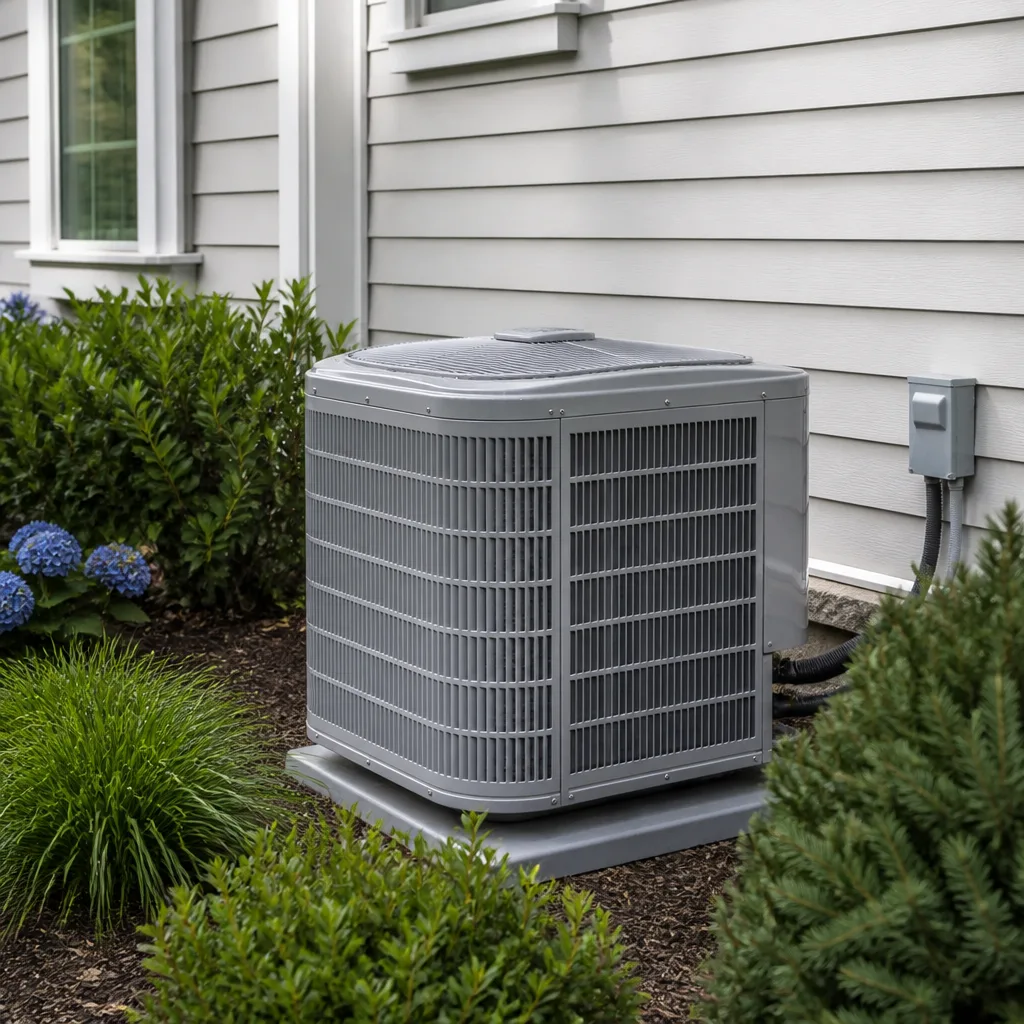 Carrier
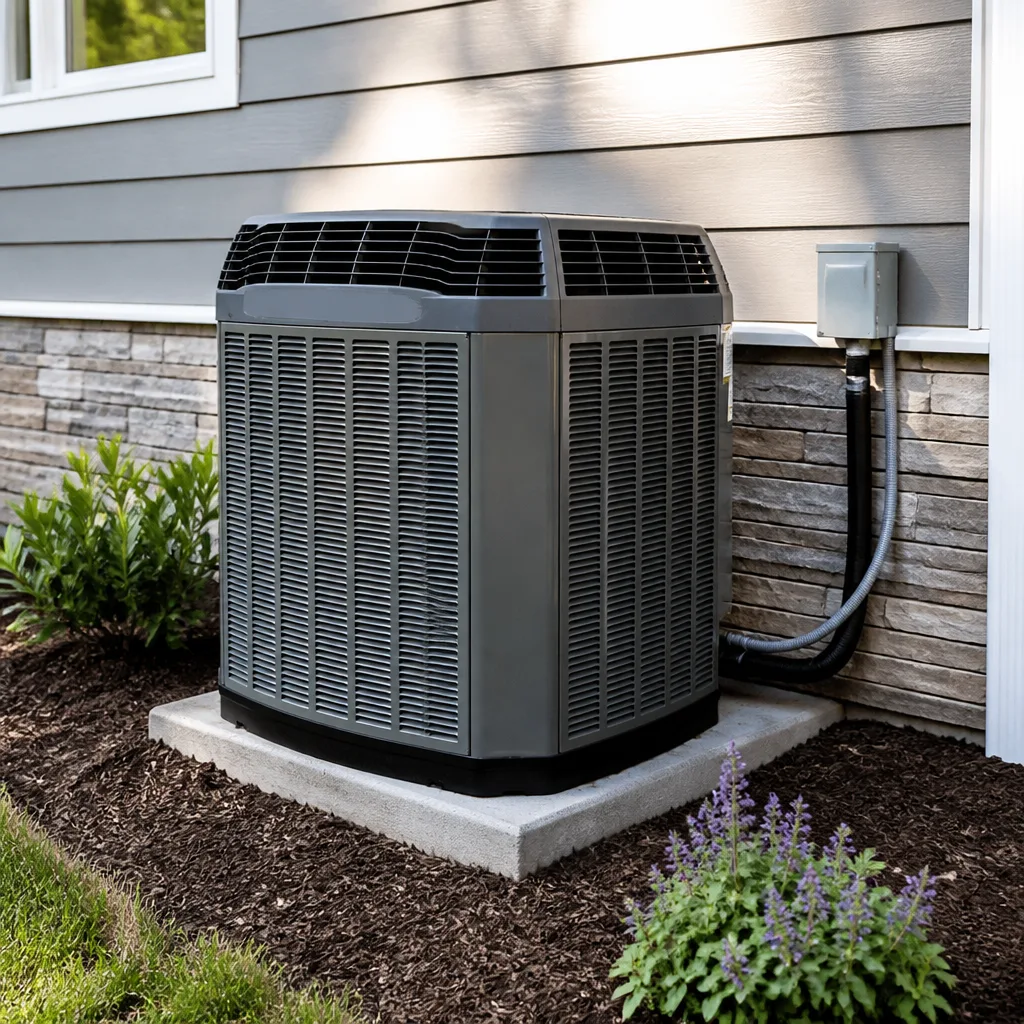 Trane
Trane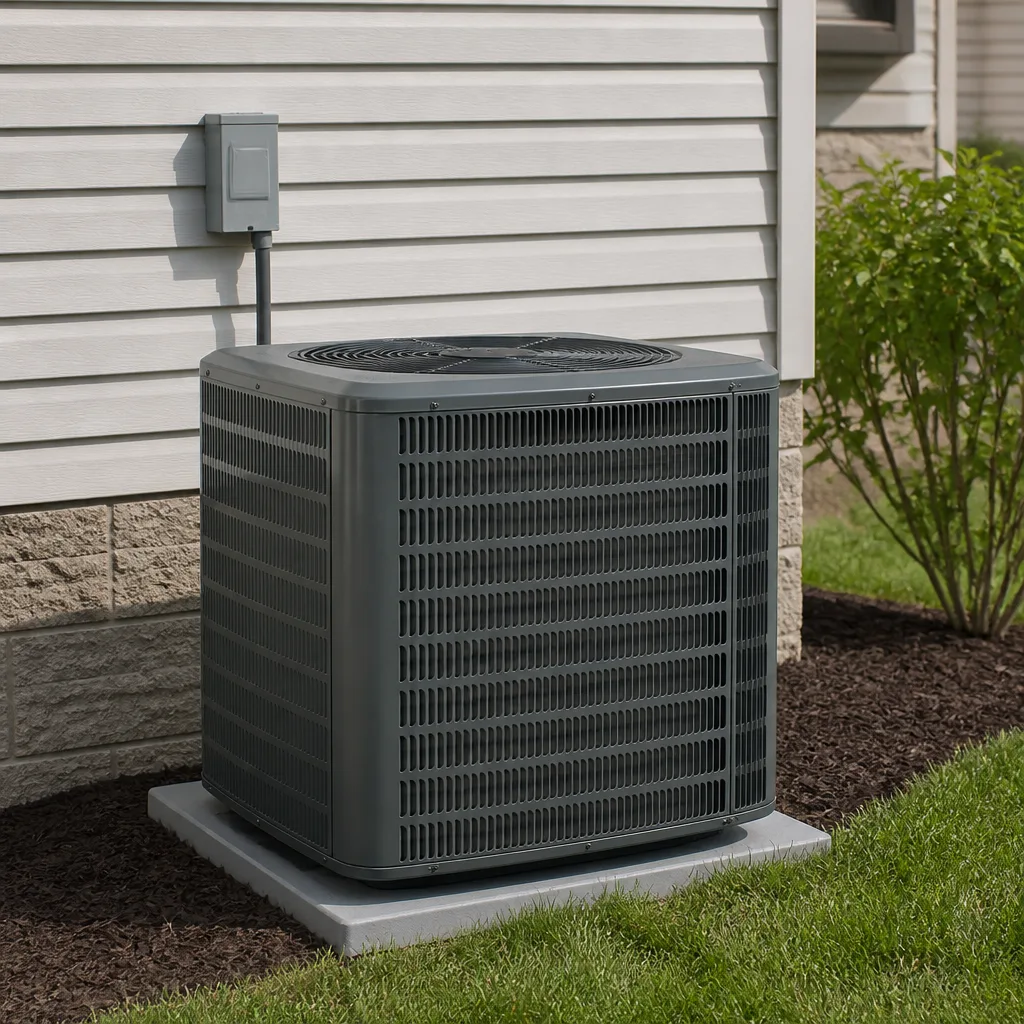 Goodman
Seasonal tune-up and full diagnostic on your Carrier, Trane, or Goodman system - readings shown to you before any repair is proposed
Diagnosis first, numbers second - you approve the repair price before a single part goes in.
Get your free estimateAmerican Standard Capacitor Replacement: The Fort Worth Owner’s Guide
We stock American Standard-compatible capacitors on our trucks and replace them same-day in most Fort Worth neighborhoods, with installed pricing typically running $150 – $325 depending on the capacitor’s rating and your condenser model. The most common way owners discover a failed capacitor is when the outdoor unit hums but the fan won’t spin, or the compressor clicks and shuts off within seconds. Another tell: the system runs, but the air coming from the vents is warm because the compressor never actually started.
In Fort Worth’s heat, a capacitor that’s on its way out rarely gives you weeks of warning. It tends to fail on the hottest afternoon in July, when the system has been cycling hard for days. And when it does, the fix is usually quick and the part itself is inexpensive. What matters is matching the right microfarad (µF) rating to your specific American Standard model, because a close-but-not-exact capacitor can damage the compressor it’s supposed to protect.
Key Takeaways
- Installed capacitor replacement in Fort Worth typically runs $150 – $325, including the part and labor.
- American Standard units often use dual-run capacitors (one can, two ratings) rather than separate capacitors for the fan and compressor.
- We keep the most common American Standard ratings (35/5, 40/5, 45/5 µF, among others) stocked on the truck.
- Capacitors in Fort Worth’s climate rarely last their theoretical 20-year rating. Real-world lifespan here is closer to 5 – 12 years.
- The swap itself takes under an hour in most cases. It’s one of the fastest AC repairs we do.
Which American Standard Models This Applies To
American Standard air conditioners and heat pumps across the Silver, Gold, and Platinum series lines, as well as the older Allegiance and Heritage model families, all rely on run capacitors to start and sustain the compressor and condenser fan motors. The key thing to understand is that American Standard predominantly uses dual-run capacitors on residential systems. That means a single cylindrical component carries two separate ratings printed on its label: one for the compressor (typically 30 – 60 µF) and one for the fan (typically 5 – 10 µF). If you see a label reading “45/5 µF 370V” or “440V,” that’s a dual-run capacitor.
Here’s the compatibility gotcha we see regularly in Fort Worth: many homeowners or handymen replace a 440V capacitor with a 370V unit because it’s cheaper and “close enough.” It’s not. The voltage rating needs to be equal to or higher than the original. A 440V capacitor can replace a 370V, but never the other way around, especially on hot Texas afternoons when voltage sag from the grid is common and the capacitor is already working at its limit.
As for OEM versus aftermarket: American Standard-branded capacitors (which are typically manufactured by suppliers like GE, Titan, or Packard under American Standard’s label) are fine parts, but they carry a premium price for the sticker. Quality aftermarket equivalents from AmRad, Titan HD, or Packard meet or exceed the original specifications and cost less. The honest difference is the label, not the performance. We install both and we’ll show you the failed part and the new one before we put anything in.
A note for clarity: Meadowsweet Heating and Air Fort Worth is an independent HVAC service provider. We’re not affiliated with American Standard, though we service and stock parts for their equipment every day, along with Carrier, Trane, and Lennox.
Styles & brands we work with
Signs Your American Standard Capacitor Replacement Is Failing
- Outdoor unit hums but the fan won’t turn. The capacitor can’t deliver the starting jolt the fan motor needs, so the motor sits there drawing current and making a low buzz. In Fort Worth’s summer heat, this is the #1 service call we run between June and September.
- Compressor clicks on, then immediately shuts off. This is the compressor’s thermal overload protecting itself because the capacitor isn’t providing enough starting torque. If you hear that click-click-click pattern, stop running the system and call us. Repeated attempts can damage the compressor.
- System runs but blows warm air. The indoor blower is doing its job, but the outdoor compressor never actually started. A capacitor that’s weak but not fully dead can cause this intermittent behavior, especially during peak afternoon heat load.
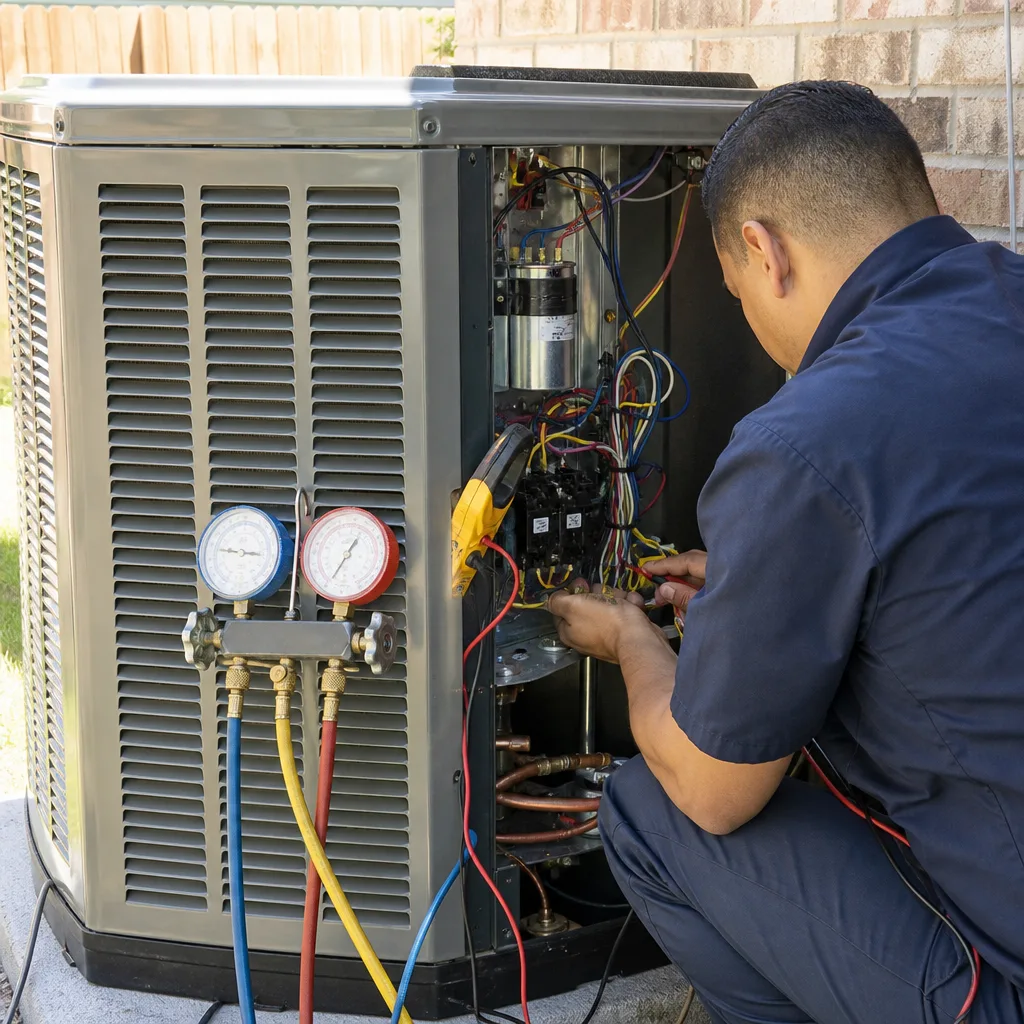
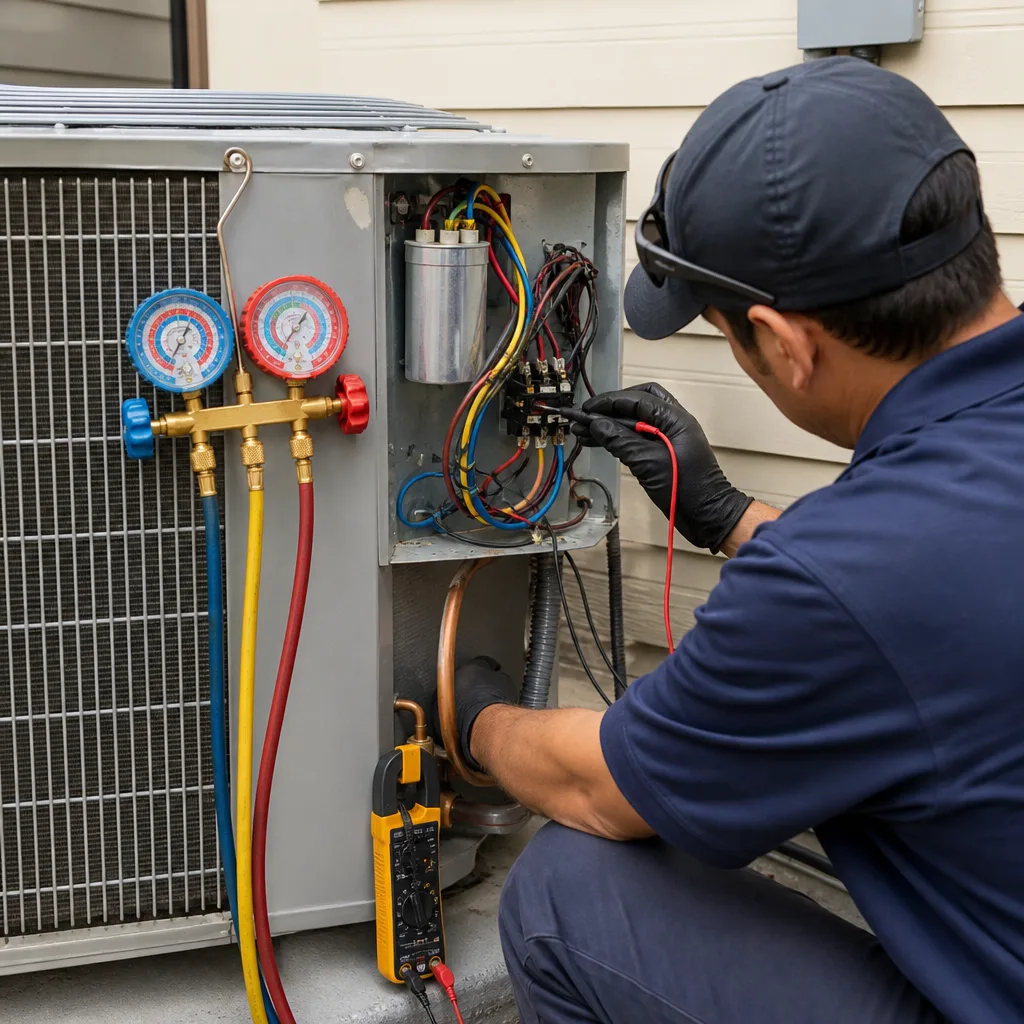
- Visible bulging, leaking, or rust on the capacitor itself. If you’re comfortable opening the outdoor unit’s electrical panel (power off at the breaker, please), a capacitor that’s swollen like a soda can left in a hot car, or one leaking dielectric fluid, has already failed. It needs replacement, not diagnosis.
- The condenser fan spins slowly or needs a manual push to start. That’s the fan-side portion of the dual capacitor losing its rating. We see this most often on units that are 8 or more years old and have run hard through multiple Fort Worth summers.
See the difference
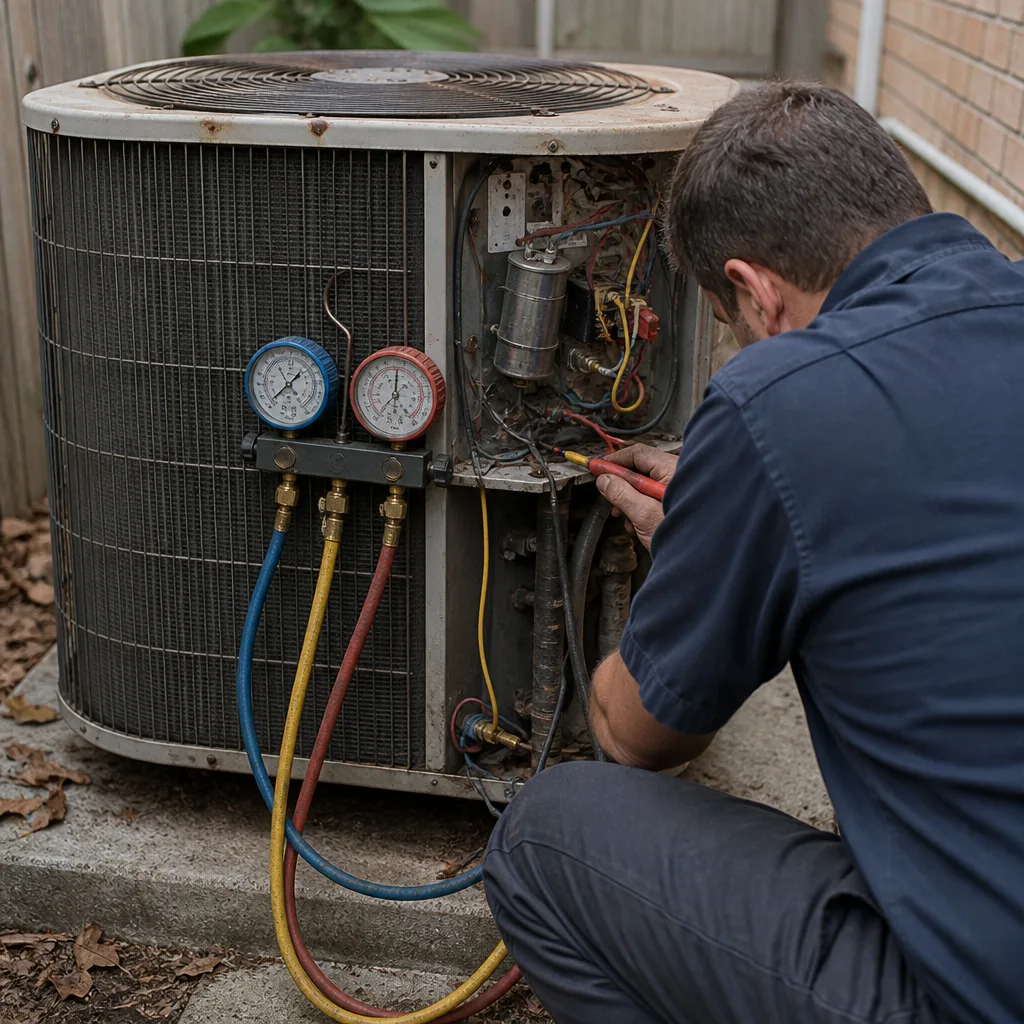 Before
 After
After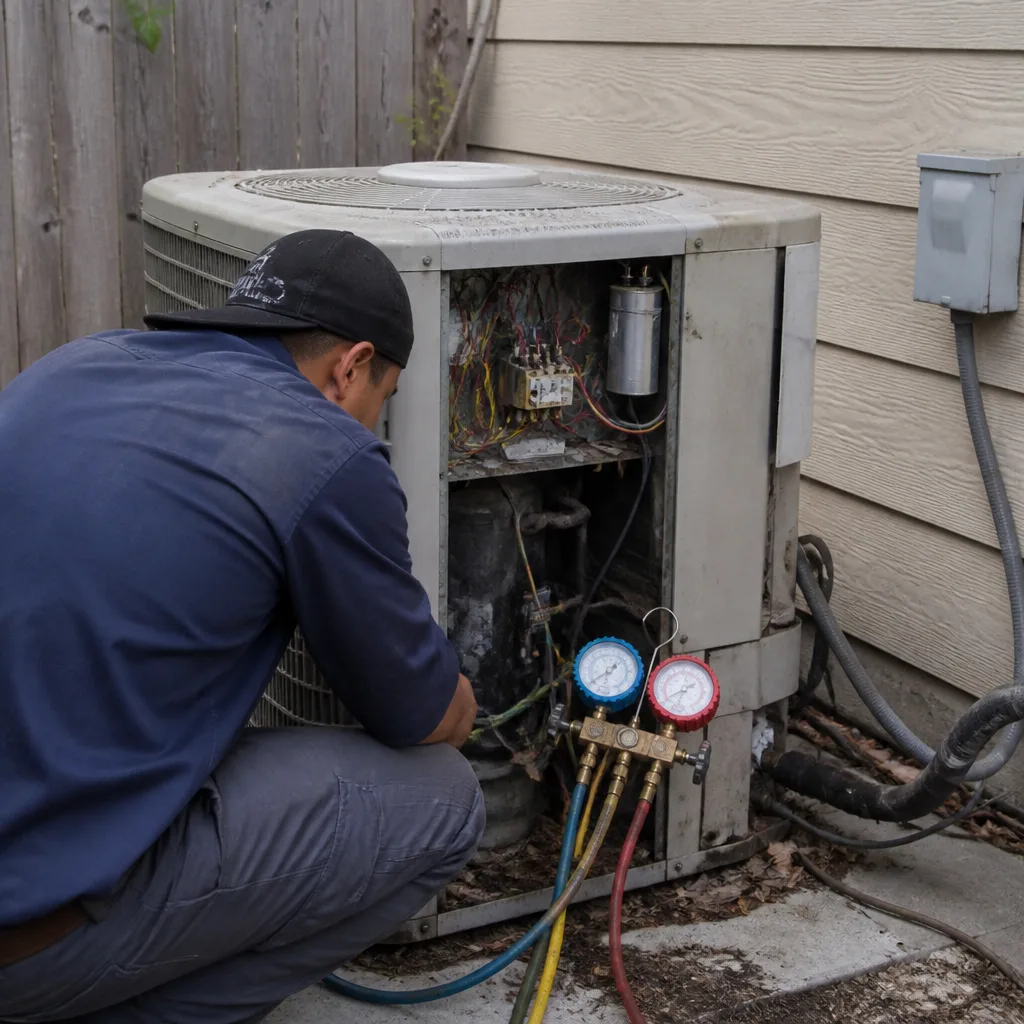 Before
 After
After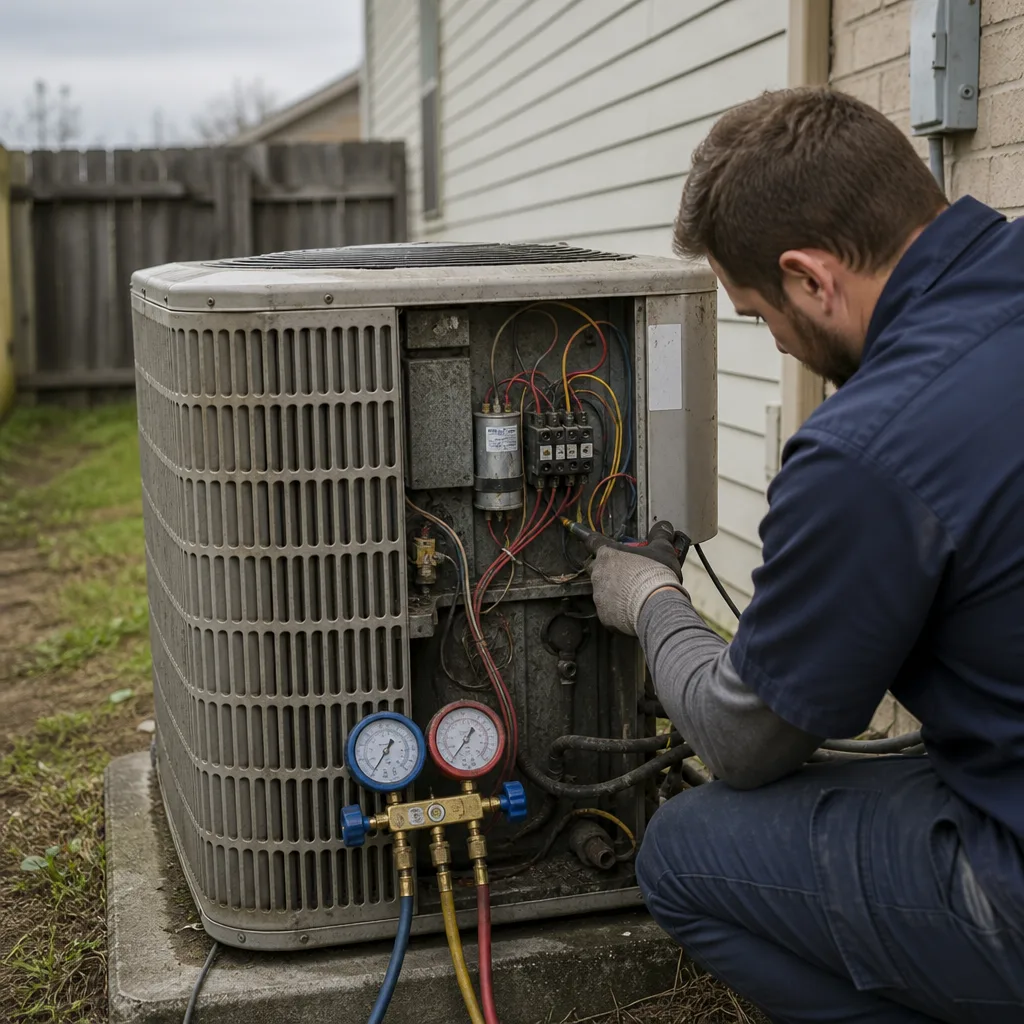 Before
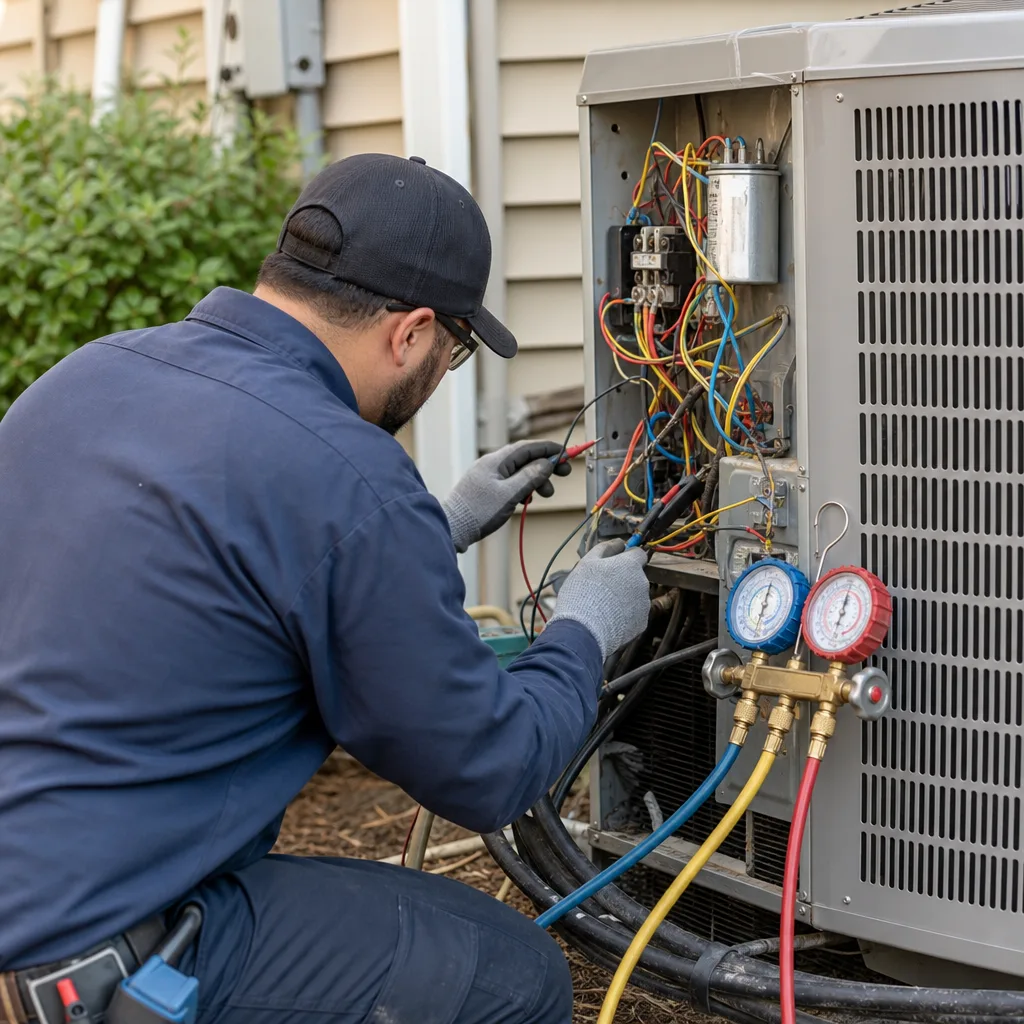 After
AfterReplacement Cost & What’s Included
In Fort Worth, installed capacitor replacement on an American Standard system runs $150 – $325. The range comes down to a few things: the capacitor’s exact rating, whether it’s a dual-run or single-run part, and whether we’re also replacing a hard-start kit or contactor at the same time. Here’s the breakdown, in dollars, so there’s no guessing:
| What you’re paying for | Typical Fort Worth price |
|---|---|
| Standard single-run or dual-run capacitor (part only) | $15 – $65 |
| Labor for capacitor swap (includes testing and verification) | $90 – $175 |
| Most common total installed price | $150 – $325 |
| Optional: hard-start kit addition (extends compressor life, recommended on older systems) | $75 – $150 more |
Every replacement includes a full system check after the part goes in: we test the replacement under load, verify the amp draw on both the fan and compressor, and make sure the system is cooling to spec before we leave. The new capacitor is covered by the manufacturer’s warranty, and our labor on the install is backed by the 365-Day Done Right Promise. If it’s not right, we make it right. No runarounds, no fine print.
As Luis Serrano puts it: “Tell me what the system is doing, and I’ll tell you exactly what it needs – nothing more.” That’s how the quote works too. You’ll get a written price before any work starts, every time.
DIY or Call Us?
A capacitor stores and releases electricity even when the power is off. That’s the honest truth about this part: it’s one of the few AC components that can hurt you even after you’ve killed the breaker at the panel, because a charged capacitor holds voltage until it’s safely discharged. We discharge them with a proper tool before touching the terminals. If you don’t know how to do that safely, don’t open the panel.
What you can safely do is this: flip the breaker off if the unit is buzzing and you’re worried, clear leaves and debris from around the outdoor unit (a choked condenser coil makes every part work harder, including the capacitor), and check that your thermostat is calling for cooling. After that, the smart move is a phone call. We’ll have a capacitor matched to your American Standard’s rating installed in under an hour in most cases. Call (682) 610-2888 and a live person will answer. Always.
FAQs
In Fort Worth’s climate, expect 5 – 12 years from an original capacitor, not the 15 – 20 years a manufacturer’s spec sheet might suggest. Heat is the enemy: sustained 100°F days, a hot attic, and a condenser sitting in direct afternoon sun all shorten the lifespan. Capacitors fail on a bell curve, and the Texas summer pushes that curve left.
No. A capacitor is a sealed component. Once it’s bulging, leaking, or reading out of tolerance on a meter, the only correct repair is replacement. Anything else is a temporary patch that risks the compressor. For an exact quote on your unit, call (682) 610-2888 and we’ll give you a straight number.
The swap itself is usually a 20-to-40-minute job once we’re on site. What adds time, and what you should actually want us to spend time on, is the before-and-after testing: confirming the old capacitor failed, verifying the new one is correct under load, and checking that neither the fan motor nor the compressor was damaged by running without a working capacitor.
Yes. We carry the most common dual-run ratings for American Standard systems (35/5, 40/5, 45/5, 50/5, and 60/5 µF, in 370V and 440V) on our trucks. For unusual ratings or specialty models, we can typically source the part the same day in Fort Worth and have it installed by the end of the business day.
If your American Standard system is humming, clicking, or blowing warm air, call (682) 610-2888 now. You’ll get a live person, a written quote before any work starts, and a technician who’ll leave shoe covers on, drop cloths down, and a photo of the clean-up on your phone before we roll out. That’s the Cedarwell Care Promise, and it’s included on every job we do in Fort Worth.
Written by Luis Serrano, Owner, Meadowsweet Heating and Air Fort Worth at Meadowsweet Heating and Air Fort Worth, serving Fort Worth and nearby areas.