
 Furnace & heating
 AC repair
 Heat pumps
 Ductless mini splits
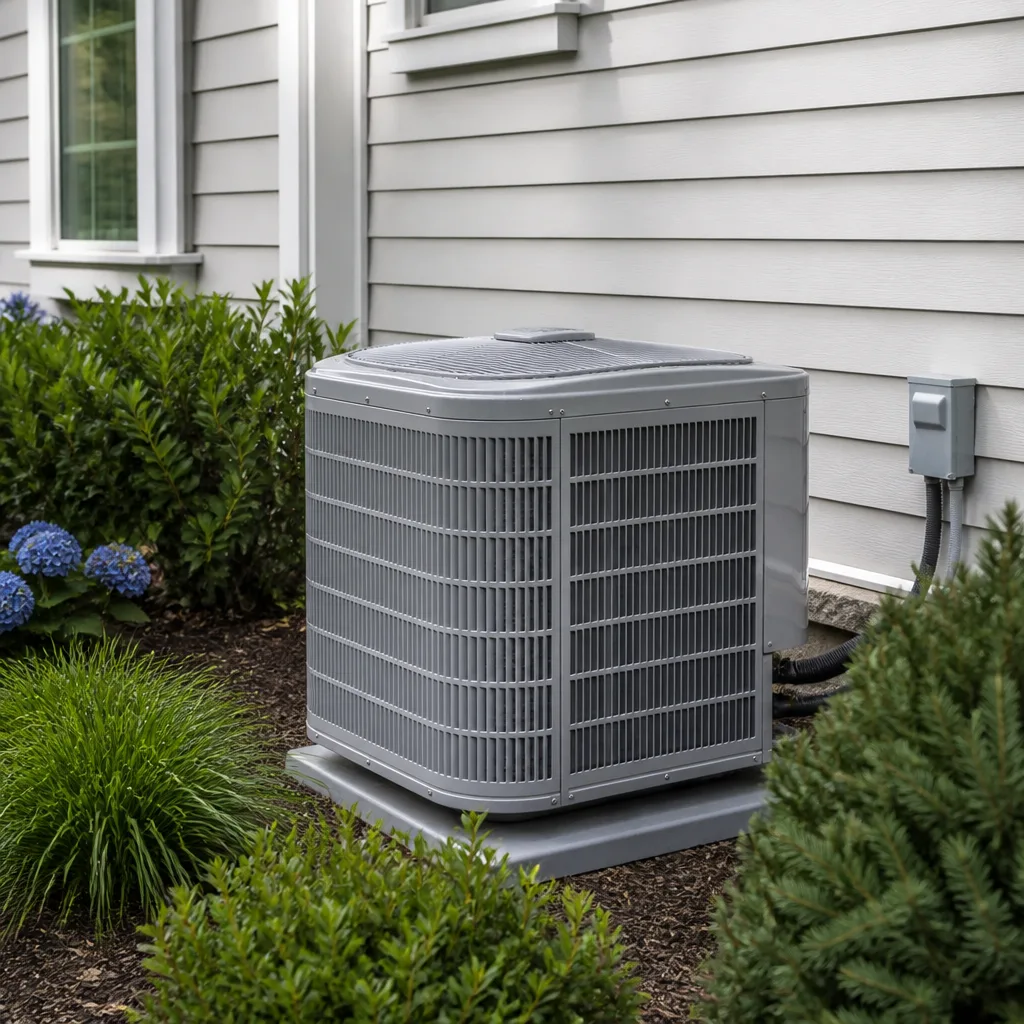 Carrier
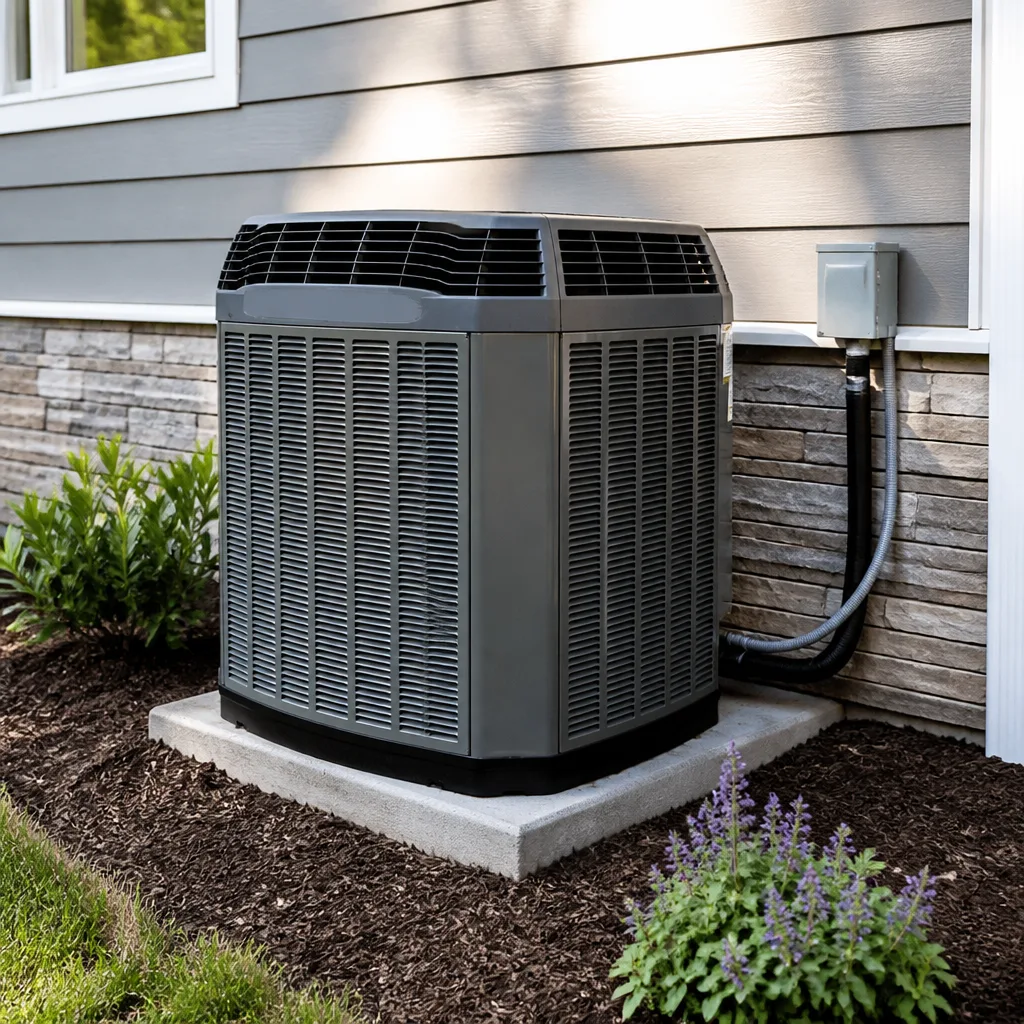 Trane
Trane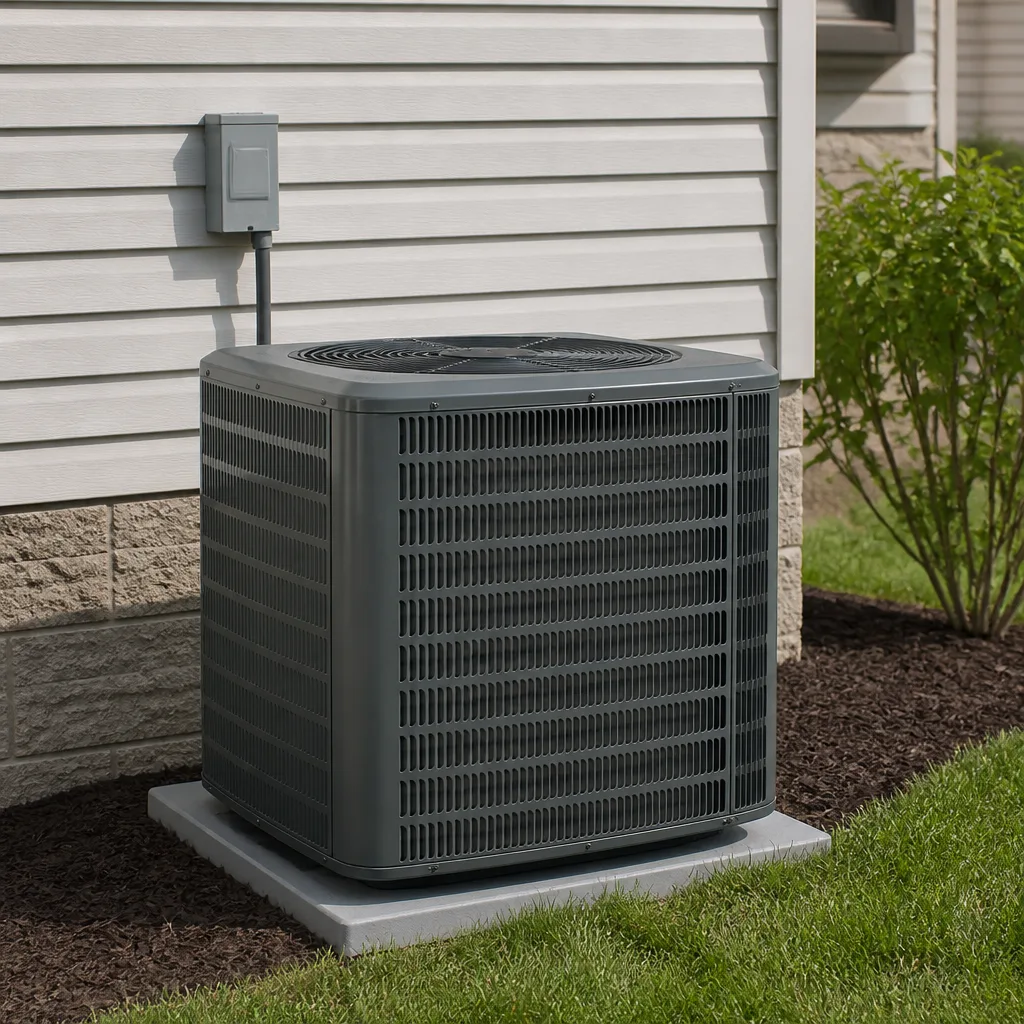 Goodman
Seasonal tune-up and full diagnostic on your Carrier, Trane, or Goodman system - readings shown to you before any repair is proposed
Diagnosis first, numbers second - you approve the repair price before a single part goes in.
Get your free estimateDaikin Capacitor Replacement: The Fort Worth Owner’s Guide
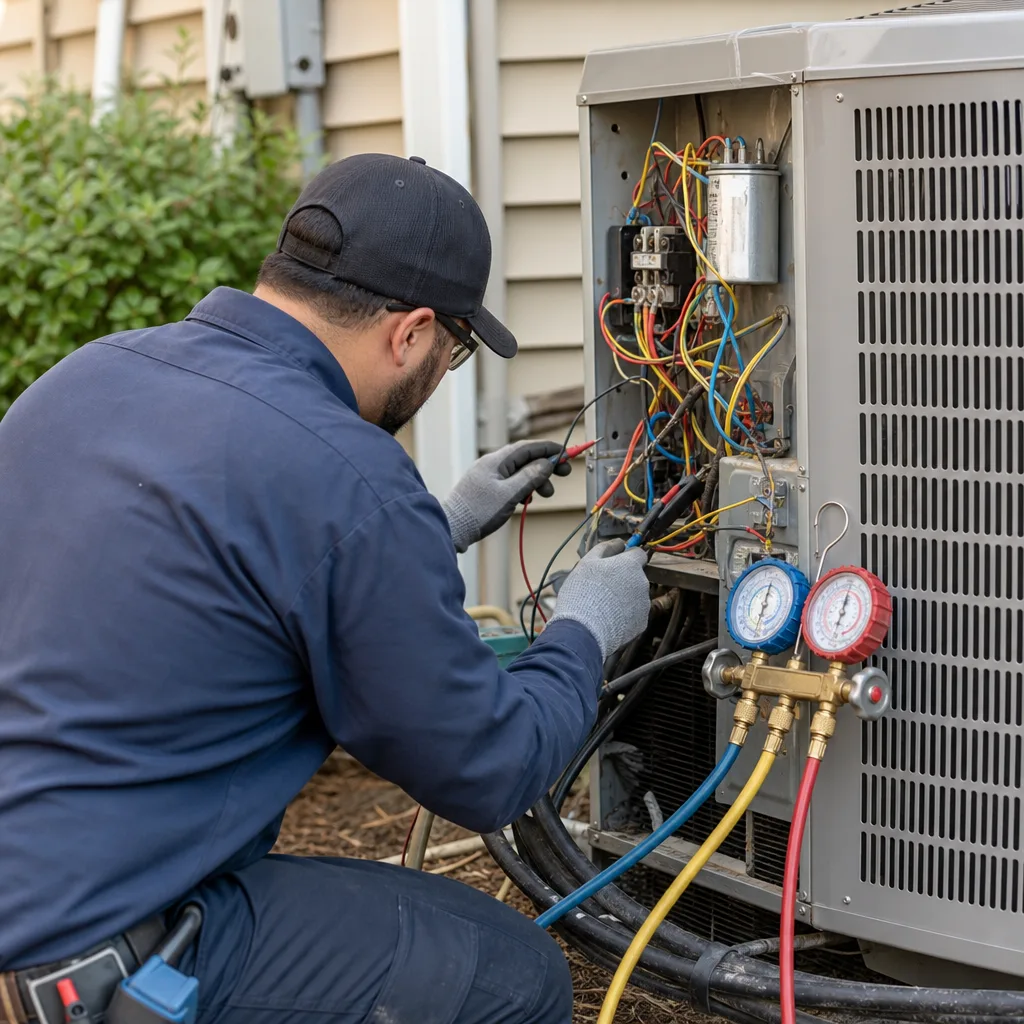
Daikin capacitor replacement in Fort Worth typically costs $150 – $400 installed, depending on whether your system needs a single run capacitor or a dual capacitor that serves both the compressor and the condenser fan motor. We stock Daikin-compatible capacitors on our trucks, so in most cases we can have your system running again the same day you call. Most owners discover the problem the hard way: the outdoor unit hums but the fan won’t spin, or the compressor clicks and gives up after a few seconds.
A capacitor is a small cylindrical component inside the outdoor condenser unit that stores and releases the electrical jolt needed to start the compressor and fan motor. In Texas heat, these parts work brutally hard. When a Fort Worth summer pushes attic and outdoor temperatures past 110°F on the condenser, the capacitor’s internal dielectric fluid degrades faster than in milder climates. The part simply loses its ability to hold a charge. The good news is that it’s a straightforward diagnosis and a fast fix when you know what you’re looking at.
If your Daikin is humming, clicking, or short-cycling, call (682) 610-2888 and we’ll walk through the symptoms together before we roll a truck.
Which Daikin Models This Applies To
Daikin builds its residential split systems under several series names, and the capacitor varies by model and age. If you have a Daikin DX, DZ, or FTQ series unit, you’ll typically find either a 35/5, 40/5, or 45/5 microfarad (µF) dual-run capacitor. The first number is the compressor rating and the second is the fan rating. Older Daikin units from the mid-2000s sometimes use separate single capacitors for each motor, which changes the replacement part entirely. The label on the old capacitor tells you everything: it lists the µF rating, the voltage (usually 370V or 440V on Daikin models), and a tolerance percentage.
Here’s a compatibility gotcha most people miss: Daikin recommends replacing a capacitor with one that matches the original’s µF rating within ±5%, but many generic aftermarket parts are rated ±10% or looser. That wider tolerance can cause a capacitor to work harder than the original, shortening its life in Fort Worth heat. We source OEM Daikin capacitors when available and use tight-tolerance aftermarket equivalents only when the OEM part is backordered. We’ll show you the old part and the replacement, including the spec label, before anything gets installed.
Meadowsweet Heating and Air Fort Worth is an independent service company, not affiliated with Daikin Industries. But we’ve worked on enough Daikin systems across Fort Worth to know which capacitors fail first and why.
Styles & brands we work with
Signs Your Daikin Capacitor Is Failing
- The outdoor unit hums but the fan doesn’t turn. This is the classic symptom. The capacitor has lost enough charge to start the fan motor, so the motor just sits there and vibrates against the electromagnetic field. If you hear this, shut the system off at the thermostat and the breaker to avoid burning out the motor.
- The compressor clicks on and off every few seconds. That rapid clicking is the compressor trying to start, failing, and tripping its internal thermal overload. Each failed start builds heat in the windings. Left too long, a $30 capacitor becomes a $2,500 compressor replacement.
- Your AC runs but blows warm air. If the fan capacitor fails but the compressor still starts, you’ll get a running compressor with no heat rejection at the coil. The system will ice up or simply blow lukewarm air through the vents.
- You see a bulged or leaking capacitor. A healthy capacitor has flat, clean ends. A failing one swells at the top or weeps a yellowish fluid. That fluid is the dielectric that once gave the part its charge capacity. In a Fort Worth attic, this bulging happens faster than you’d expect.
- Your energy bill ticked up without explanation. A weak capacitor makes the compressor work harder on every start cycle. Over a full Texas summer, that inefficiency shows up as a noticeable bump in your kWh usage. It’s one of the quieter signs that something’s fading.
See the difference
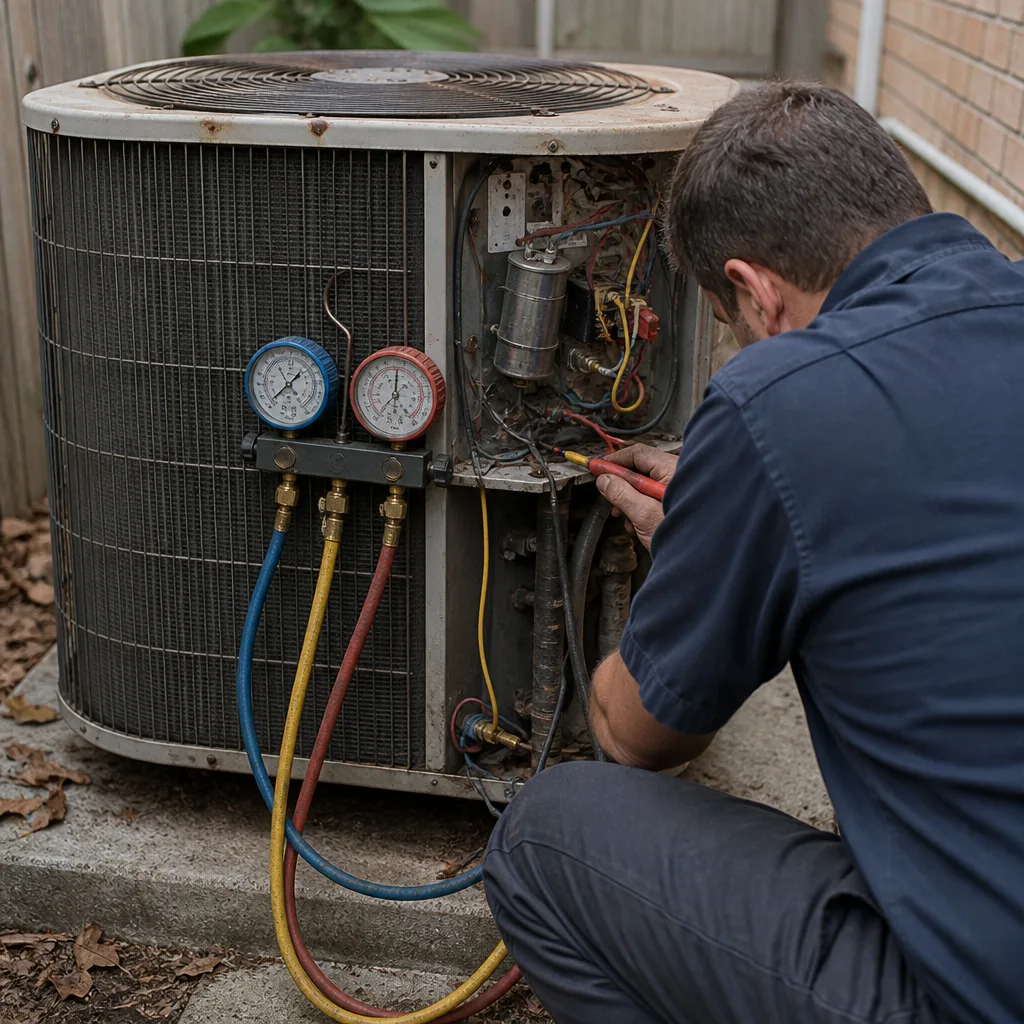 Before
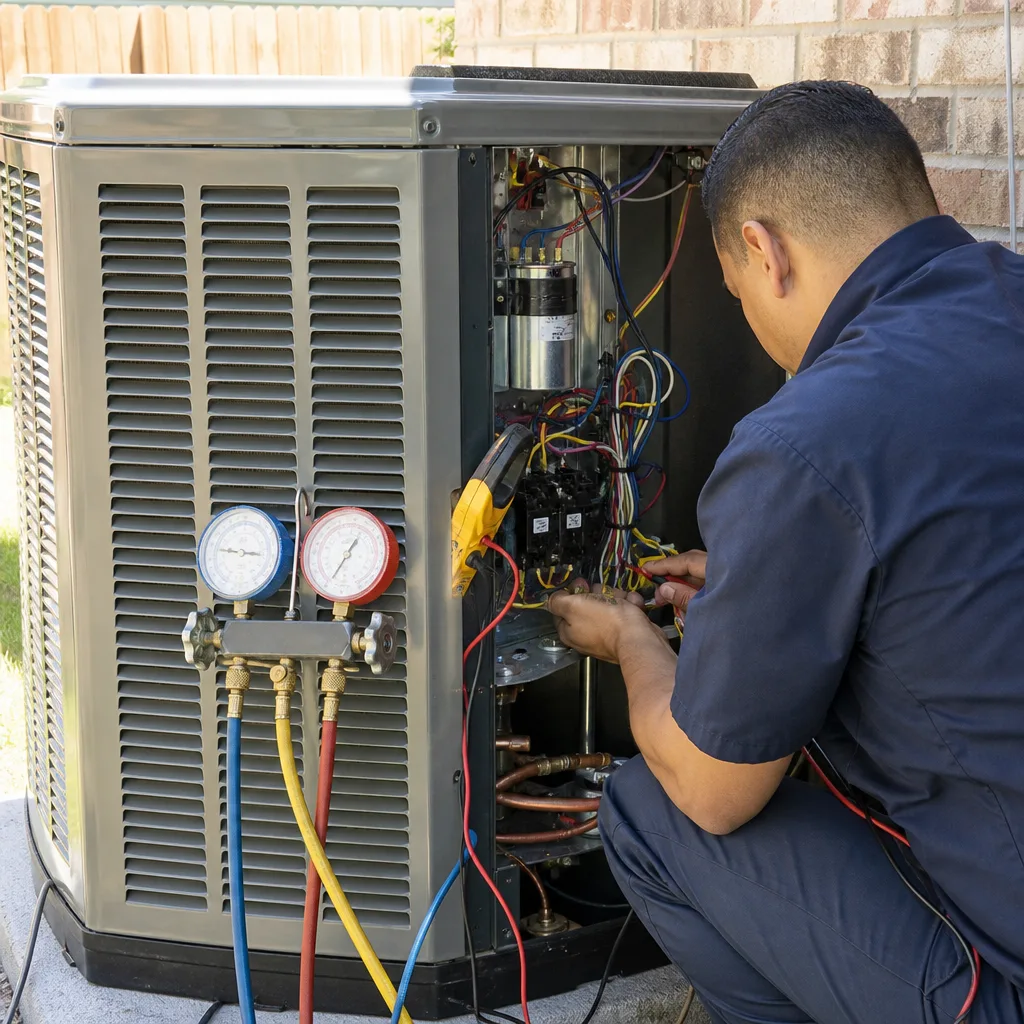 After
After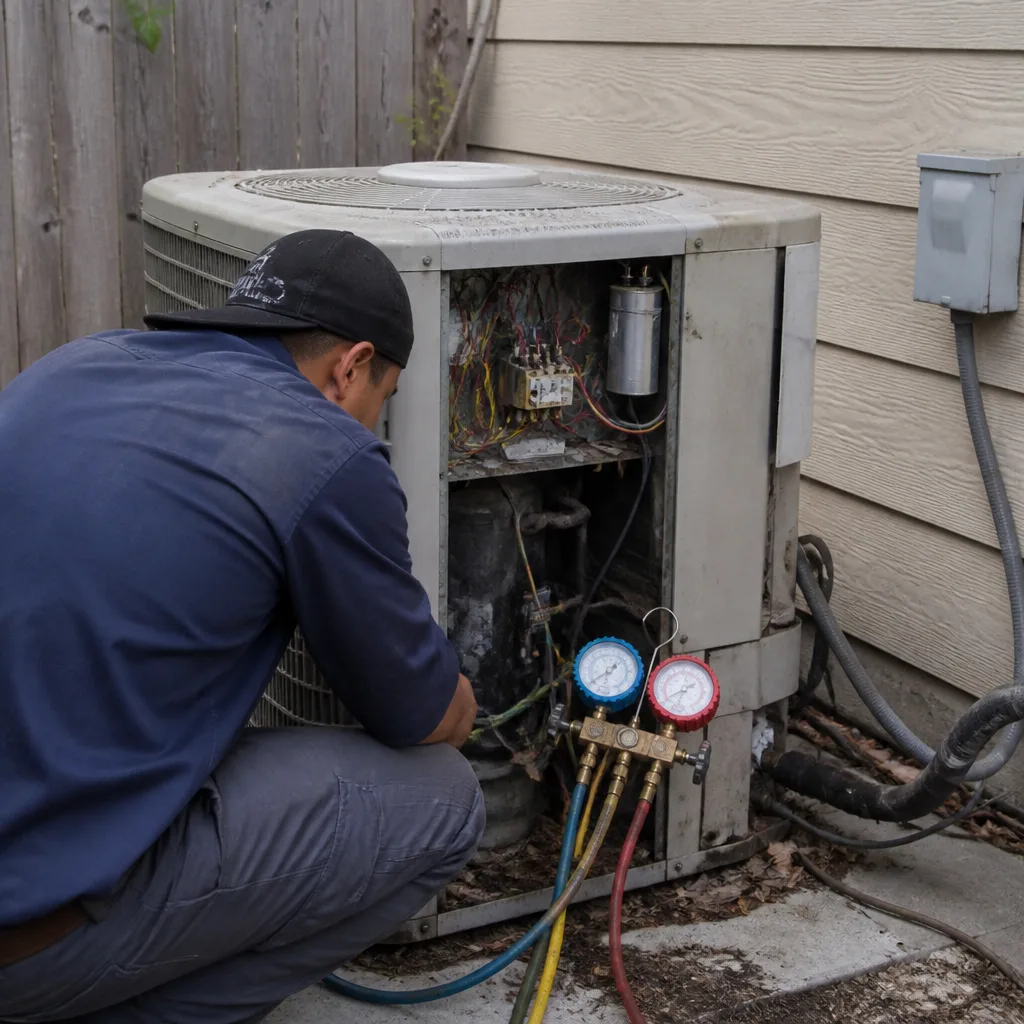 Before
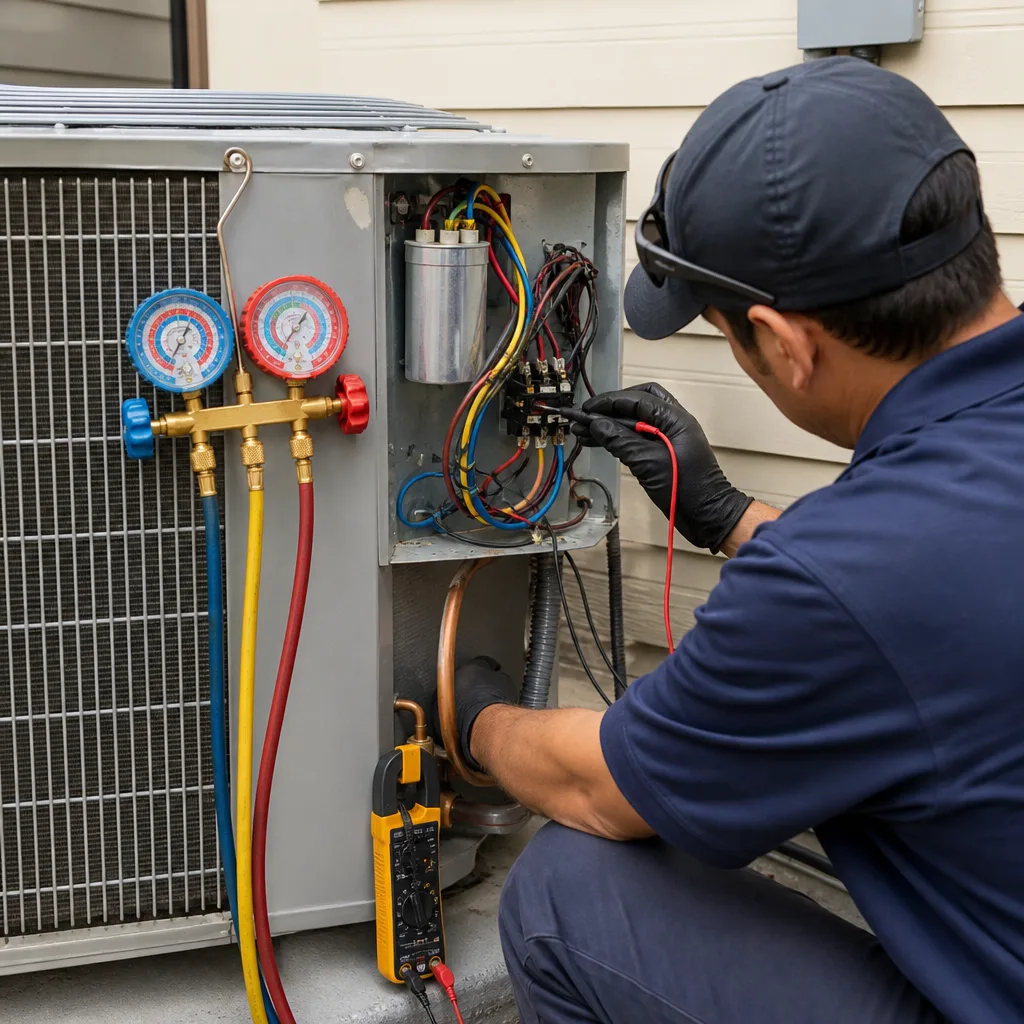 After
After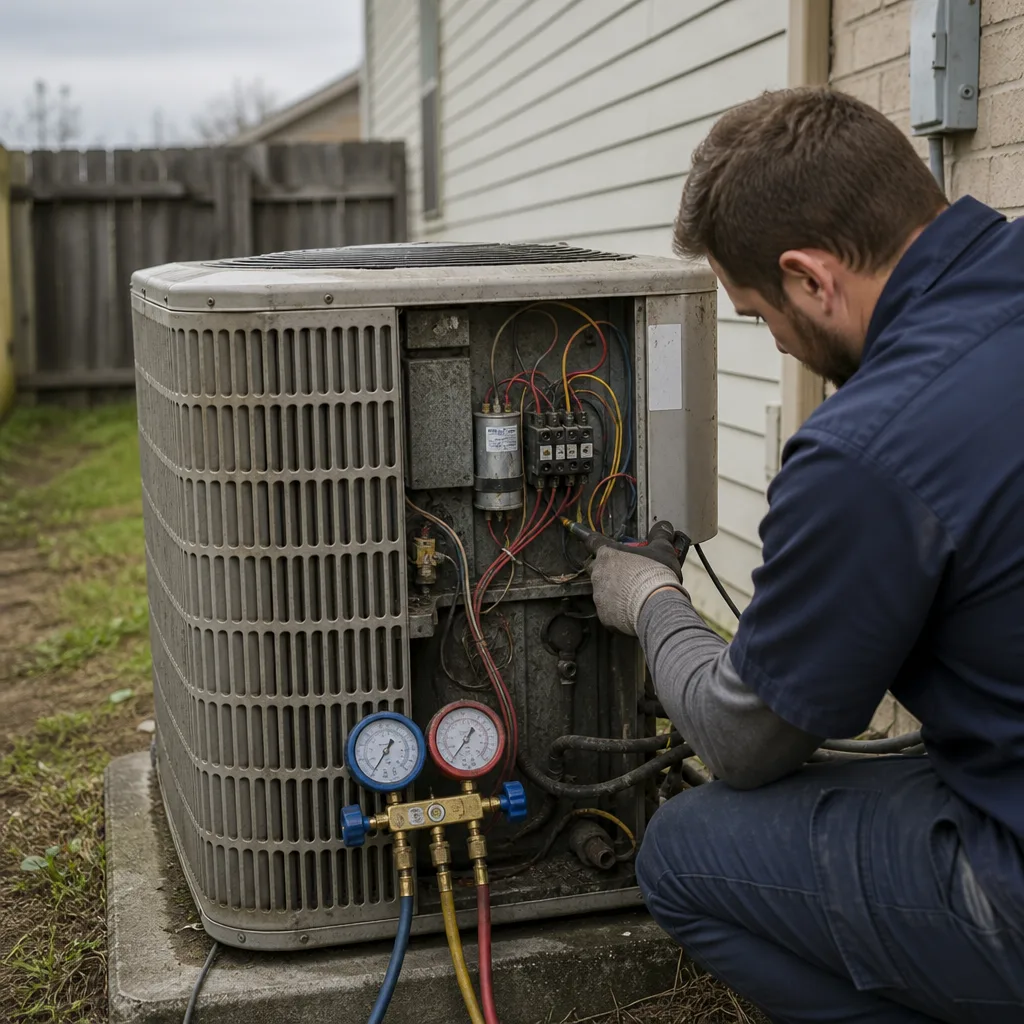 Before
 After
AfterReplacement Cost & What’s Included
For Fort Worth homeowners, expect to pay between $150 and $400 for a Daikin capacitor replacement, installed. At the lower end, a single-run capacitor with basic access runs about $150 – $200. At the higher end, a dual-run capacitor on a unit with difficult condenser access or a rusted mounting bracket can push toward $400. Here’s the breakdown:
- Capacitor part: $25 – $90 depending on OEM vs. aftermarket and the µF/voltage spec
- Labor and service fee: $75 – $180 for diagnosis, replacement, and testing
- System test after install: $25 – $60 for a full start-up check and amp draw verification
Every Daikin capacitor replacement from Meadowsweet includes a written price before any work starts, so there’s never a surprise line item. We’ll also check the contactor and the fan motor while we’re in there, because a capacitor failure often leaves a witness mark on the components around it. Our work is backed by the 365-Day Done Right Promise: if the replacement doesn’t hold up, we return and make it right, no runaround.
DIY or Call Us?
A capacitor stores enough electrical charge to stop your heart even when the system is off. That’s not a scare tactic, it’s the plain truth. Even after you kill the breaker, capacitors hold residual voltage that can discharge when you touch the terminals. Professional techs discharge the capacitor with a resistor tool before ever removing the wires.
What you can safely do: check the breaker, check the thermostat batteries, and listen. If the unit hums or clicks, shut it down and call us. Don’t open the condenser panel. Don’t try to “spin-start” the fan with a stick. That trick dates from the 1970s and damages modern motors. A capacitor replacement takes us 30 – 45 minutes. Call (682) 610-2888 and tell us what the system is doing. We’ll tell you exactly what it needs, nothing more.
FAQs
In Fort Worth’s heat, a Daikin capacitor typically lasts 5 to 10 years. The repeated thermal cycling of Texas summers stresses the dielectric fluid inside the part. Units that run harder, like an undersized system or one with dirty coils, will burn through capacitors faster. A capacitor that lasts 5 years in Fort Worth might have lasted 12 in a milder climate.
No. A failed or failing capacitor is a sealed component whose internal plates and dielectric layer break down chemically. There’s no safe or practical way to rebuild one. Replacement is the only correct fix, and it’s one of the least expensive repairs in HVAC. Call us for a written quote before you decide.
Most Daikin capacitor replacements take 30 to 45 minutes from arrival to clean-up. That includes diagnosis, part replacement, a full start-up test, and a check of the contactor and fan motor. We’ll show you a photo of the finished job before we leave.
Yes. Our trucks carry common Daikin dual-run capacitors (35/5, 40/5, 45/5 µF) in both 370V and 440V ratings, plus single-run capacitors for older Daikin units. In the rare case we don’t have your exact spec, we can typically source it same-day from a local Fort Worth supply house. Call (682) 610-2888 and describe the unit; we’ll confirm before we dispatch.
If your Daikin is humming, clicking, or struggling to start, don’t wait for a Fort Worth afternoon to test it further. Call (682) 610-2888 for a free estimate and a straight answer. Luis Serrano and our crew will show up with the part, the price in writing, and shoe covers on before we walk through your door.
Written by Luis Serrano, Owner, Meadowsweet Heating and Air Fort Worth at Meadowsweet Heating and Air Fort Worth, serving Fort Worth and nearby areas.