
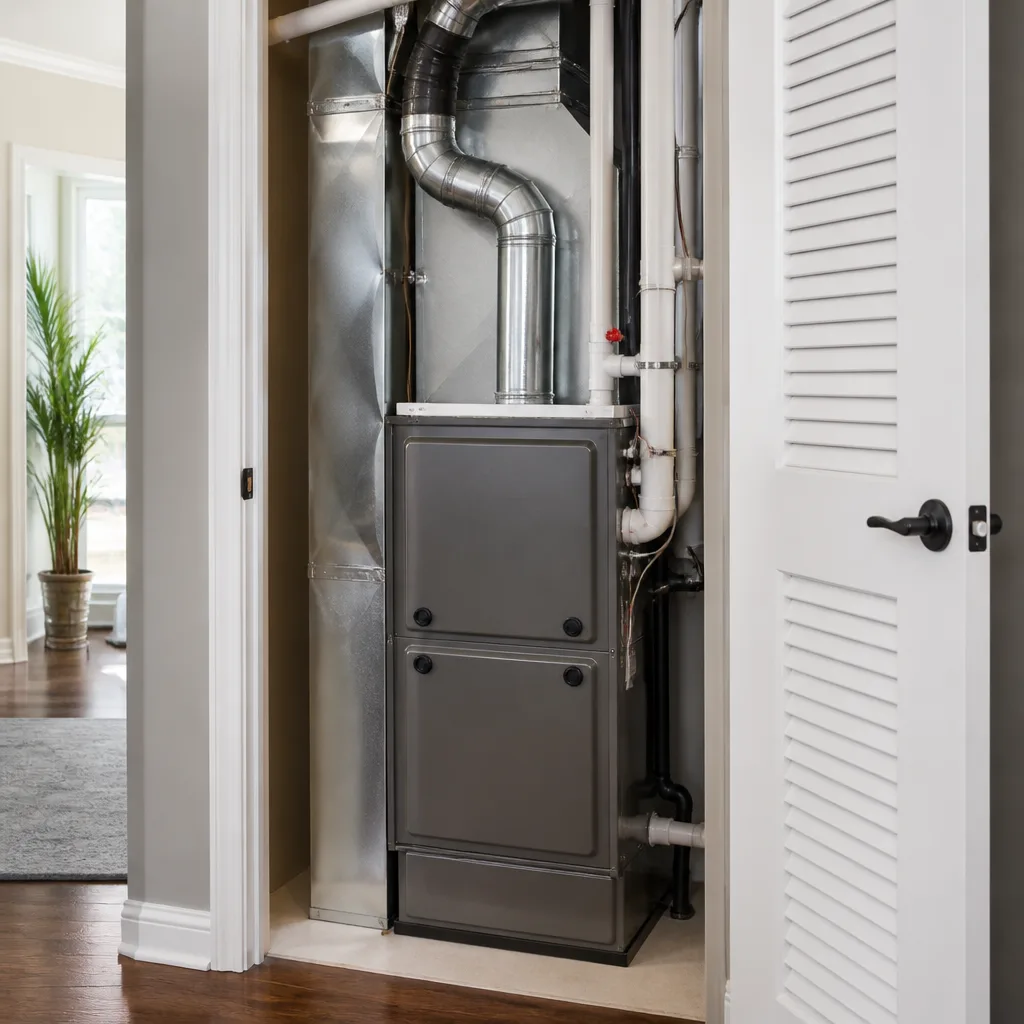
 Furnace & heating
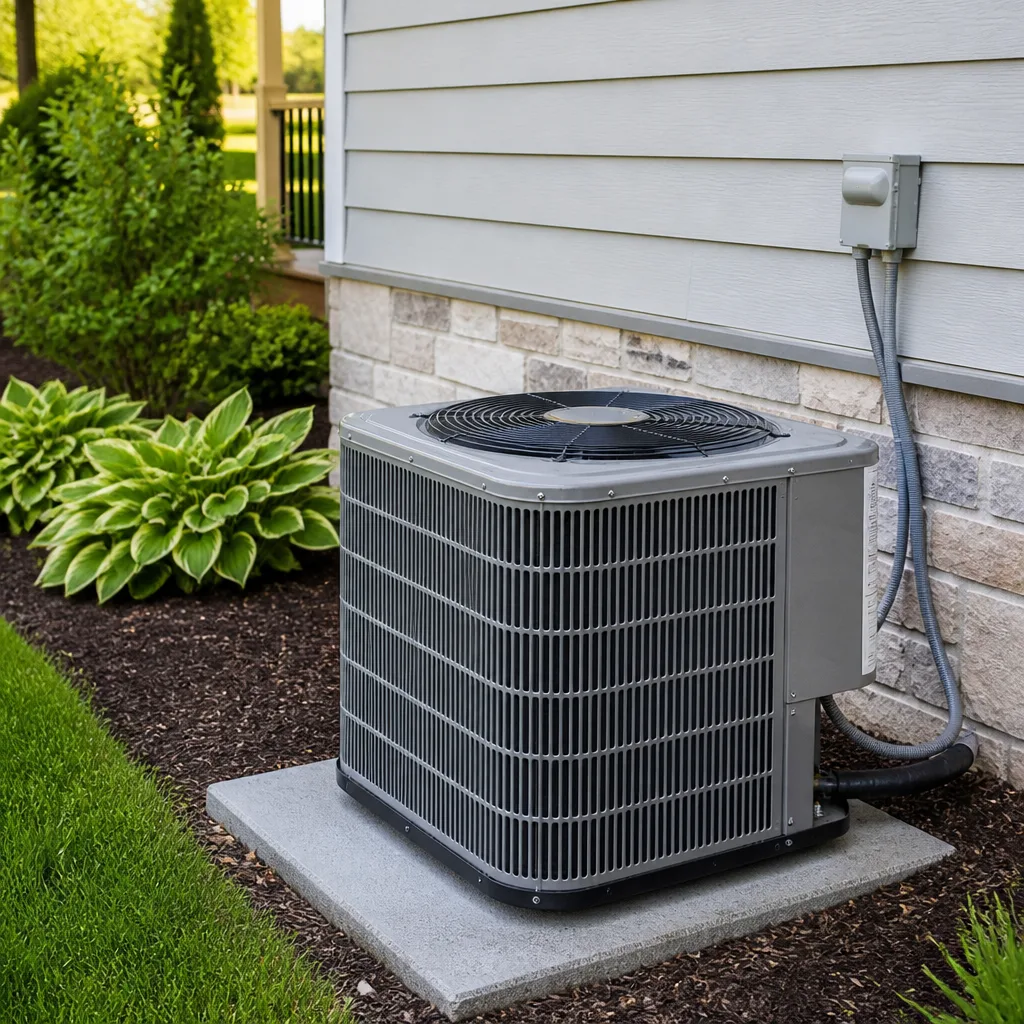 AC repair
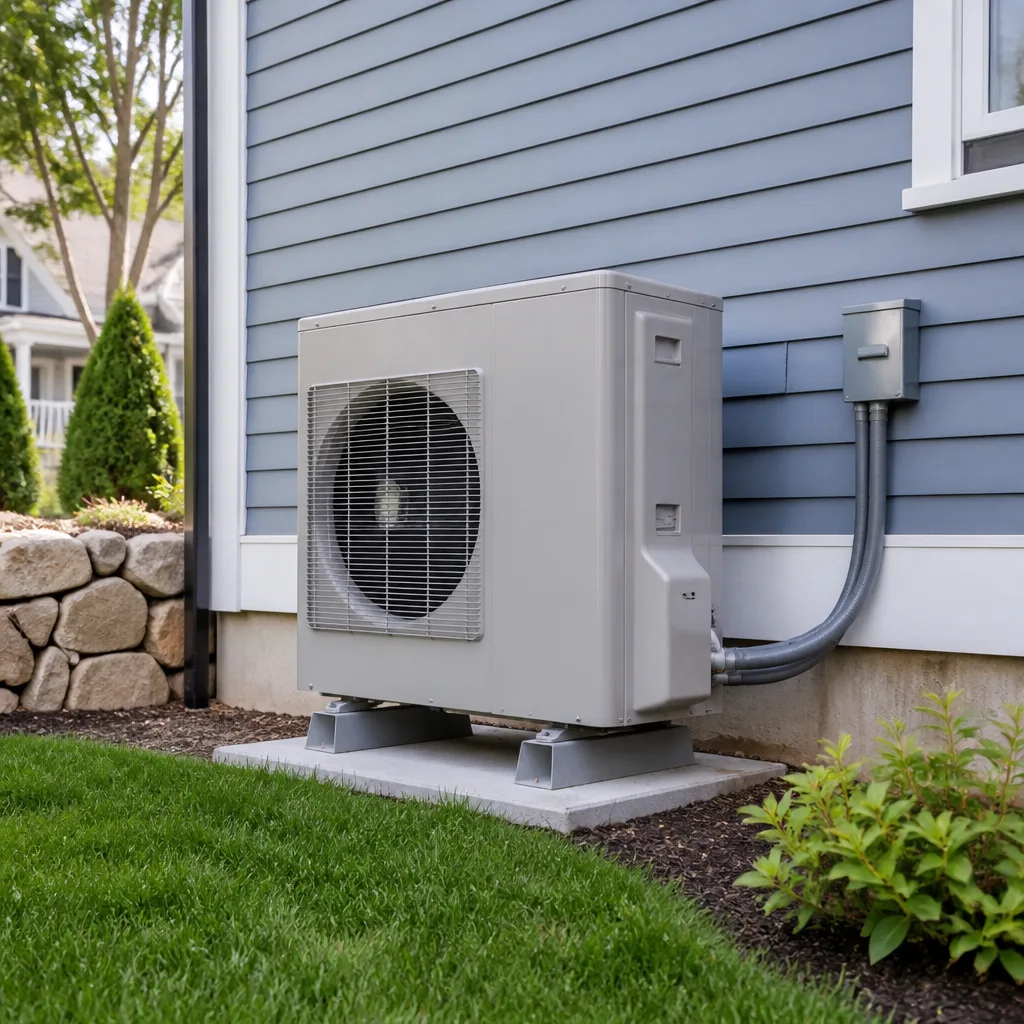 Heat pumps
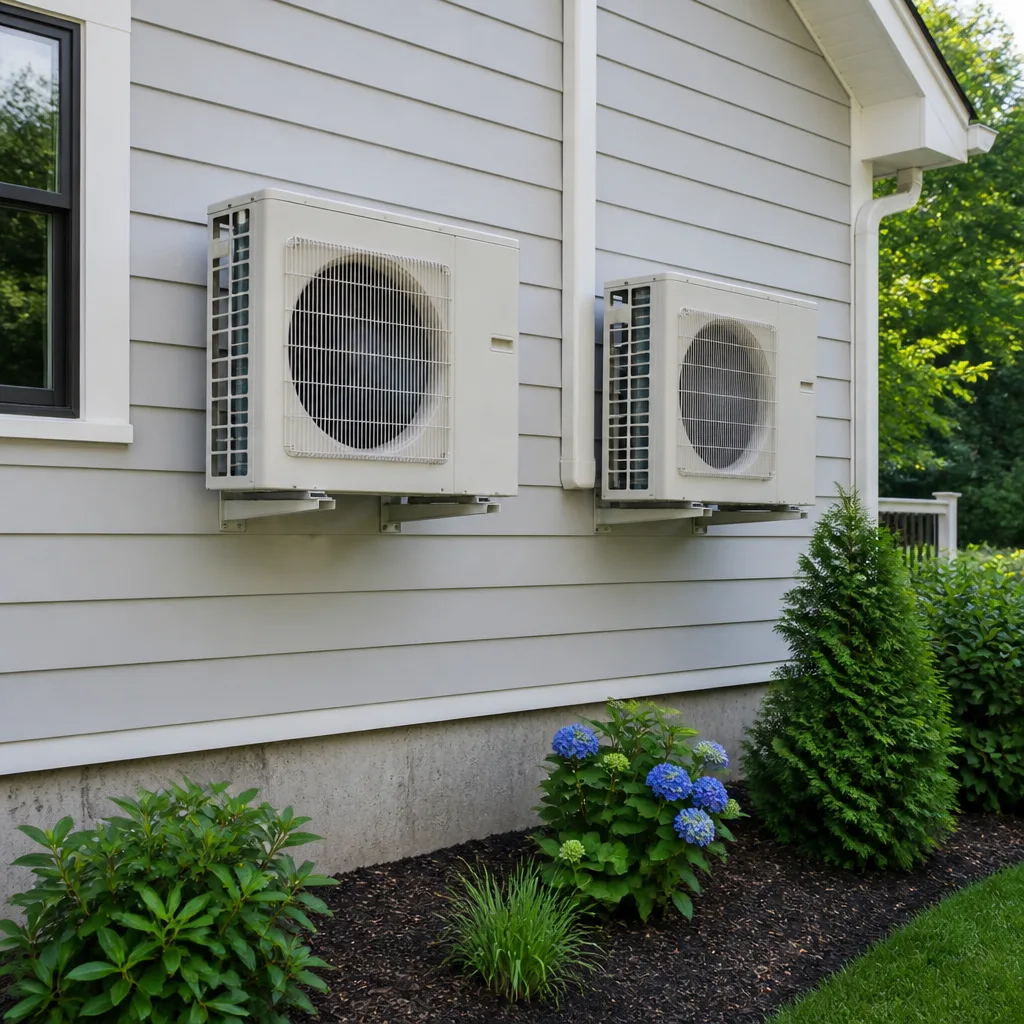 Ductless mini splits
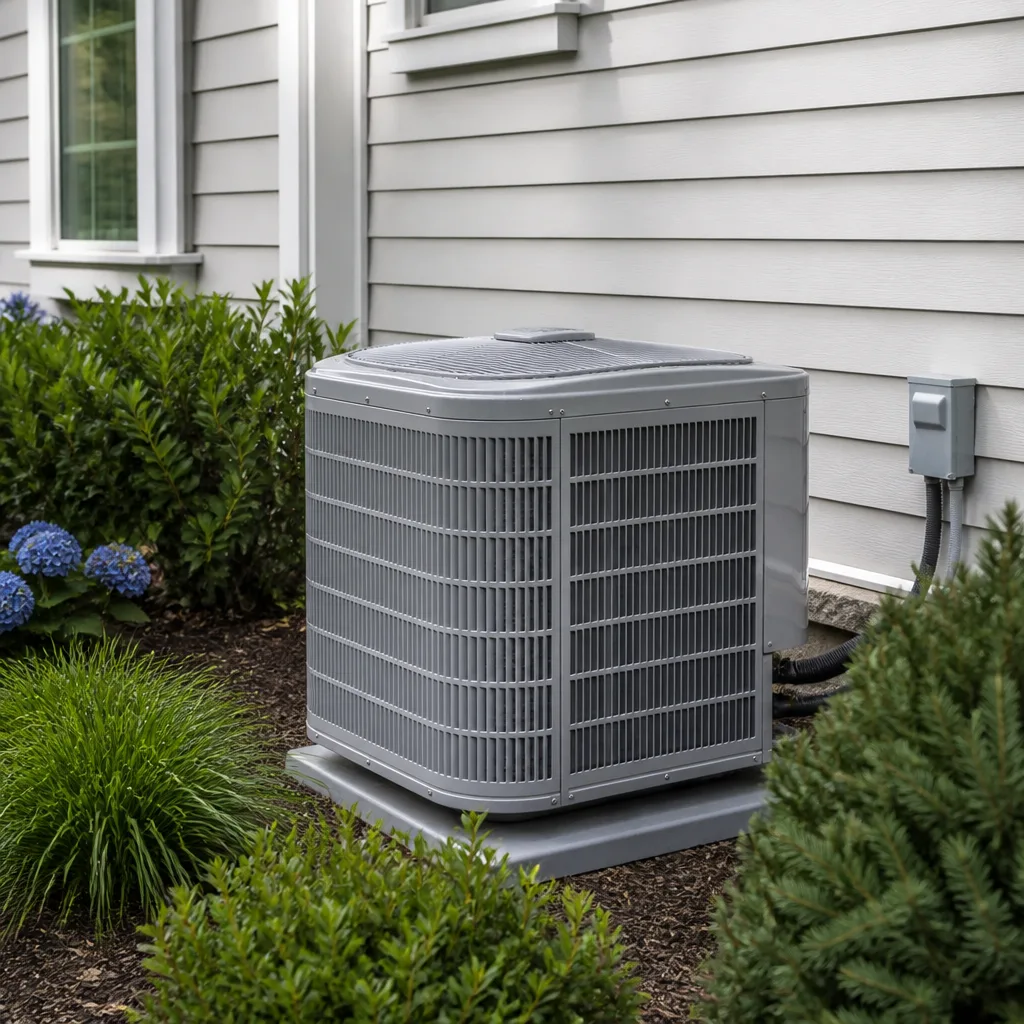 Carrier
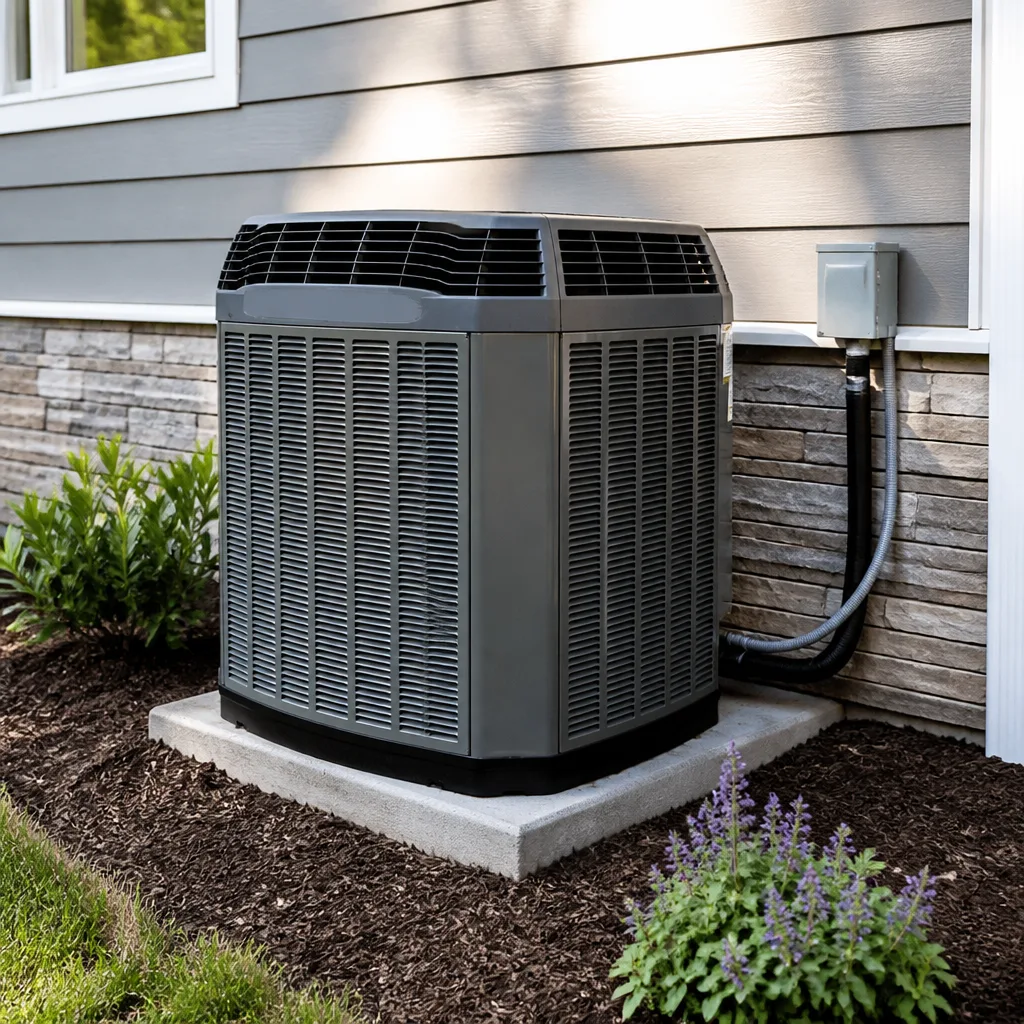 Trane
Trane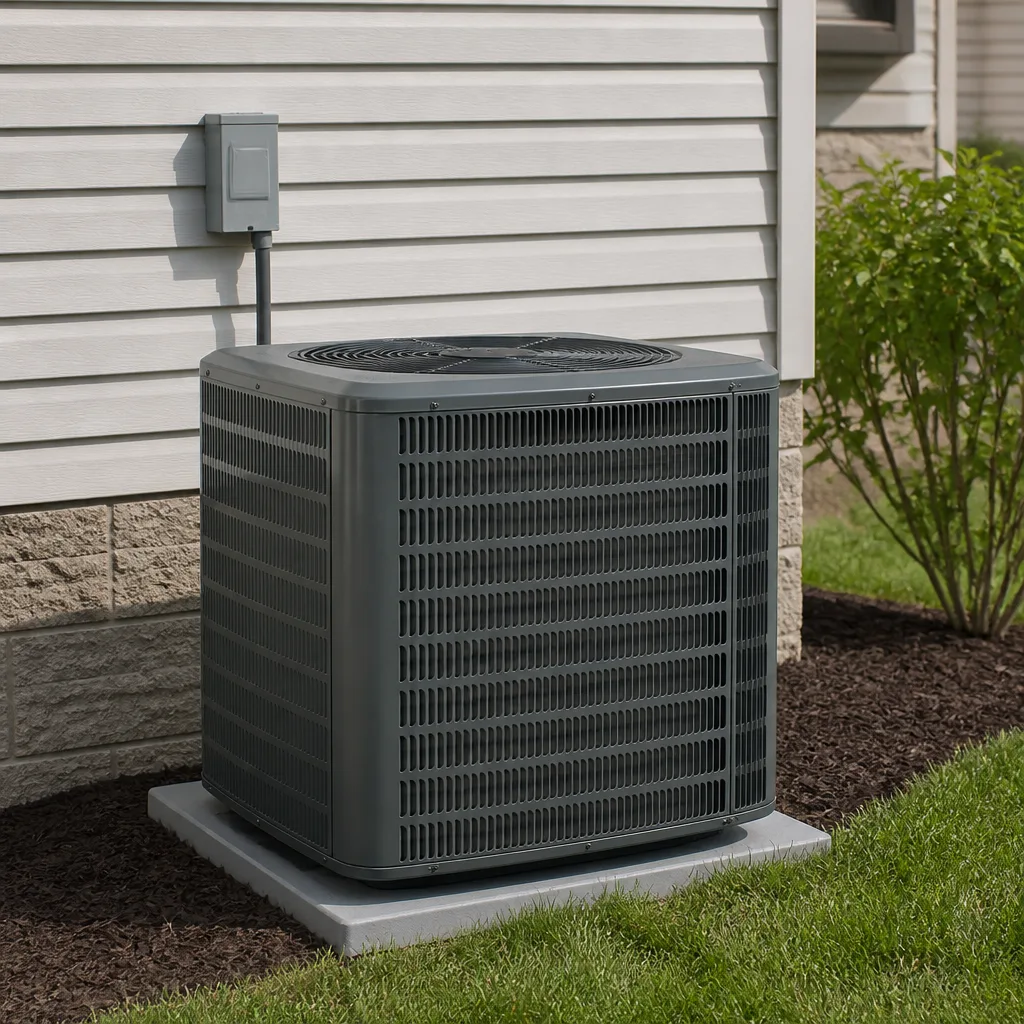 Goodman
Seasonal tune-up and full diagnostic on your Carrier, Trane, or Goodman system - readings shown to you before any repair is proposed
Diagnosis first, numbers second - you approve the repair price before a single part goes in.
Get your free estimateCarrier Capacitor Replacement: The Fort Worth Owner’s Guide
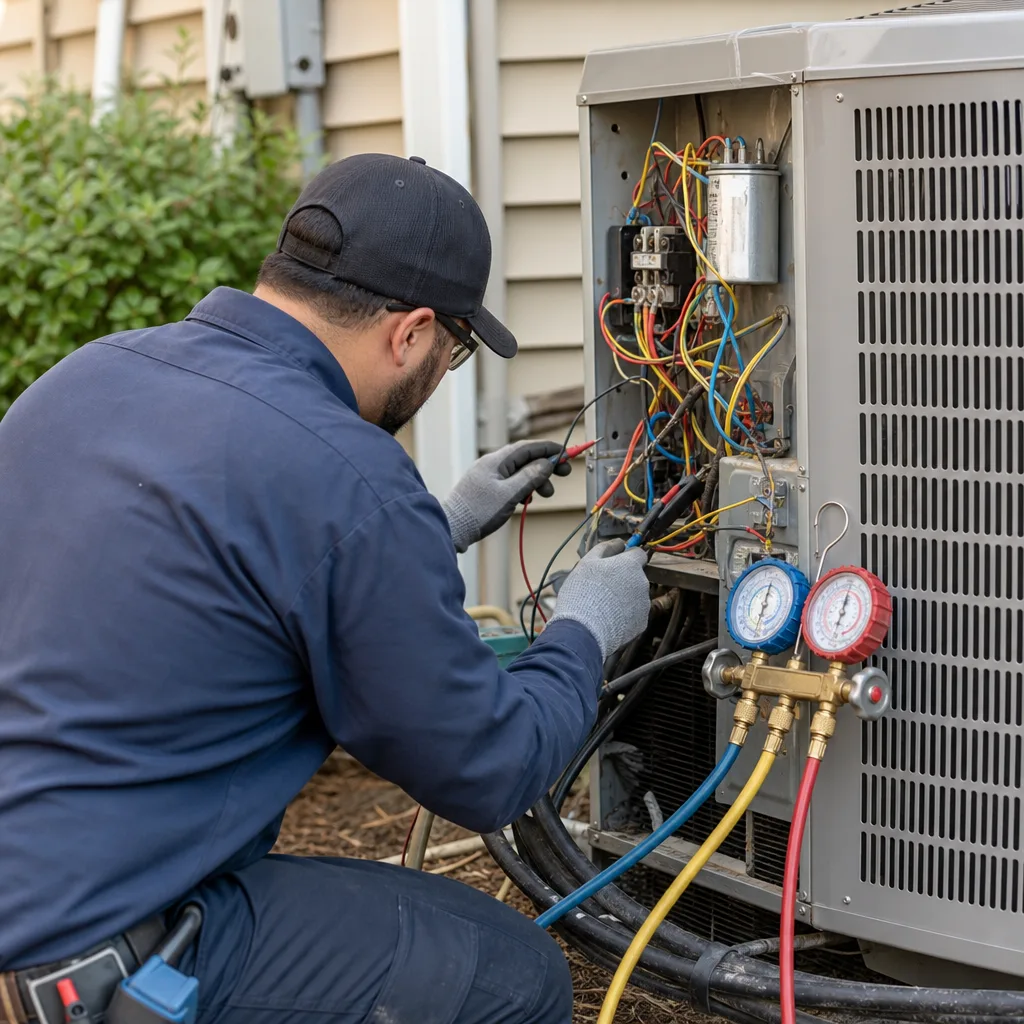
A Carrier capacitor replacement in Fort Worth typically runs $150 – $350 installed, depending on whether your system needs a single or dual-run capacitor and the specific microfarad rating your condenser or air handler calls for. We stock Carrier-compatible capacitors on our trucks and can usually complete the swap the same day you call, often within a few hours. Most Fort Worth homeowners discover the problem the hard way: the outdoor unit hums but won’t start, or the compressor kicks off after a minute of running, especially during a July afternoon when the attic heat has already pushed everything to its limit.
The capacitor is one of the least expensive parts in a Carrier system, but when it fails, it shuts the whole thing down. Luis Serrano, our owner, grew up in Los Angeles and learned the trade at Los Angeles Trade-Technical College before spending decades on HVAC systems across Texas. He’ll tell you the same thing he tells every Fort Worth customer: the capacitor is the part that takes the hit first, because it works every single time the system cycles on. Tell me what the system is doing, and I’ll tell you exactly what it needs, nothing more.
Which Carrier Models This Applies To
The capacitor part number depends on your specific Carrier unit, not just the brand. Carrier installs dual-run capacitors on most residential condensers and heat pumps from the Comfort, Performance, and Infinity series, including common Fort Worth workhorses like the 24ACC6, 25HBC5, and 24VNA9 lines. A dual-run capacitor handles both the compressor and the condenser fan motor, while older or smaller systems may use separate single capacitors for each component.
Here’s the compatibility gotcha we see regularly in Fort Worth: two Carrier units made the same year can call for different microfarad ratings. Installing the wrong rating, even by a small margin, causes the compressor to start hard, overheat, and eventually fail. The correct rating is printed directly on the side of the existing capacitor, along with the voltage. We always verify against the condenser data plate before we install anything, because guessing is how compressors die young. For Carrier specifically, OEM capacitors are built to tight tolerance, but quality aftermarket equivalents from AmRad and Titan match or exceed OEM specs and often last longer in Texas heat. We carry both and will show you the difference on the part itself before we install it.
Styles & brands we work with
Signs Your Carrier Capacitor Replacement Is Failing
Capacitors rarely fail silently. Here are the five symptoms we see most often on Carrier calls in Fort Worth, and what each one actually means:
- The outdoor unit hums but the fan doesn’t spin. The capacitor is no longer delivering the starting jolt the condenser fan motor needs. The motor is drawing current but can’t turn without that phase shift.
- The compressor clicks on, then shuts off after 10 – 30 seconds. This is the capacitor failing under load. It can start the compressor but can’t keep the run winding energized, so the thermal overload trips to protect the compressor.
- The AC runs but blows warm air. If the condenser fan motor fails while the capacitor is weak, there’s no airflow across the coil. The compressor runs, but the refrigerant never sheds its heat.
- Your energy bill ticks up before you notice any comfort change. A degraded capacitor makes the motor work harder and draw more current. We see this in older Carrier units where the capacitor is still “working” but has already lost 20 – 30% of its rated microfarads.
- A bulging or leaking capacitor housing. If you can see the metal top domed upward or oil staining around the terminals, that capacitor is done. The dielectric inside has broken down. It’s not coming back.
In Fort Worth, we also see a seasonal pattern. The first 100-degree stretch of the year kills more capacitors than any other two weeks, because heat accelerates the internal chemical breakdown. The part that limped through spring finally gives out when it’s working hardest.
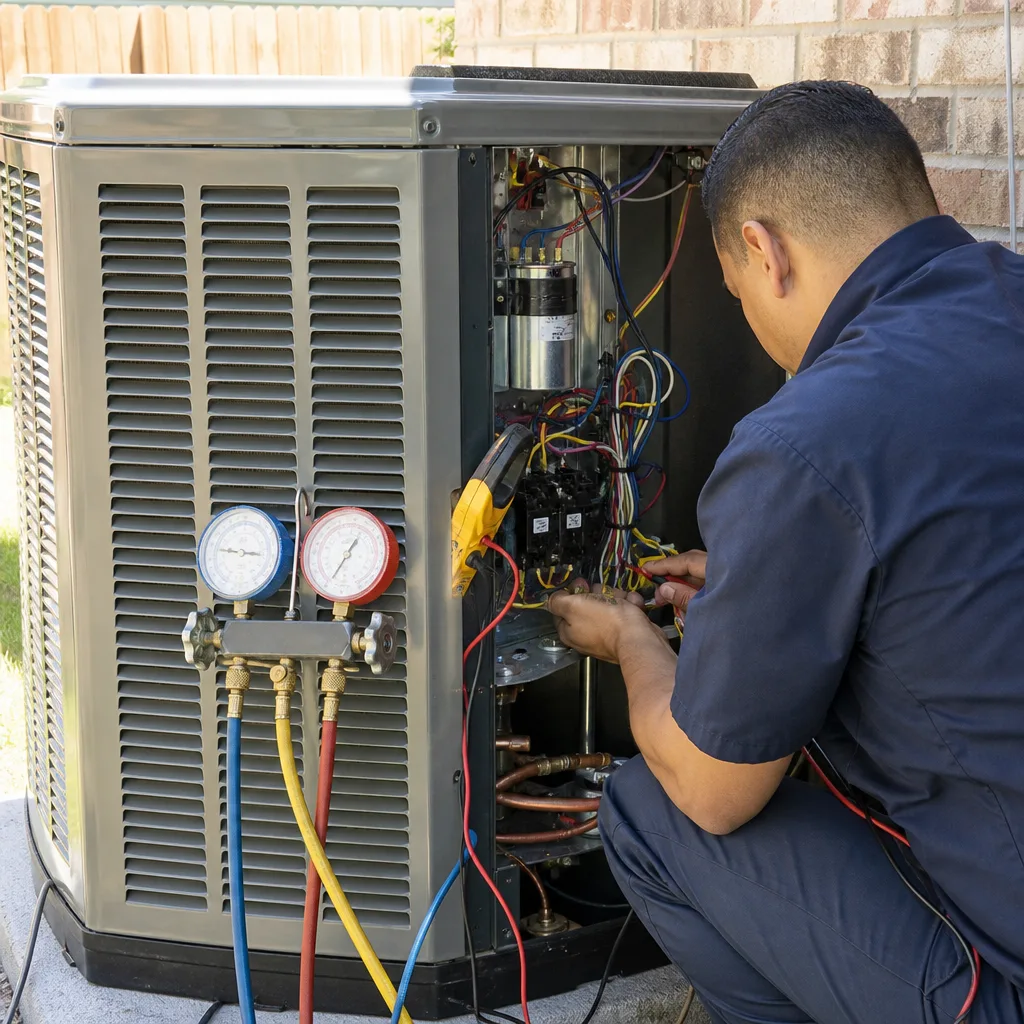
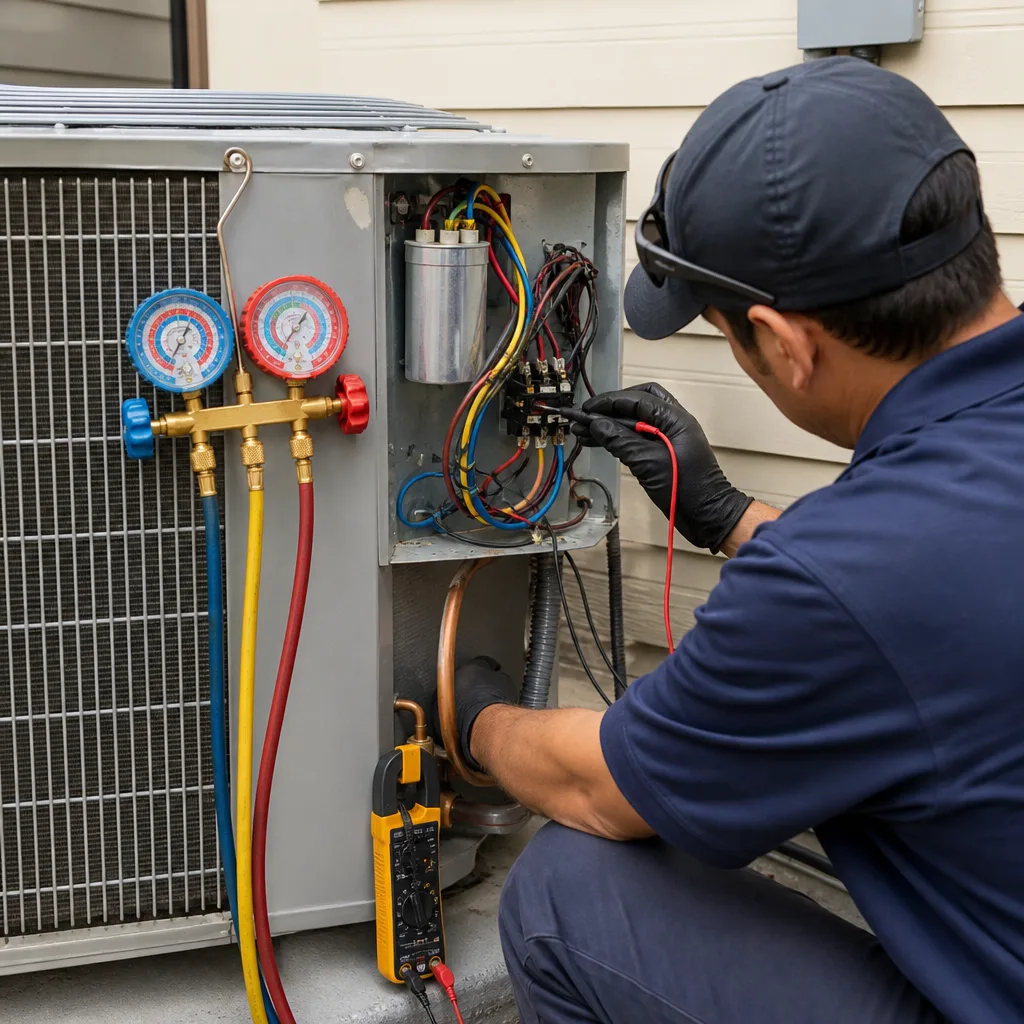
See the difference
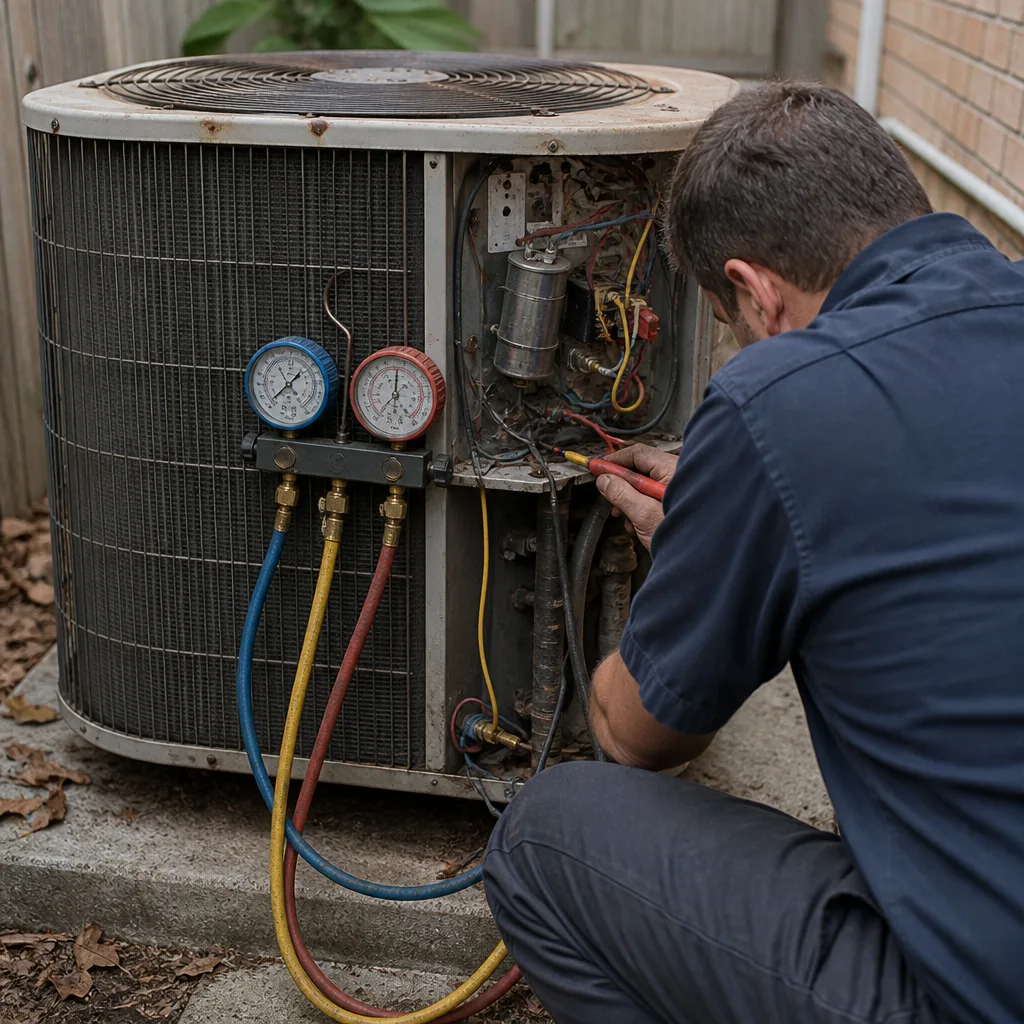 Before
 After
After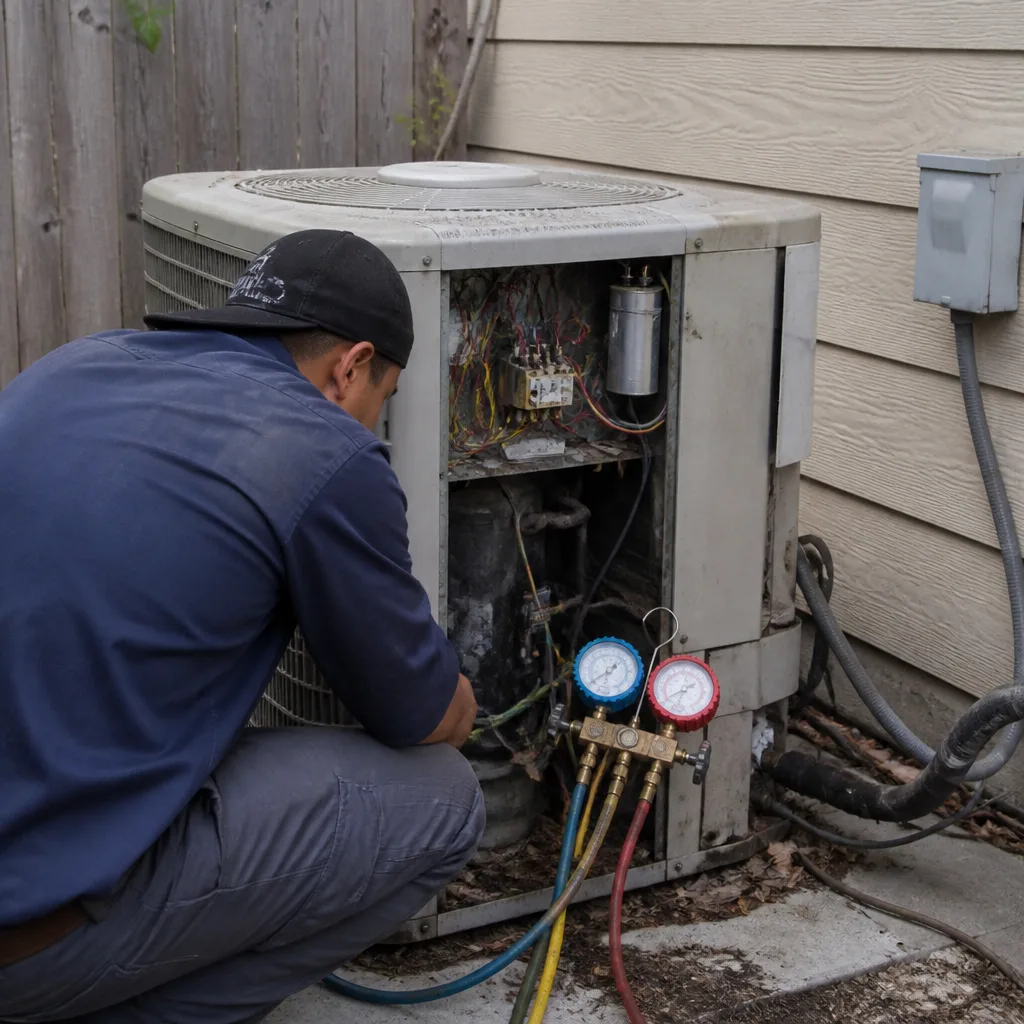 Before
 After
After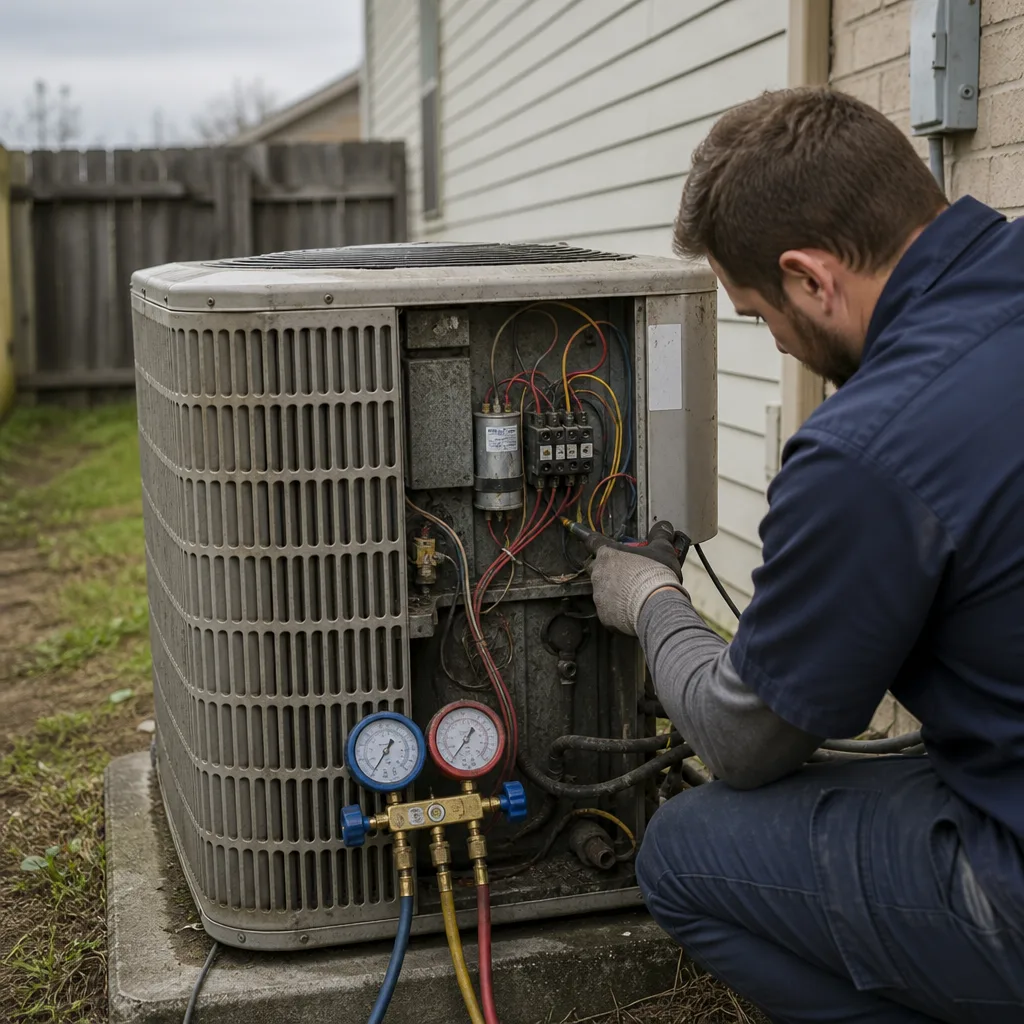 Before
 After
AfterReplacement Cost & What’s Included
A Carrier capacitor replacement in Fort Worth lands between $150 and $350 installed. Here’s what drives that range:
- Single vs. dual-run capacitor: single capacitors run cheaper, usually $150 – $200 installed. Dual-run capacitors for Carrier condensers and heat pumps run $200 – $350.
- OEM vs. aftermarket: Carrier-branded OEM capacitors cost more than quality equivalents. We’ll show you both prices up front and let you decide. The aftermarket options we carry meet or exceed the OEM spec and carry the same workmanship warranty from us.
- Access factors: if your condenser is in a tight side yard or behind a fence, the job takes a little longer. That’s reflected in the quote, not hidden in a service fee.
Every capacitor replacement from Meadowsweet includes the part, the labor, a written price before we start, and our 365-Day Done Right Promise. If the capacitor fails within a year of our install, we replace it. No runaround, no fine print. We also test the replacement part in front of you before we close up the panel, so you see the exact microfarad reading on our meter.
Call (682) 610-2888 for an exact quote on your Carrier system. Estimates are free, and a live person answers. Always.
DIY or Call Us?
Full honesty: capacitors store an electrical charge even when the system is powered down. A charged capacitor can deliver a shock that stops a heart. We do not recommend opening the condenser electrical panel and touching the capacitor terminals unless you have formal HVAC or electrical training, a proper discharge tool, and insulated gloves rated for the voltage. Luis Serrano will tell you the same thing: this is the one part on the unit where the risk isn’t overstated.
What you can safely check: visually inspect the capacitor through the access panel if you know how to kill power at the disconnect and the breaker. Look for bulging, leaking, or burnt terminals. That’s enough to have a useful conversation with us on the phone. You can also note whether the condenser fan spins when you push it with a stick, and whether the compressor hums. Those observations help us bring the right part on the first trip. But the actual swap? Let a trained tech handle it. We’ll have it done in under an hour, and you won’t be the one holding a charged capacitor. Call (682) 610-2888 and tell us what your system is doing. We’ll bring the right part and a written price.
FAQs
A Carrier capacitor in Fort Worth typically lasts 5 – 10 years, but Texas heat shortens that compared to cooler climates. We replace capacitors more often in Fort Worth than anywhere else we work, because the sustained high ambient temperatures around the condenser accelerate the breakdown of the internal dielectric. If your capacitor is older than seven years and your unit is acting up, it’s the first thing we check. Call (682) 610-2888 and we’ll test it for you.
No. A capacitor is a sealed component, and once the dielectric inside degrades, there is no repair. The fix is replacement with a correctly rated part. The good news: it’s one of the least expensive parts on a Carrier system, and the swap takes under an hour in most cases. Call (682) 610-2888 for a written quote before any work starts.
Most Carrier capacitor replacements take 30 – 60 minutes from the time our tech arrives. That includes testing the old capacitor, verifying the correct microfarad rating against the data plate, installing the new part, and testing the system through a full cycle. We also clean up the panel area and leave the workspace exactly as we found it.
Yes. Our trucks carry the most common Carrier single and dual-run capacitor ratings, and we also stock equivalents for Trane and Lennox systems. If your Carrier system takes an uncommon rating, we can usually source it the same day from our Fort Worth supply partners. Call (682) 610-2888 and we’ll confirm before we roll.
Written by Luis Serrano, Owner, Meadowsweet Heating and Air Fort Worth at Meadowsweet Heating and Air Fort Worth, serving Fort Worth and nearby areas.