
Last updated October 16, 2026
 AC repair
 Furnace & heating
 Heat pumps
 Ductless mini splits
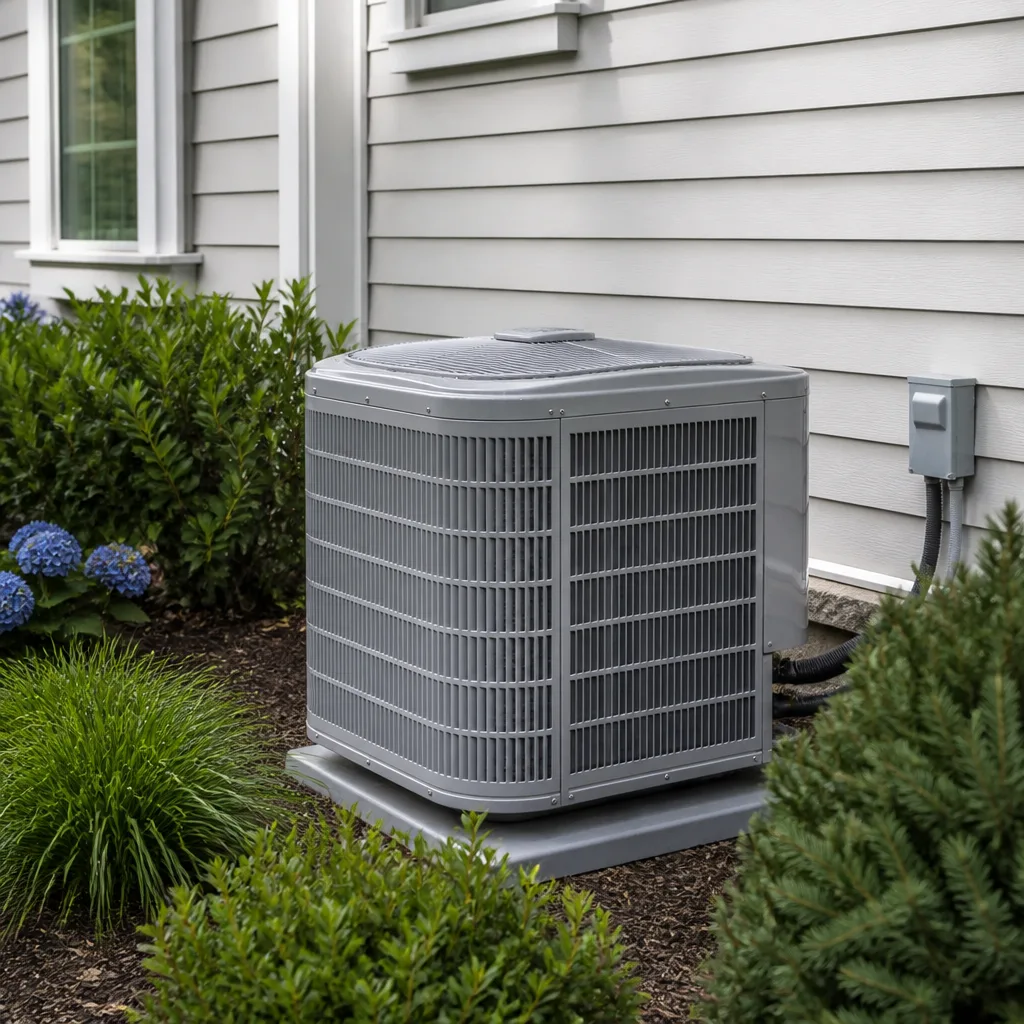 Carrier
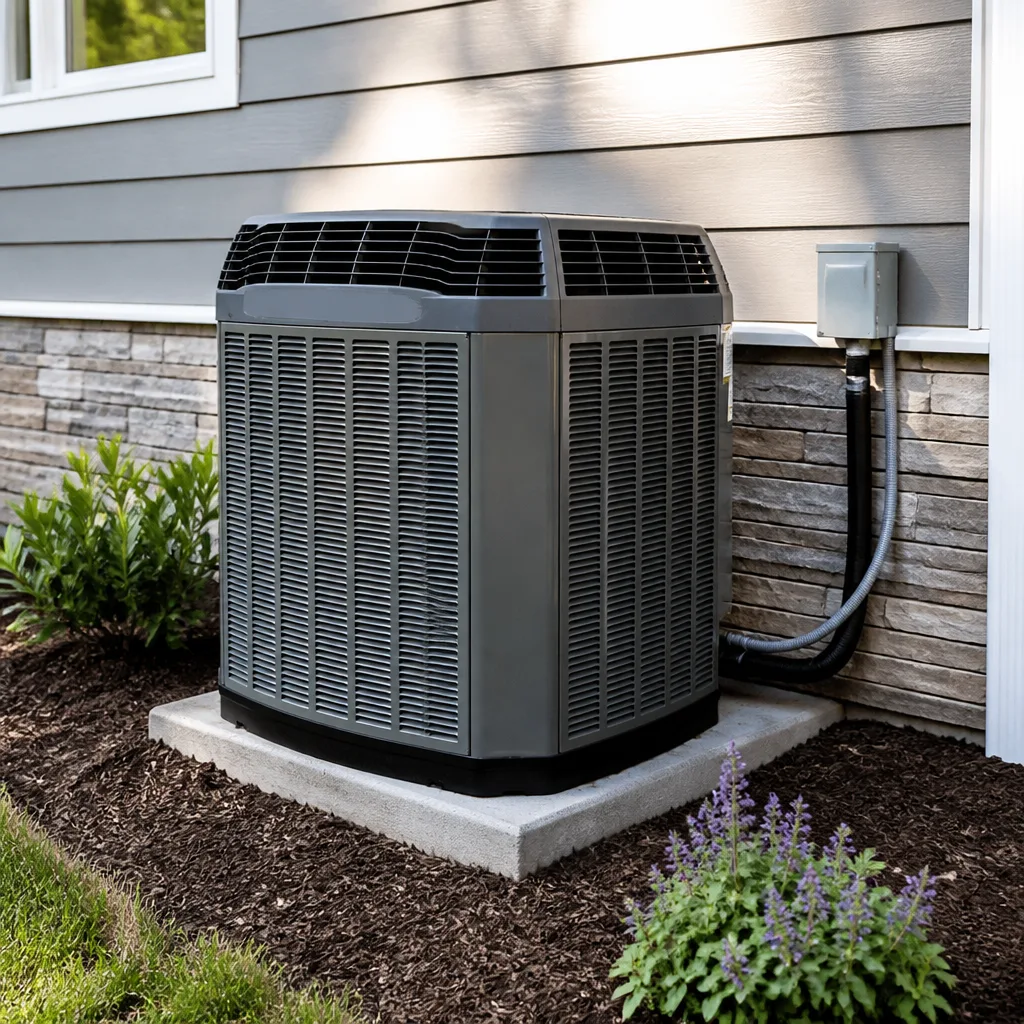 Trane
Trane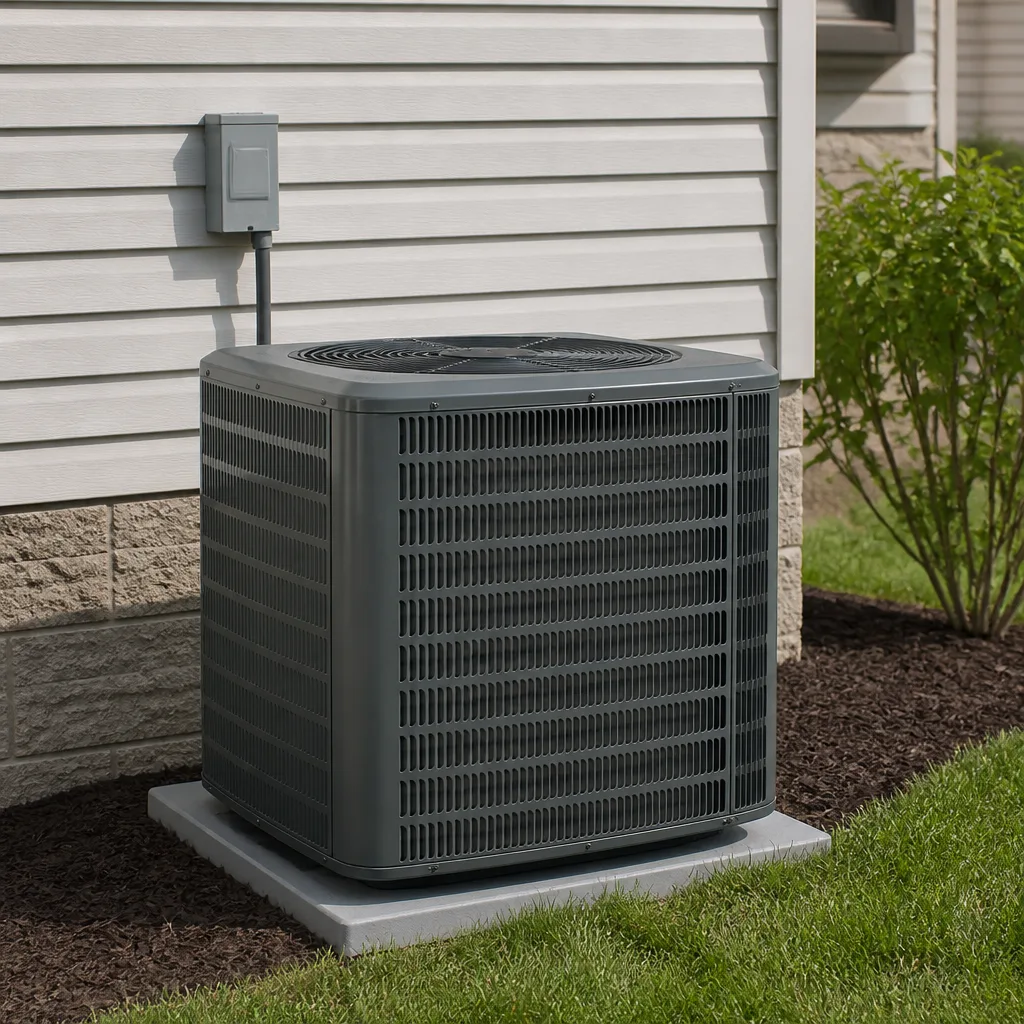 Goodman
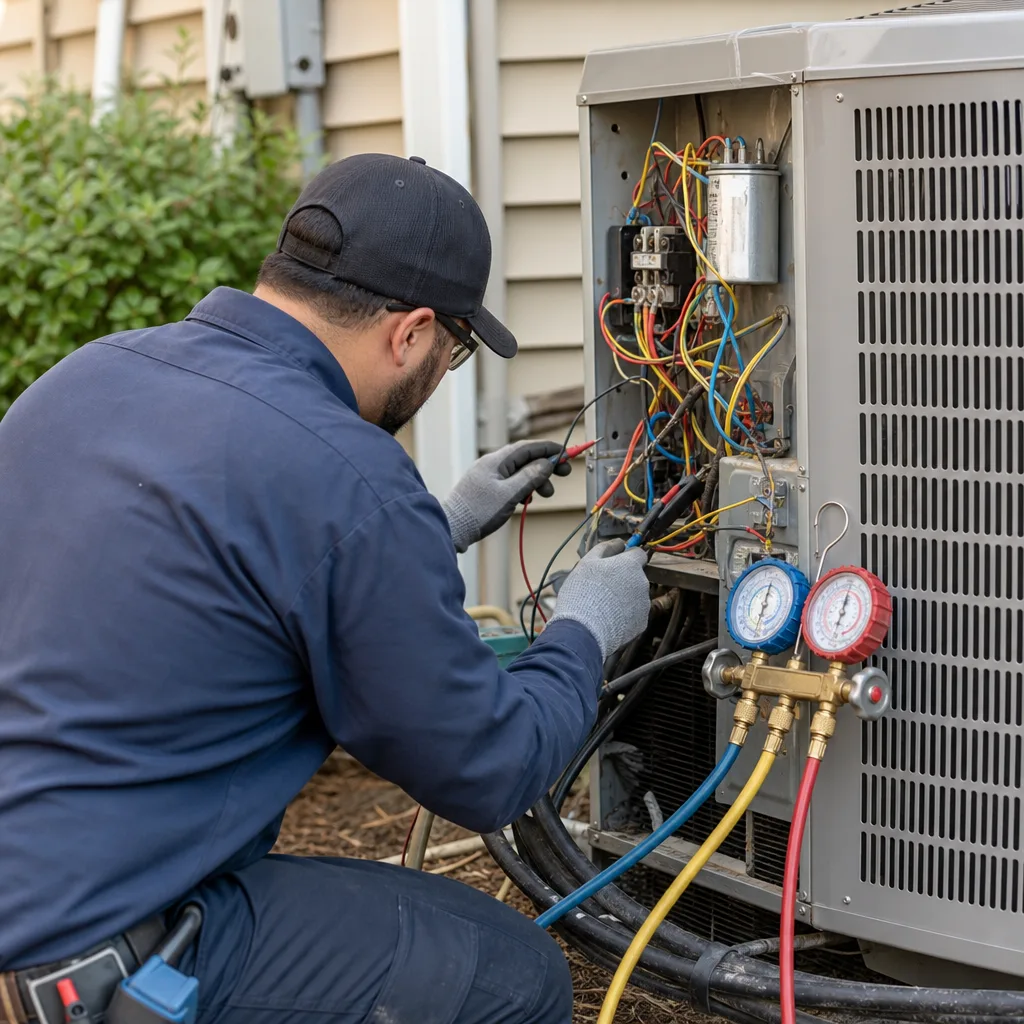
Seasonal tune-up and full diagnostic on your Carrier, Trane, or Goodman system - readings shown to you before any repair is proposed
Diagnosis first, numbers second - you approve the repair price before a single part goes in.
Get your free estimateHVAC Permits, Codes & Inspections in TX: What You Need to Know
Few decisions in home improvement carry as much quiet legal weight as an HVAC permit. Most Fort Worth homeowners we talk to have no idea that swapping out an air conditioner or furnace is not a simple appliance replacement – it’s structural work that touches electrical wiring, gas lines, refrigerant, and building code. And here’s the part nobody says out loud: some contractors skip permits to save a few hundred dollars, and the homeowner is the one who absorbs the risk. This guide explains exactly when a permit is required, what it costs, what inspectors actually check, and how unpermitted work can surface years later when you try to sell; for ongoing help, see our more guides & resources.
Styles & brands we work with
Quick Answer
In Texas, residential HVAC replacement requires a permit in nearly every incorporated city, including Fort Worth, where mechanical permits are issued by the City of Fort Worth Development Services Department. The permit fee for a standard residential HVAC change-out typically runs $75 to $150 depending on the scope of work, the permit must be pulled by a state-licensed HVAC contractor, and the work must pass a city inspection before the job is legally complete.
Table of Contents
- Do You Need a Permit for HVAC Work in Fort Worth?
- What an HVAC Permit Actually Costs in Fort Worth
- The Codes That Govern HVAC Work in Texas
- How to Verify That Your Contractor Actually Pulled the Permit
- What a Failed HVAC Inspection Looks Like (and Who Pays for Re-Inspection)
- Why Unpermitted Work Shows Up on Title Searches and Hurts Your Sale
- What Happens From Permit to Final Approval: A Step-by-Step Timeline
- Common Mistakes to Avoid
- When to Call a Professional
- Frequently Asked Questions
- The Bottom Line
Do You Need a Permit for HVAC Work in Fort Worth?
Yes, for most residential HVAC replacements. In Fort Worth, a mechanical permit is required whenever you replace an air conditioner, heat pump, furnace, or air handler. The City of Fort Worth treats this as an equipment alteration to a structure, not a simple swap. This means the work falls under the city’s permitting authority, and the inspector will verify that the installation matches what was listed on the permit application.
What does not require a permit? Minor maintenance and service work. Replacing a capacitor, cleaning a condenser coil, changing a filter, adding refrigerant (by a licensed tech), or repairing a thermostat does not require a city permit. The line is straightforward: if you are keeping the existing equipment and only restoring function, no permit. If you are removing equipment and installing new equipment, you need a permit.
There is also a difference between City of Fort Worth permits and Tarrant County permits. Tarrant County issues permits only for properties in unincorporated areas of the county – not for homes inside Fort Worth city limits. If your address includes “Fort Worth, TX” as your mailing city and you live within the incorporated limits, the City of Fort Worth Development Services Department is your permitting authority. Homes in unincorporated Tarrant County with a Fort Worth mailing address would go through Tarrant County instead. A quick check on your property tax statement or a call to city hall will confirm which applies to your address.
We work with homeowners across Fort Worth, fromArlington Heights to Wedgwood to Fossil Creek, and the answer is consistent: if a contractor replaces your AC or furnace and says “we don’t need a permit for this,” that’s a red flag, not a convenience. For related warning signs, see HVAC Warning Signs: A Fort Worth Homeowner’s Reference Guide.
What an HVAC Permit Actually Costs in Fort Worth
Let’s talk dollars, because nobody ever does. A residential mechanical permit in Fort Worth for a standard HVAC change-out typically falls between $75 and $150, depending on the total valuation of the work. The city calculates the permit fee on a sliding scale tied to project cost, not a flat fee. Here’s what we tell customers to budget for:
- Standard AC or furnace replacement: $75 – $125 permit fee
- Full system replacement (AC + furnace, or heat pump with air handler): $100 – $150 permit fee
- Ductwork replacement or significant modification: $100 – $200, depending on scope
- Re-inspection after a failed inspection: $50 – $75 per visit (charged to whoever is named on the permit)
These are the ranges we’ve seen in the Fort Worth market as of the current permitting year. The city periodically adjusts its fee schedule, so the exact number may shift slightly. Notice something in the fine print: the contractor is the one who pulls the permit, not the homeowner. That’s Texas law. State-licensed HVAC contractors hold the license that the city verifies before issuing the permit. If a homeowner pulls a mechanical permit on their own, the city may require a homeowner’s affidavit, and the work still must pass the same inspection.
Who pays the permit fee? Practically speaking, the homeowner does, because legitimate contractors itemize the permit cost as a line item on the invoice. A quote that says “permit included” and a quote that says “permit: $95” are often the same number presented two ways. What matters is not whether the permit is line-itemed, but whether the permit exists. We recommend asking for the permit number after the work is scheduled but before the crew arrives. If the contractor hesitates, you have your answer.
The Codes That Govern HVAC Work in Texas
Texas residential HVAC installations are governed by the International Residential Code (IRC) as adopted and amended by the State of Texas, plus the Texas State Energy Code. You don’t need to memorize these, but knowing what inspectors check helps you understand why the process exists and what failure looks like.
The IRC sets the mechanical requirements: minimum clearances, combustion air for gas furnaces, venting standards, condensate drainage, and electrical wiring to the unit. These standards shift with the seasons, which is why we also publish Seasonal HVAC Care for Fort Worth: Year-Round Homeowner’s Guide. In Fort Worth, inspectors check that the new equipment is sized and installed so that it doesn’t create a carbon monoxide risk, doesn’t leak refrigerant into the home, and doesn’t overload the electrical panel.
The Texas State Energy Code sets the efficiency and installation standards. Since Texas sits in Climate Zone 3 for most of Fort Worth, the code prescribes minimum SEER2 ratings, proper duct sealing, and refrigerant charge verification. Starting in recent years, the federal minimum efficiency standards increased, and Texas enforces those through the energy code. Practically, this means your new AC unit must meet certain energy-efficiency thresholds, and the inspector may ask to see the manufacturer’s data plate to confirm.
There’s one more layer that matters to us as a company: manufacturer installation requirements. Brands we install, including Bryant, American Standard, Carrier, and Trane, each publish installation manuals with specific requirements – line-set sizing, refrigerant charge, airflow verification. A code inspector won’t read the manual, but a failed installation can pass code inspection and still harm the equipment. That’s why we treat manufacturer specs as part of the job, not as after-the-fact paperwork.
How to Verify That Your Contractor Actually Pulled the Permit
The City of Fort Worth has a public online portal called Accela Citizen Access, where anyone can search for permits by address. Here’s how to check:
- Go to the City of Fort Worth Development Services page and find the “Search Permits” link (Accela Citizen Access).
- Enter your street address. The system will show all permits associated with your property, current and past.
- Look for a permit record with a type matching “mechanical” or “HVAC” and a status of “issued” or “open” (meaning the job is in progress and not yet finaled).
- Match the contractor name on the permit to the contractor doing your work. If the names don’t match, call the city to ask why.
- After the final inspection, return to the portal and confirm the status has changed to “finaled” or “approved.” That closed permit is your proof of code compliance.
A valid permit record will show your address, the contractor’s name and license number, the type of work, the issue date, and the inspection history. If the search returns no mechanical permit and your contractor says they pulled one, something is wrong. If they tell you they’ll “pull it next week” but the work starts tomorrow, that’s another red flag. The permit must be issued before work begins, not after.
We always encourage customers to check. It’s open public record. It takes five minutes. And it protects you from the exact scenario we opened this guide with: a contractor who quietly skips the permit and leaves you holding the legal bag.
What a Failed HVAC Inspection Looks Like (and Who Pays for Re-Inspection)
An HVAC inspection is not a white-glove test, but it is not a rubber stamp either. In Fort Worth, the inspector typically walks through the equipment area with the contractor, checks the equipment label, and verifies a set of standard items. The most common reasons for failure, based on what we’ve seen in Tarrant County inspections, are:
- Missing equipment data plate: The inspector can’t verify efficiency ratings without the manufacturer’s data plate attached to the unit.
- Improper condensate drainage: Condensate lines draining into the wrong location or lacking a proper trap and slope.
- Inadequate combustion air: Gas furnaces need a dedicated combustion air source. Closets that are too tight fail.
- Electrical deficiencies: Improper breaker sizing, missing disconnect, or wiring that doesn’t match the equipment’s nameplate amperage.
- Unsealed duct connections: Open joints or poorly connected ductwork that will leak conditioned air into the attic.
- Refrigerant line issues: Kinked or undersized line sets, or evidence of leaks at the connections.
If the inspection fails, the contractor fixes the problem and schedules a re-inspection. The re-inspection fee in Fort Worth is typically $50 to $75, and the permit holder pays it. In a properly arranged job, that’s the contractor. If a contractor tries to pass that fee to you for a mistake they made, we’d call that a conversation-stopper. Our position at Meadowsweet Heating and Air Fort Worth home: if we fail an inspection, we fix it and pay the re-inspection. That’s our job.
Most inspections in Fort Worth are scheduled on a specific day, not a specific time. That means someone needs to be available during a window, typically 4 hours. Some inspectors coordinate with the contractor directly, which is easier for everyone. Ask your contractor how they handle inspection scheduling before you sign.
Why Unpermitted Work Shows Up on Title Searches and Hurts Your Sale
Here’s the part that surprises Fort Worth homeowners most. When you sell a house, the title company runs a search on the property. Unpermitted mechanical work may not appear on the title search directly, but it appears indirectly. Cities share permit records with appraisal districts and sometimes with title search companies. An appraiser who notices that the HVAC system is newer than the permit history for the property may flag it. A buyer’s inspector who sees a 2023 condensing unit on a house with no 2023 mechanical permit will note it in the inspection report.
The consequences cascade from there:
- Appraised value reduction: An appraiser who cannot verify that the HVAC system was legally installed may not give full value for it.
- Closing complications: A cautious buyer’s agent may require the seller to pull a retroactive permit or obtain a “no-permit” letter from the city before closing. Retroactive permits are not automatic, and the city may require the work to be re-inspected, which means re-opening walls or paying additional fees.
- Insurance claim denial: As stated in the opening: if a homeowner’s insurance claim is tied to an unpermitted installation – an electrical fire traced to the HVAC circuit, or water damage from a bad condensate line – the insurer may deny the claim on the basis that the work was not code-compliant.
We hear this from realtors we work with across Fort Worth. The $100 saved by skipping a permit becomes a $5,000 sales issue years later. It’s not theoretical. It’s a known pattern in the North Texas market, and we’ve walked into homes where the seller had to make it right before the buyer would sign.
What Happens From Permit to Final Approval: A Step-by-Step Timeline
Understanding the sequence helps you know what to expect and when. Here’s the typical flow for a residential HVAC replacement in Fort Worth:
- Quote and permit confirmation (day 0): You receive a written price that includes the permit fee as a clearly identified line item. The contractor confirms that they will pull the permit.
- Permit application (day 1-2): The contractor submits the permit application to the City of Fort Worth Development Services Department. The contractor’s state license is verified during this step.
- Permit issuance (day 2-5): The city issues the permit. The permit number is tied to your address and the contractor’s license. This is when you can verify it on the Accela Citizen Access portal.
- Installation (day 3-10, depending on scheduling): The equipment is installed. For a standard change-out, this is a single-day job. For a full system replacement with ductwork, it may run two days.
- Inspection scheduling (day 2-5 after install): The contractor schedules the mechanical inspection. The city assigns a date. The inspection is typically within 1-3 days of the request.
- Inspection (30 minutes on site): The inspector verifies code compliance. If it passes, the permit moves to “finaled” status. If it fails, the contractor corrects and reschedules.
- Final record (day of passing inspection): The permit shows “finaled” in the city portal. That record is your proof of compliance, now and at resale.
The whole process usually adds 1 to 3 days to the job timeline versus unpermitted work. That’s the entire cost of doing it right. We consider that the smallest price for long-term protection.
Common Mistakes to Avoid
- Believing a “permit included” promise without checking. Some contractors say the permit is included and then never pull it, pocketing the fee. You know the verification steps now. Use them.
- Accepting a cash discount that “saves the permit fee.” A contractor who offers to skip the permit to save you money is not doing you a favor. They’re shifting legal exposure onto you.
- Pulling the permit yourself when you don’t know the code. Homeowner permits are legal in some Texas cases, but if you’re not trained in current mechanical code, the inspection becomes a guessing game, and you’re responsible for the outcome.
- Ignoring the permit until the home sale. By the time the title company asks questions, the contractor may be out of business or unreachable. Retroactive permits are costly and slow.
- Hiring an unlicensed contractor who “works with an inspector.” In Fort Worth, only the licensed contractor can pull a mechanical permit. An unlicensed handyman saying they have “an inspector on call” is a fiction.
- Skipping the final inspection because the AC “works fine.” A working system is not necessarily a code-compliant one. The final inspection is what converts a fresh installation into legal property improvement.
- Not keeping the finaled permit record. Save it with your closing documents. It’s a small record with oversized value when you sell.
When to Call a Professional
Any time you’re replacing an AC, furnace, or heat pump in Fort Worth, a licensed contractor is not optional – it’s the law. You need someone who knows the current IRC and Texas energy code provisions, who has all nine of the common equipment certifications, and who will pull the permit as a matter of course, not as an afterthought. If you’re planning an AC installation in Fort Worth and want a permitting process that’s handled for you, documented, and verifiable, Meadowsweet Heating and Air Fort Worth pulls the permit on every replacement job and gives you the permit number before the crew arrives. We also provide a written price before any work starts and follow the C.A.R.E. values on every visit: clean up like it’s our own home, ask before moving anything, respect your family’s time and quiet hours, and explain the price before the work. Call (682) 610-2888 for a free estimate, any time – a live person answers.
Frequently Asked Questions
Yes, in incorporated cities like Fort Worth, a mechanical permit is required for AC or furnace replacement. The permit must be pulled by a state-licensed HVAC contractor before work begins. Maintenance and repair work on existing equipment does not require a permit.
An HVAC permit in Fort Worth typically costs $75 to $150 for residential equipment replacement, depending on the project valuation. Re-inspection fees after a failed inspection usually run $50 to $75. Call (682) 610-2888 for a written estimate that includes the exact permit fee for your job.
Search your address on the City of Fort Worth’s Accela Citizen Access portal. A valid permit shows your address, the contractor’s name and license number, the permit type, and the current status. It should say “issued” while work is in progress and “finaled” after the final inspection.
The work is not legally recognized as code-compliant. It can surface during a home sale, trigger an appraised value adjustment, complicate closing, or become the basis for an insurance claim denial. The city may require the homeowner to obtain a retroactive permit, which includes additional fees and inspections.
The permit holder pays the re-inspection fee. In a properly arranged job, that’s the contractor. If a contractor fails an inspection due to their own workmanship and tries to pass the fee to the homeowner, we’d call that a contract conversation worth having before the work starts. Our standard at AC repair in Fort Worth and full replacements: we pay re-inspection on work we got wrong.
Yes. In Fort Worth city limits, the City of Fort Worth issues the mechanical permit through Development Services. In unincorporated areas of Tarrant County, the county issues the permit. A furnace repair in Fort Worth typically does not require a permit, but replacement always does.
The Bottom Line
An HVAC permit is not bureaucratic red tape. It’s the record that protects your investment, your insurance coverage, and your future home sale. In Fort Worth, the process is clear: a licensed contractor pulls the permit, the work passes inspection, and the finaled record lives in the city’s public portal for anyone – including future buyers – to verify. The cost is under $150 in most cases, and the risk of skipping it is measured in denied claims and failed closings, not dollars saved. If you’re replacing your AC or furnace, or you discover that a previous contractor never pulled a permit, call (682) 610-2888. We’ll help you understand exactly where you stand and what it takes to make it right.
Written by Luis Serrano, Owner at Meadowsweet Heating and Air Fort Worth, serving Fort Worth since 2004.
See the difference
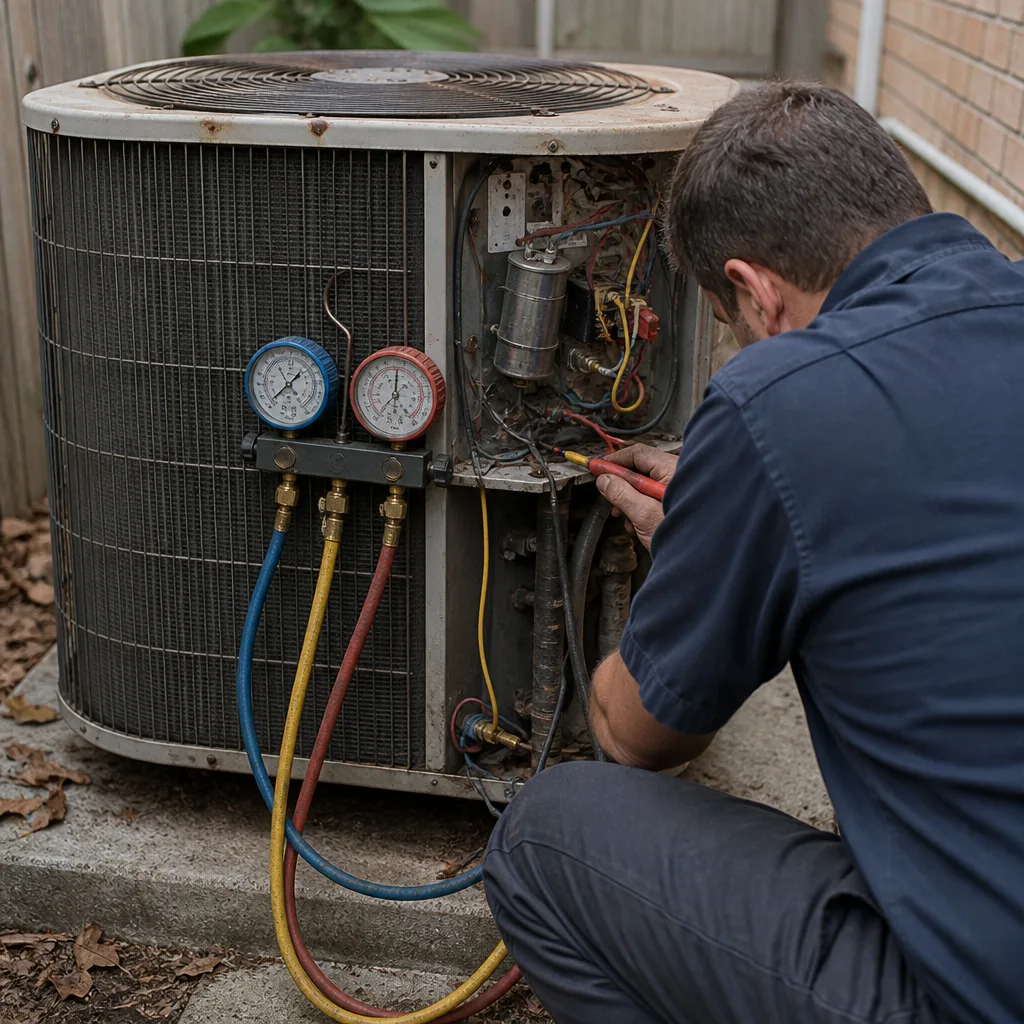 Before
 After
After Before
 After
After Before
 After
After